Loading...
Please wait while we load the content...

Loading...
Please wait while we load the content...
Loading...
Please wait while we load the content...
Explore peer - reviewed titles across the humanities and social sciences - rigorous research, fresh perspectives, and scholarship that inspires dialogue across disciplines.
Stay informed about our latest publications, calls for proposals, author news, events, and special announcements.
Join our community of scholars, librarians, authors, and readers and receive the latest updates from Vernon Press directly in your inbox.

From special discounts and global distribution partners to downloadable catalogs, flyers, and high-resolution covers, we make it easy to enrich your library’s collection. Access bibliographic data, explore subject-specific listings, and stay updated on forthcoming titles.
Become part of our librarian network and access dedicated tools, discounts, and resources to support collection development and promote new titles to your patrons.

Partner with Vernon Press to provide your customers with high-quality, peer-reviewed scholarship. We offer flexible ordering options, reseller agreements, and promotional materials to support your sales and outreach.

Vernon Press provides dedicated resources to help instructors adopt our books for courses and to support students with affordable access to high-quality scholarship. From desk and examination copies to tailored student editions, we aim to make our titles accessible in the classroom.
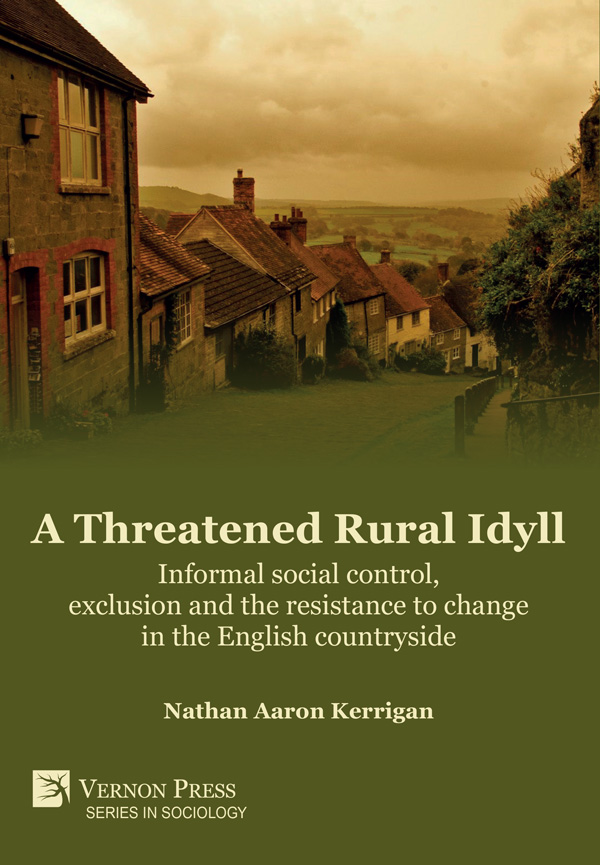
By: Nathan Aaron Kerrigan (Centre for Advances in Behavioural Science, Coventry University, UK)
Issues concerning globalisation, protection of identity and resistance to change at the national level (e.g., Brexit) have been the cause of much public and scholarly debate. With this in mind, this book demonstrates how these national, and indeed global narratives, have impacted on and are influenced by ‘going-ons’ in local contexts. By situating these national narratives within a rural context, Kerrigan expertly explores, through ethnographic research, how similar consequences of informal social control and exclusion are maintained in rural England in order to protect rural identity from social and infrastructural change. Drawing on observation, participant observation, and in-depth interviews, ‘A Threatened Rural Idyll’ illustrates how residents from a small but developing rural town in the South of England perceived changes associated with globalisation, such as population growth, inappropriate building developments, and the influx of service industries. For many of the residents, particularly those of middle-class status and long-standing in the town, these changes were seen as a direct threat to the rural character of the town. The investigation highlights how community dynamics and socio-spatial organisation of daily life work to protect the rural traditions inherent in the social and spatial landscape of the town and to maintain the dominance of its largely white, middle-class character. As a result, Kerrigan contends that the resistance to change has the consequence of constructing a social identity that attempts to reinforce the notions of a rural idyll to the exclusion of processes and people seen as representing different values and ideals.
Edited by: Tim Madigan (St. John Fisher College in Rochester, New York and Bertrand Russell Society) and Tim Delaney (State University of New York at Oswego)
In "A Global Perspective on Friendship and Happiness", editors Tim Delaney and Tim Madigan have organized a collection of original articles on the subjects of friendship and happiness. Each of these chapters offers a unique perspective and serves as worthy contributions to the field of friendship and happiness studies. The chapters found in this publication are the result of the "Happiness & Friendship" conference held June 12-14, 2017 at Mount Melleray Abbey, Waterford, Ireland. The contributing authors come from many diverse countries and academic disciplines thus enhancing this outstanding volume.
By: Charles Quist-Adade (Kwantlen Polytechnic University, Canada)
This book is a survey of Symbolic Interaction. In thirteen short chapters, it traces the history, the social philosophical roots, the founders, “movers and shakers” and evolution of the theory. Symbolic Interactionism: The Basics takes the reader along the exciting, but tortuous journey of the theory and explores both the meta-theoretical and mini-theoretical roots and branches of the theory. Symbolic interactionism or sociological social psychology traces its roots to the works of United States sociologists George Hebert Mead, Charles Horton Cooley, and Herbert Blumer, and a Canadian sociologist, Erving Goffman; Other influences are Harold Garfinkel’s Ethnomethodology and Austrian-American Alfred Schutz’s study of Phenomenology. Symbolic Interactionism: Basics explores the philosophical sources of symbolic interactionism, including pragmatism, social behaviorism, and neo-Hegelianism. The intellectual origins of symbolic interactions can be attributed to the works of William James, George Simmel, John Dewey, Max Weber, and George Herbert Mead. Mead is believed to be the founder of the theory, although he did not publish any academic work on the paradigm. The book highlights the works of the intellectual heirs of symbolic interactionism— Herbert Blumer, Mead’s former student, who was instrumental in publishing the lectures his former professor posthumously with the title Symbolic Interactionism, Erving Goffman and Robert Park.
Edited by: Abbes Maazaoui (Lincoln University of Pennsylvania)
Studies on foreignness have increased substantially over the last two decades in response to what has been dubbed the migration/refugee crisis. Yet, they have focused on specific areas such as regions, periods, ethnic groups, and authors. Predicated on the belief that this so-called “twenty-first century problem” is in fact as old as humanity itself, this book analyzes cases based on both long-term historical perspectives and current occurrences from around the world. Bringing together an international group of scholars from Australia, Asia, Europe, and North America, it examines a variety of examples and strategies, mostly from world literatures, ranging from Spain’s failed experience with consolidation as a nation-state-type entity during the Golden Age of Castile, to Shakespeare’s rhetorical subversion of the language of fear and hate, to Mario Rigoni Stern’s random status at the unpredictable Italian-Austrian borders, to Lawrence Durrell’s ambivalent approach to noticing the physically visible other, to the French government’s ongoing criminalization of hospitality, to Sandra Cisneros’s attempt at straddling two countries and cultures while belonging to neither one, to the illusive legal limbo of the DREAMers in the United States. We are not born foreigners; we are made. The purpose of the book is to assert, as denoted by the title, this fundamental premise, that is, the making of strangers is the result of a deliberate and purposeful act that has social, political, and linguistic implications. The ultimate expression of this phenomenon is the compulsive labeling of people along artificial categories such as race, gender, religion, birthplace, or nationality. A corollary purpose of the book is to help shed light worldwide on one of the most pressing issues facing the world today: the place of “the other” amid fear-mongering and unabashedly contemptuous acts and rhetoric toward immigrants, refugees and all those excluded within because of race, gender, national origin, religion and ethnicity. As illustrated by the examples examined in this book, humans have certainly evolved in many areas; dealing with the “other” might not have been one of those. It is hoped that the book encourages reflection on how the arts, and especially world literatures, can help us navigate and think through the ever-present crisis: the place of the “stranger” among us.
By: Marian Barnes (University of Brighton), Beatrice Gahagan (Age UK Brighton and Hove), and Lizzie Ward (University of Brighton)
The understanding that humans are relational beings is central to the development of an ethical perspective that is built around the significance of care in all our lives. Our survival as infants is dependent on the care we receive from others. And for all of us, in particular, in older age, there are times when illness, emotional or physical frailty, mean that we require the care of others to enable us to deal with everyday life. With this in mind, this book presents the findings of a project that seeks to understand what wellbeing means to older people and to influence the practice of those who work with older people. Its starting point was a shared commitment amongst researchers and an NGO collaborator to the value of working with older people in both research and practice, to learn from them and be influenced by them rather than seeing them as the ‘subjects’ of a research project. Theoretically, the authors draw upon a range of studies in critical gerontology that seek to understand how experiences of ageing are shaped by their social, economic, cultural and political contexts. By employing a broad body of work that challenges normative assumptions of ‘successful’ ageing,’ the authors draw attention to how these assumptions have been constructed through neo-liberal policies of ‘active ageing.’ Notably, they also apply insights from feminist ethics of care, which are based on a relational ontology that challenges neo-liberal assumptions of autonomous individualism. Influenced by relational ethics, they are attentive to older people both as co-researchers and research respondents. By successfully applying this perspective to social care practice, they facilitate the need for practitioners to reflect on personal aspects of ageing and care but also to bridge the gap between the personal and the professional.
By: Patrick Holz
This contribution argues that a long-established social order has been in place since the first stratified societies in the Near Middle East which unavoidably comes with substantial economic, political and environmental repercussions. Part I of the book dissects the various facets of this order, which is termed the social dominance paradigm, while in Part II a fundamentally different order, the peace paradigm, is introduced. The latter rests on real democracy (in the Athenian sense), sustainability and peace. As such, both paradigms function as vehicles for further analysis and research while the peace paradigm also provides a rough plan for the implementation of transformational change. Typically, political, economic, social, and environmental research seeks to increase specialized knowledge. Here, however, the overall intent is to utilize interdisciplinary evidence and connect the dots between a number defining features within seemingly modern societies. The argument is that these are, in fact, not modern at all but follow an ancient template of power, control, and coordination concentrated in the hands of the few. Potentially, this contribution can function as a trans-disciplinary methodological framework as well as an information hub for researchers in the fields of political and social sciences, history, anthropology, evolutionary biology, organization and peace studies. Practitioners who are interested in fundamental social change may also find the issues raised to be of interest. As such, this book provides a generalist, evidence-based discussion of a multi-disciplinary nature that may pique the interest of both experts and amateurs alike.
Edited by: Beverley A. Searle
The issue of generational transfers is growing in importance. Populations are ageing, placing an increasing burden on provision of pensions, health care and other welfare services. In many nations the imbalance between a growing, older generation, supported by a shrinking younger generation, has fuelled debates about intergenerational justice. The key argument being that political and institutional developments over the last century have been to the advantage of older generations at the expense of current younger and future generations. But this only addresses half of the story, neglecting the flows of resources, through private, family channels. One key response to the growing fiscal problem of ageing societies has been to focus responsibility on self-funding and familial support. The growth of asset values, particularly housing, which are concentrated among the elderly, underpin such strategies. But this exposes new risks as potentially extractable resources are determined by wider fluctuations in the economy, and housing markets in particular. Clearly, these cohort effects, and responses to them, play out differently in different national developmental settings, depending on long-run patterns of economic, social and demographic change. This collection address these issues and provides original insights across different international contexts. The collection focusses on financial and non-financial transfers, generational interdependencies, and the role of labour and housing markets in welfare support, set against the changing economic landscape following the Great Financial Crisis of 2007. Although institutional and national differences exist the key emerging issues are the same: the financial and welfare challenges of supporting aging in societies; inequalities in the availability of assets across individuals, families and nations; and the extent to which private asset accumulation can support families over the life course. Drawing from examples across European countries, this collection will nonetheless be relevant to researchers and policy makers in other nations addressing the complexities of providing welfare across the life course in the face of restricted financial resources.
A Critical Analysis Of Pierre Bourdieu's Theoretical Framework
By: Jacek Tittenbrun (University of Poznan, Poland)
This book offers an in-depth examination of Pierre Bourdieu's theoretical framework. The book is not just a collection of more or less critical remarks but constitutes a coherent whole, underpinned by an original analytical framework. This conceptual apparatus makes it possible to present some alternative solutions to the theoretical problems under consideration. The book goes largely against the grain of views that are dominant in the literature on Bourdieu. Therefore, its conclusions may be surprising to many a reader. The book demonstrates that Bourdieu's well-known theory of 'capital' forms is untenable, resembling more an illegitimate metaphor rather than a scientific concept. In a similar vein, the Bourdesian class theory should be largely regarded as a variant of social stratification rather than class. There are many theoretical and empirical problems with Bourdieu's theory of social and cultural reproduction as well. There is more to the above criticisms than meets the eye. The point is that many weaknesses of Bourdieu's style of theorising seem to stem from his intellectual dependence upon structuralism, especially in Claude Lévi-Strauss' version. It is this affinity that accounts for such features of Bourdieu's approach as its essentialism, formalism and epistemic idealism. The book will be of interest primarily to students of Bourdieu's many and varied contributions to social theory. In view of Bourdieu's immense influence, it will also hold interest to critical scholars in political science, economic sociology and political philosophy.
How Social Relations rebuild Space(s)
By: Roberta Iannone (Sapienza University of Rome, Italy), Manuela Ciprì (Sapienza University of Rome, Italy), Emanuela Ferreri (Sapienza University of Rome, Italy), Maria Cristina Marchetti (Sapienza University of Rome, Italy), and Laura Mariottini (Sapienza University of Rome, Italy)
The present volume attempts to critically evaluate claims that modern society may be read and understood as a network. Accepting that this perspective holds some potential, the question becomes how to best capitalize on it. To analyze society as a network means to respond not only to the “actual needs”, but also to highlight the "opportunities" and the "utilities", and to investigate whether society is increasingly relational or just perceived as such, as e.g. digital "social networks" and related concepts exemplify. From a strictly scientific perspective to answer the question "how to" read society as a network means to ask ourselves: a) if the conceptual categories (especially the concepts of structure and exchange) and the paradigms of traditional analysis (holism and individualism, both in the functionalist and the conflictive versions) are still sufficient; b) if new conceptual categories/theories/instruments are needed to represent more properly the reality we face: to investigate it, to explain it or, at least, to understand it. Starting from a reflection on already established social networks (Scott, 2003), the fundamental differences between groups and networks (Vergati, 2008), the logics of networks (Serra, 2003) as well as social capital formation and links (Di Nicola, 2006; Mutti, 1998), we seize the spatial dynamics, seemingly following opposite paths, but which revert to a common denominator: de-spatialization and re-spatialization, namely the processes of dematerialization of space(s) and its reconstruction by specific relational dynamics and forms. The study of networks is therefore not attributable to a single theory but to several theories converging towards a unique perspective (spaces) and logical reasoning (Serra, 2001) each one with its own uniqueness. The strength of this volume and the difference with respect to other attempts at explaining the Network Society lies in the multidimensional and interrelated perspectives it offers emerging from converging multidisciplinary perspectives (sociological, anthropological and linguistic), and from applications that the Network Society provides, namely, international (European Governance), institutional, public (linguistic landscape of the city of Rome) and mediated ones (communication technology).