Loading...
Please wait while we load the content...

Loading...
Please wait while we load the content...
Loading...
Please wait while we load the content...
Explore peer - reviewed titles across the humanities and social sciences - rigorous research, fresh perspectives, and scholarship that inspires dialogue across disciplines.
Stay informed about our latest publications, calls for proposals, author news, events, and special announcements.
Join our community of scholars, librarians, authors, and readers and receive the latest updates from Vernon Press directly in your inbox.

From special discounts and global distribution partners to downloadable catalogs, flyers, and high-resolution covers, we make it easy to enrich your library’s collection. Access bibliographic data, explore subject-specific listings, and stay updated on forthcoming titles.
Become part of our librarian network and access dedicated tools, discounts, and resources to support collection development and promote new titles to your patrons.

Partner with Vernon Press to provide your customers with high-quality, peer-reviewed scholarship. We offer flexible ordering options, reseller agreements, and promotional materials to support your sales and outreach.

Vernon Press provides dedicated resources to help instructors adopt our books for courses and to support students with affordable access to high-quality scholarship. From desk and examination copies to tailored student editions, we aim to make our titles accessible in the classroom.
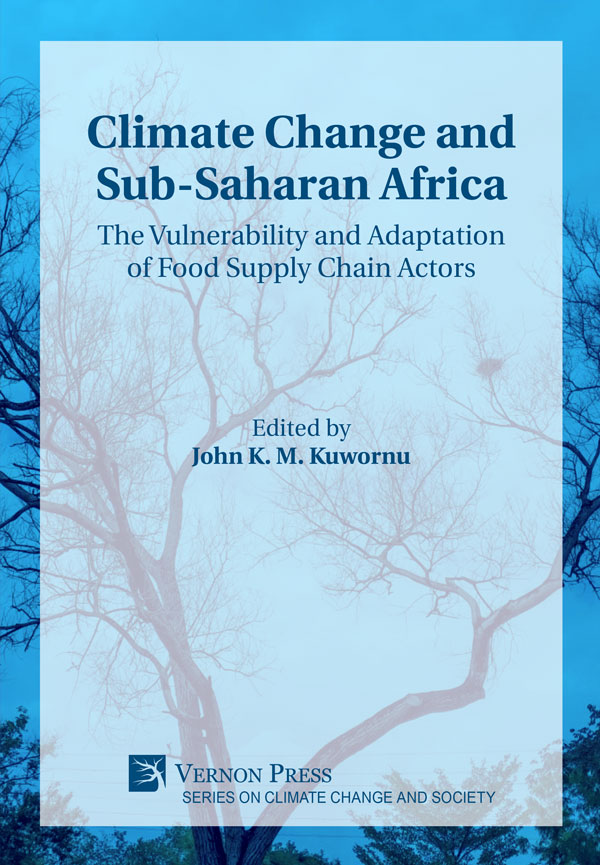
Edited by: John K. M. Kuwornu (Asian Institute of Technology, Thailand)
The adverse effects of climate change and climate variability have become some of the biggest environmental and socio-economic challenges for society, and for food supply chain actors, in particular. Serving as a serious inhibitor to the attainment of food security, climate change poses a fundamental threat to the availability, accessibility, stability and utilization of nutritious food and quality drinking water. The threat of this global phenomenon is not only apparent from the difficulties faced by all food supply chain actors, but is also felt acutely by households dependent on semi-subsistence agriculture. As evidenced by numerous studies conducted by the academic community, governmental and non-governmental organisations, climate change and climate variability will have disastrous effects on entire food supply chains across the world. This edited volume looks to address: How vulnerable are food supply chain actors to climate change and climatic variability? What adaptation strategies are they adopting? How is the resilience of food supply chains being supported? Are they being financed and/or supported by international organizations to cope with climate change? And what governmental support are they receiving to help cope with climate change? This book is an essential resource for students, lecturers, researchers, agribusinesses, marketing firms, agricultural institutions, climate change adaptation institutions, policymakers and many others with an interest in agricultural development and the global food industry.
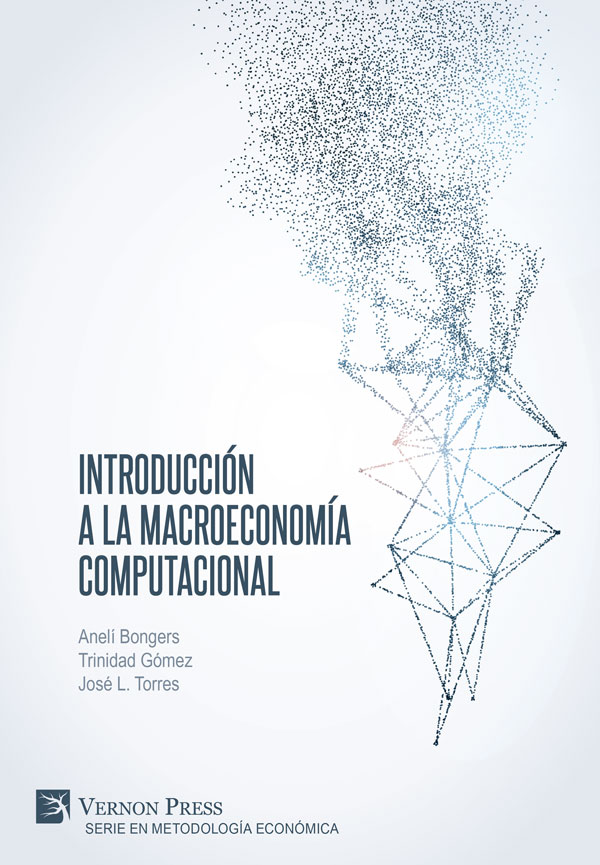
By: Anelí Bongers (Universidad de Málaga, Spain), Trinidad Gómez (Universidad de Málaga, Spain), and José Luis Torres Chacon (Universidad de Málaga, Spain)
Este libro presenta una introducción a la macroeconomía computacional, utilizando un nuevo enfoque para el estudio de los modelos macroeconómicos dinámicos. Para ello resolveremos numéricamente una gran variedad de modelos en tiempo discreto, utilizando como herramienta informática una hoja de cálculo; en particular, Excel de Microsoft. Los modelos resueltos incluyen tanto modelos macroeconómicos dinámicos con expectativas racionales no microfundamentados, como modelos microfundamentados, constituyendo un enfoque que facilita el aprendizaje y uso de los modelos de equilibrio general dinámico, los cuales se han convertido en la principal herramienta para el análisis macroeconómico en la actualidad. Las hojas de cálculo son ampliamente conocidas y relativamente fáciles de usar, lo que supone que los conocimientos informáticos necesarios para poder trabajar con modelos de equilibrio general dinámico son asequibles para alumnos de grado.
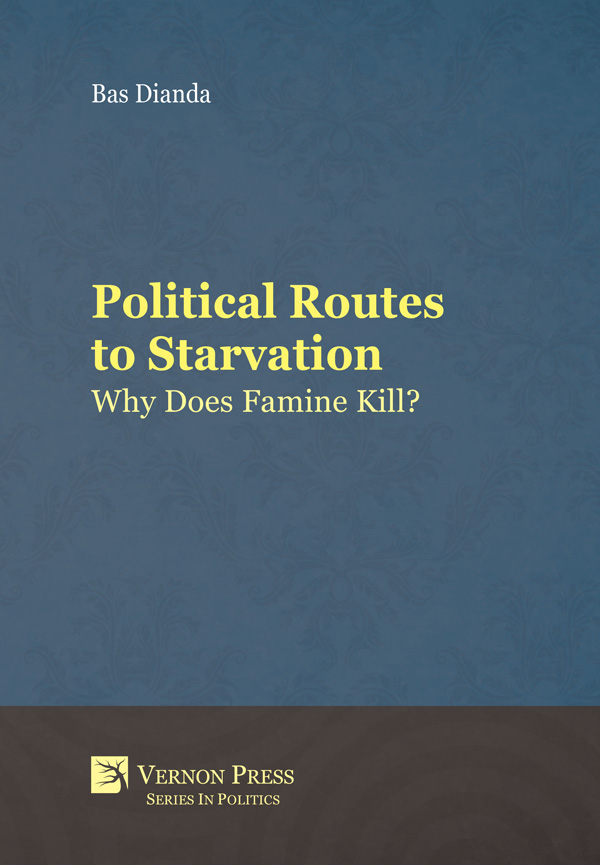
Why Does Famine Kill?
By: Bas Dianda
This book seeks to reclassify famine by offering an in-depth look at the phenomenon that continues to affect millions of people across the world every year. Defined as a widespread scarcity of food, Dr. Basilio Dianda argues that the causes of famine cannot be reduced exclusively to a shortfall in agricultural output or to economic dynamics. Instead, an analysis of famine must take into account political and economic factors as well as agricultural, climatologic and demographic data. ‘Political Routes to Starvation’ is the result of an all-encompassing analysis of eighty famines from across the globe. This extensive piece of research demonstrates that there are not only multiple factors at play in the genesis of a food crisis, but also in its evolution to starvation. Dianda contends that in order to fully understand the causes of famine it is necessary to reinstate a hierarchy between foundation and concomitant causes, especially when cross-comparing cases. Importantly, Dianda maintains that only a comprehensive approach to famine can appropriately answer the questions: What is famine? How does famine occur? Why does famine kill?
By: Howard Chitimira (North West University, South Africa)
This book provides a concise comparison of the regulation and enforcement of the anti-market abuse laws (insider trading and market manipulation) in South Africa, the United States of America (USA) and United Kingdom (UK). Bringing together a number of previously published articles, the book provides a novel discussion of the challenges associated with the enforcement of market abuse laws in both developing countries such as South Africa and developed ones such as the USA and the UK. This is primarily done to examine and expose the current strengths and weaknesses of market abuse laws in relation to certain aspects of the corporate, securities and financial markets environments in South Africa, the USA and the UK. Accordingly, chapters two to five of the book unpack the regulation and enforcement of market abuse laws in South Africa and the USA in a comparative perspective. Thereafter, chapters six to eight of the book discuss the regulation and enforcement of market abuse laws (Financial Markets Act 19 of 2012) and other related statutes in South Africa and the UK. The book proposes some measures that could be utilised to enhance the enforcement of anti-market laws in South Africa, USA and the UK. New market abuse-related challenges that occurred during the global financial crisis are also briefly discussed. The book further provides a relatively adequate overview of the comparative analysis of the regulation of market abuse in South Africa versus two key developed and respected jurisdictions, namely, the USA and the UK. Accordingly, it is hoped that the book can aid regulatory authorities, financial market participants, academics, students and other interested readers to understand market abuse offences and possible measures that could be employed to combat such offences.
Understanding globalisation through the lens of network analysis
Edited by: Sara Gorgoni (University of Greenwich), Alessia Amighini (University of Eastern Piedmont, Italy), and Matthew Smith (University of Greenwich, UK)
In recent decades, the international economy has witnessed fundamental changes in the way manufacturing is organised: products are no longer manufactured in their entirety in a single location. Instead, the production process is often split across a number of stages located in countries that are frequently far apart from each other. By spreading out their manufacturing and supply chain activities globally through international investment and intra-firm trade, Multinational enterprises (MNEs) play a focal role in this reorganisation of production. Our ability to understand the global economy, therefore, requires an understanding of the interdependencies between the entities involved in such fragmented production. Traditional methods and statistical approaches are insufficient to address this challenge. Instead, an approach is required that allows us to account for these interdependencies. The most promising approach so far is network analysis. ‘Networks of International Trade and Investment’ makes a case for the use of network analysis alongside existing techniques in order to investigate pressing issues in international business and economics. The authors put forward a range of well-informed studies that examine compelling topics such as the role of emerging economies in global trade and the evolution of world trade patterns. They look at how network analysis, as both an approach and a methodology, can explain international business and economics phenomena, in particular, in relation to international trade and investment. Providing a comprehensive but accessible explanation of the applications of network analysis and some of the most recent methodological advances in its field, this edited volume is an important contribution to research in international trade and investment.
By: Marin Muzhani (CDI College, Canada)
The economy of the industrialized countries in the 21st century has already moved to a new level of mass production and technology never seen before, thanks in part to globalization, advanced technologies, new organization management methods, and innovative supply chain. A relatively large number of mass-produced commodities (characterized as non-premium) and services in Western economies are somehow sold at discounts rather than regular prices at a much higher frequency that was never seen before. This phenomenon has completely changed how we look at the theory of the firm in microeconomics. This book is indented to introduce new ideas and theories by challenging the current modern micro-and-macro economic theories. In a globalized world, the economies of advanced countries have entered a new phase called “economy pricing,” where most of the mass commodities are sold at a low price during certain periods of the year, called ‘sales events’. In addition to low prices, most industrialized countries have had record low inflation, low-interest rates, low growth, and low unemployment rates. This book will contend how the “Economy Pricing System” is about to revolutionize how people look at a real economy’s micro and macro effects.
How Science and Technology Shape the Evolution of Human Society
By: Andrea Sommariva (SDA Bocconi, Milan, Italy)
This book provides answers to the questions of why human-kind should go into space, and on the relative roles of governments and markets in the evolution of the space economy. It adopts an interdisciplinary approach to answer those questions. Science and technology define the boundaries of what is possible. The realization of the possible depends on economic, institutional, and political factors. The book thus draws from many different academic areas such as physical science, astronomy, astronautics, political science, economics, sociology, cultural studies, and history. In the literature, the space economy has been analyzed using different approaches from science and technology to the effects of public expenditures on economic growth and to medium term effects on productivity and growth. This book brings all these aspects together following the evolutionary theory of economic change. It studies processes that transform the economy through the interactions among diverse economic agents, governments, and the extra-systemic environment in which governments operate. Its historical part helps to better understand motivations and constraints - technical, political, and economical - that shaped the growth of the space economy. In the medium term, global issues - such as population changes, critical or limited natural resources, and environmental damages – and technological innovations are the main drivers for the evolution of the space economy beyond Earth orbit. In universities, this book can be used: as a reference by historians of astronautics; for researchers in the field of astronautics, international political economy, and legal issues related to the space economy. In think tanks and public institutions, both national and international, this book provides an input to the ongoing debate on the collaboration among space agencies and the role of private companies in the development of the space economy. Finally, this book will help the educated general public to orient himself in the forest of stimuli, news, and solicitations to which he is daily subjected by the media, television and radio, and to react in less passive ways to those stimuli.
Edited by: Julia M. Puaschunder (The New School)
Intergenerational responsibility is multi-faceted.This edited volume reflects intergenerational aspects in light of spatial, age and racial segregation, global warming, and the aging Western world population. Intergenerational global governance is addressed in the era of globalization and migration. The intergenerational glue, intergenerational crises resilience strategies and intergenerational responses to external shocks serve as innovative global responsibility implementation guidelines in the international arena. Fostering intergenerational harmony through intergenerational income mobility and intergenerational opportunities, environmental protection and sustainable development aids alleviate the most pressing contemporary challenges of humankind. Overall, this interdisciplinary and applied contribution to the scholarship on intergenerational responsibility supports the leadership and management of global governance agency in the private and public sectors.
Edited by: Beverley A. Searle
The issue of generational transfers is growing in importance. Populations are ageing, placing an increasing burden on provision of pensions, health care and other welfare services. In many nations the imbalance between a growing, older generation, supported by a shrinking younger generation, has fuelled debates about intergenerational justice. The key argument being that political and institutional developments over the last century have been to the advantage of older generations at the expense of current younger and future generations. But this only addresses half of the story, neglecting the flows of resources, through private, family channels. One key response to the growing fiscal problem of ageing societies has been to focus responsibility on self-funding and familial support. The growth of asset values, particularly housing, which are concentrated among the elderly, underpin such strategies. But this exposes new risks as potentially extractable resources are determined by wider fluctuations in the economy, and housing markets in particular. Clearly, these cohort effects, and responses to them, play out differently in different national developmental settings, depending on long-run patterns of economic, social and demographic change. This collection address these issues and provides original insights across different international contexts. The collection focusses on financial and non-financial transfers, generational interdependencies, and the role of labour and housing markets in welfare support, set against the changing economic landscape following the Great Financial Crisis of 2007. Although institutional and national differences exist the key emerging issues are the same: the financial and welfare challenges of supporting aging in societies; inequalities in the availability of assets across individuals, families and nations; and the extent to which private asset accumulation can support families over the life course. Drawing from examples across European countries, this collection will nonetheless be relevant to researchers and policy makers in other nations addressing the complexities of providing welfare across the life course in the face of restricted financial resources.