Loading...
Please wait while we load the content...

Loading...
Please wait while we load the content...
Loading...
Please wait while we load the content...
Explore peer - reviewed titles across the humanities and social sciences - rigorous research, fresh perspectives, and scholarship that inspires dialogue across disciplines.
Stay informed about our latest publications, calls for proposals, author news, events, and special announcements.
Join our community of scholars, librarians, authors, and readers and receive the latest updates from Vernon Press directly in your inbox.

From special discounts and global distribution partners to downloadable catalogs, flyers, and high-resolution covers, we make it easy to enrich your library’s collection. Access bibliographic data, explore subject-specific listings, and stay updated on forthcoming titles.
Become part of our librarian network and access dedicated tools, discounts, and resources to support collection development and promote new titles to your patrons.

Partner with Vernon Press to provide your customers with high-quality, peer-reviewed scholarship. We offer flexible ordering options, reseller agreements, and promotional materials to support your sales and outreach.

Vernon Press provides dedicated resources to help instructors adopt our books for courses and to support students with affordable access to high-quality scholarship. From desk and examination copies to tailored student editions, we aim to make our titles accessible in the classroom.
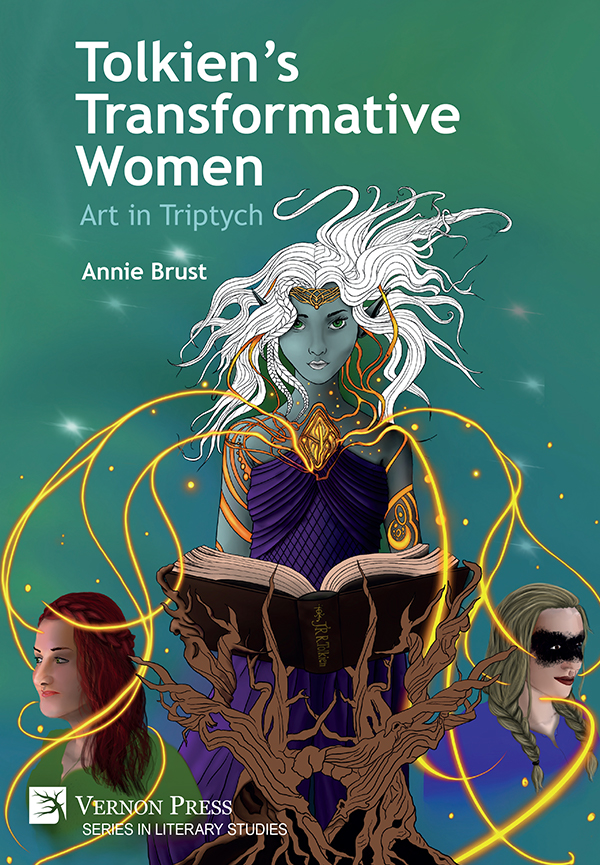
By: Annie Brust (Kent State University)
J.R. R. Tolkien has been revered as the father of twentieth-century fantasy; however, many initially criticized him for his handling of the textual matter as male-centric magical lands that did not feature prominent female roles or significant female characters. This book will highlight the vast community of powerful female figures that Tolkien created in his fantasy writing, stemming from the distinct and dominant female forces he created in his academic translation and poetry. These fierce women serve as a culmination of the powerful forces of women and female character that originated in Medieval, Norse, and Celtic traditions. They help to create the framework from which Tolkien shaped his female community, not merely as singular figures, as previously featured, but as a dynamic network of figures who shape Tolkien's creative art. For the first time, this discussion looks at the entire community of women, featuring previously excluded figures from his academic works and highlighting translation bias in modern manuscripts of the extant medieval works that influenced these women. It also seeks to create a comprehensive guide and detailed appendices exploring the female characters and influences throughout his writing portfolio. This book seeks to uncover the hidden voices of the past to find their rightful home in the strong female voices of the present, rewriting history to regain a sense of the past.
By: Raj Chandarlapaty
The primary purpose of 'Psychedelic Modernism: Literature and Film' is to trace the development of ideas and perspectives from the writing and private ambitions of 20th-century modernist writers, including Aldous Huxley. The purpose of the book is to offer a rough chronology during which ideas were first given a literary imagination, then transposed onto discussions of science and psychology, and then theoretically democratized to bring fruit to a relatively de-centered process where images, text, and interviews could re-conceptualize the modern Being from an admixture of modernist, historical, and pop roots that could express a greater moment in the human action. The work includes discussions from scientists such as Swiss chemist Albert Hofmann, rock stars such as Jerry Garcia, and unconfirmed mystics such as Carlos Castaneda. The primary focus of this work isn’t literature per se, but the literary imagination as it may correspond to greater, wider, and more impactive goals than the writing of 20th-century fiction. While there is some outreach that favors de-centered models such as the Beat Generation, the author’s primary purpose is to assemble an anthology covering the study and quests for knowledge from as many sides as could power the relative 1960s countercultural movement.
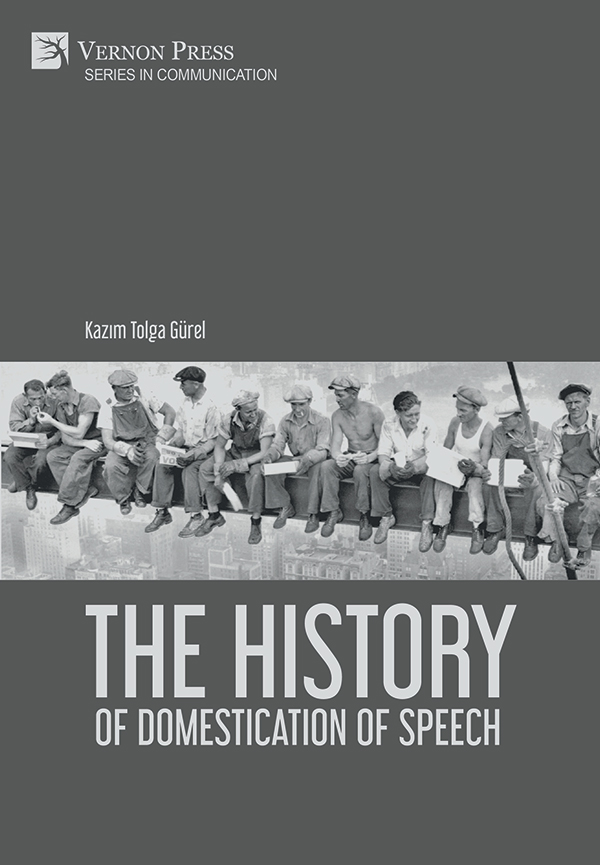
By: Kazım Tolga Gürel
Throughout history, speech has been forbidden or at least restricted to the laboring classes. Enslaved people laboring in ancient Egypt or working on Latin American plantations were forbidden to speak during work. In the early period of nation-states, the language of many peoples was forbidden because of the sovereignty of the lingua franca. Censorship has taken various forms in the history of all states. Talk amongst the laboring classes could lead to revolt and revolution; for this reason, speech was restricted during the harshest periods of labor. However, speech could be commercialized and reproduced in a society where all individuals were atomized entirely and isolated, in an environment where meaning was almost lost. In short, speech was supervised and controlled for the oppressed until the second half of the 20th century. However, especially in the postmodern period, speech has been supported at every point and subjected to significant inflation as if it were detached from meaningfulness. The pressures previously placed on the speech of workers and marginalized groups have suddenly diminished; speech everywhere has been commercialized and reproduced. This book analyses the causes of this evolution.
By: Simin Li (University of Victoria)
Cantonese (Jyut Jyu) is a language prevailing in the Guangdong province of China, Hong Kong, Macau, and ethnic Chinese groups in Southeast Asia and North America. It evolves with the engagements of the authoritarian government and globalization over time. Cantonese in China is special because it remains strong under the constant suppression from the administration and the continual interactions between the natives and migrants. However, the concern about Cantonese dying among the natives has been increasing in recent years. The speaking population, the imposed language policy, and the economy at least determine Cantonese’s life. In particular, the economy is also a window to examine the central-local relations in China due to the leading roles of the Pearl River Delta, Hong Kong, and Macau in China’s economic growth. Therefore, the struggles of local language between the younger generation and the Communist Party via the Internet are exposed. The book intends to explore the rising of a potential language community around the globe that speaks Cantonese by analyzing the usage and images of Cantonese of a popular TV show on YouTube, discussion groups on Baidu Tieba and Facebook, and talk shows on Bilibili with content analysis, interviews, and cases studies. Through this research, the relations between language and collective identity will be presented in an innovative way. "Remaking a Global Cantonese Community with Television and Social Media" has something to offer everyone, regardless of age or background. For those residing in mainland China, it’s a journey back in time. Older Cantonese speakers will reminisce about their childhood, with memories of delicious Cantonese food, playful children’s songs, and cherished customs. Even those who aren’t native Cantonese speakers will recall the Cantonese TV shows, movies, and music that colored their youth. Younger readers will find familiar elements in the short videos they currently enjoy. For language preservation advocates, this book sheds light on Cantonese speakers’ efforts to protect their native language and the challenges they face. For readers outside of mainland China, it offers insights into the country’s internal changing landscape, especially grassroots practices and identities. By blending the disciplines of linguistics, political science, and communication, this book provides a broad perspective on how language is intertwined with our sense of belonging.
By: Arthur Asa Berger (San Francisco State University)
This book is about the never-ending need we have to make choices. If you think about it, we have to decide what time to wake up every morning, what to wear (unless we need to wear a uniform), what to have for breakfast (if we eat breakfast), lunch and dinner (and if we eat in restaurants, what to order), and our need to make all kinds of other choices all day long. Some of our choices are mundane, like what to have for breakfast (if we eat breakfast): to have coffee or tea (and if so, plain or with milk), cereal, toast or a bagel (and if so, what kind: plain, with poppy seeds, with everything) or a sweet roll, eggs (if so, fried, soft boiled, scrambled), and so on. Most of the choices we make are not important, and we often develop habits to relieve us of having to think about our choices. For example, I have the same thing for breakfast every day: a bowl of oatmeal with chia seeds and flax seeds, hot milk, a cup of espresso coffee with hot milk, and half a bagel with butter. Occasionally, I have a soft-boiled egg, as well. But other choices we have to make are life-changing, such as how to live (single, living with a partner, or getting married), what kind of education to get, what kind of job or profession to choose, where to live and what kind of house to buy (if you can afford a house), whom to vote for, and so on. After reading this book, you will better understand the role that the choices we make play in society and culture and in our everyday lives.
Edited by: Francesca Cadel (University of Calgary) and Paola Nastri
A period of turmoil, uncertainty, and fears, the second half of the nineteenth century in Italy is also characterized by resilience, creativity, courageous discussions on the emancipation of women, and a variety of cultural products that are instrumental for the birth of a new and modern culture that will lead to the achievements of the twentieth century. Contributing to and expanding on recent scholarships on Italian literature of the nineteenth century, the book presents a series of literary, interdisciplinary and intercultural case studies. These case studies explore the social and cultural dimensions of the period, investigating the historical, literary, artistic, cultural, and social events of the time while probing their significance and relevance in bridging new Italian cultures.
By: Alberto Castelli (Hainan University, China)
'Eros and Thanatos' is about the deadly nature of love. It is remarkable that literary critics have paid so little attention to the combination between love and death in literature. This book seeks to address this significant scholarly lacuna by exploring key literary texts of the last two hundred years as exemplary of a consistent tendency toward love and death. Its emphasis on singular characters and close readings suggests the spectrum of an arbitrary dichotomy never fully resolved. The existential discussion triggered by each plot is so intense that the erotic and the merely sexual seem inappropriate. Indeed, each writer chose to reduce it to the setting and background of a story that takes place elsewhere. With this in mind, the author intends to reflect love’s paradoxical nature. If love is triggered by beauty, beauty can be immoral and love must die to preserve the illusion of beauty.
By: James Martin Rogers (Meijo University, Japan)
Collocations are words that commonly co-occur, such as ‘jury’ and ‘verdict.’ Collocational fluency is an essential aspect of second language fluency. Learning a language via collocations improves upon the efficacy of language acquisition because it essentially kills three birds with one stone: students learn vocabulary, collocations, and also subconsciously absorb the grammar patterns of language through mastery of these chunks of language. This is, in fact, similar to the way native speakers learn language and an efficient way to become fluent. This book will detail efforts to create and then apply a methodology to develop a large-scale high-frequency collocation list and custom-tailored collocation resources for Japanese, Chinese, and Korean learners to study directly and for practitioners to utilize as reference materials to create additional resources. Presented in this book is a novel approach taken to fill a major gap in the research and to create large-scale resources that were previously unavailable. Therefore, this book should be considered a valuable contribution to research that aims to help second language learners more effectively achieve fluency in English as a second language.
A Transatlantic Perspective of European, Latin American, and American Narratives
By: José F. Rojas-Viana (Louisiana State University)
In this book, Rojas explores comparatively the representations of deviant and criminal women in the late nineteenth and early twentieth centuries from Transatlantic perspectives in literary productions of the first-wave feminist writers of the New Woman movement and writers of Radical Naturalism. This work addresses how the writers' sex is relevant in depictions of social constructions of female characters and how they established a dialogue based on gender through the themes of 'femme fatale', marginal spaces, eugenics, and social Darwinism in the novels of Emilia Pardo Bazán's 'La piedra angular' (1891), 'La gota de sangre' (1911), and "Tio Terrones" (1920); Refugio Barragán de Toscano's 'La hija del bandido o los subterráneos del nevado' (1887); Federico Gamboa's 'Santa' (1903); Kate Chopin's (Katherine O'Flaherty) 'The Awakening' (1899); Thomas Hardy's 'Tess of the D'Urbervilles' (1891); and 'Grand's Ideala' (1888). There is a good volume of research on different aspects of these novels, but this book addresses issues of the social constructions of deviant and criminal women from an interdisciplinary and metatheoretical perspective often missed from established criticism. This work is not only reachable for the non-expertise reader, graduate, or undergraduate students but also it is sufficiently elaborated for the expert reader in different fields. It provides a detailed analysis of the social, historical, philosophical, and scientific background that shows how the treatment of the female characters converges and diverges from male and female writers of the New Woman and Radical Naturalism points of view. It can be a good contribution for references or classes in Hispanic studies, gender studies, women's studies, sexuality studies, nineteenth-century studies, and in other fields.