Browse by Subject
Explore our complete collection
Status
Format
Language
Publishing
Resources
News & Updates
About Vernon Press
Subjects
Series
Publication Status
Type
Loading...
Please wait while we load the content...
Community College of Baltimore County, MD
By: Libby Catchings, David Theo Goldberg, Michael Owens, Anna Plemons, J. Marie Darden, Casey Keel, Carmen Hoover, Dawn Barron, Suree Towfighnia, Maria Isabel Morales, Kevin Mullen, Lan Dong, Irina Popescu, Megan Schutte, Alyse Bensel, Rebecca Boylan, Ada Vilageliu-Diaz, Kenton Rambsy, Brenda Aghahowa, Stacy Maddern, and Louis M. Maraj
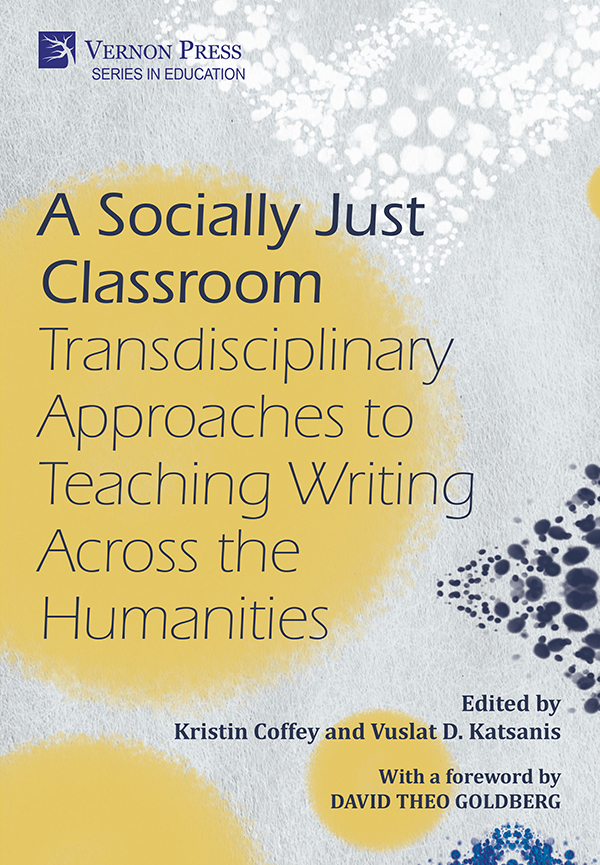
This edited collection provides a range of transdisciplinary approaches to the teaching of writing across the Humanities through the lens of inclusion and equity in higher education. In three parts - From Disciplinary Practice to Transdisciplinary Application, The Collective We: Transparent Pedagogy in Praxis, Power in Presence: From Chalkboard to Pavement - the chapters focus on teaching triumphs and challenges, specific learning objectives and best practices, theories and their applications, and concrete examples of campus action within specific institutional or socio-historical contexts. In whole, the book represents what a socially just classroom looks like from first-year university writing classes, to advanced graduate studies, and the impact of learning beyond the university. Building on the scholarship of equity in higher education, the book forefronts transdisciplinary pedagogies with chapters representing language and literature, creative writing, cultural and ethnic studies, women and gender studies, and media studies. While we understand social justice as a multifaceted and ever expanding effort, we affirm the essential role of classroom instructors as the foundational actors in cultivating and sustaining inclusion and equity. We also acknowledge the current challenges of teaching brought on by the COVID-19 pandemic, which intensifies previously existing issues surrounding housing, employment, healthcare, and the legal residency status of many students. By fostering a conversation around writing pedagogy in a comparative and transdisciplinary context, we encourage educators to translate the resources available in their fields in a collective effort to close the equity gaps. At the same time, we intend for this book to provide a context where younger faculty and diverse students can redefine the college classroom while empowering each other within their chosen institutions.