Browse by Subject
Explore our complete collection
Status
Format
Language
Publishing
Resources
News & Updates
About Vernon Press
Subjects
Series
Publication Status
Type
Loading...
Please wait while we load the content...
Mercyhurst University
By: Chloé Angué, Wes Berry, Anne Cirella-Urrutia, Asis De, Stephen Greenfield, Hoffmann Catherine, David Latour, David Lloyd, Maxime Petit, George Piggford, Peter Schulman, Adrian Tait, and Keiko Takioto Miller
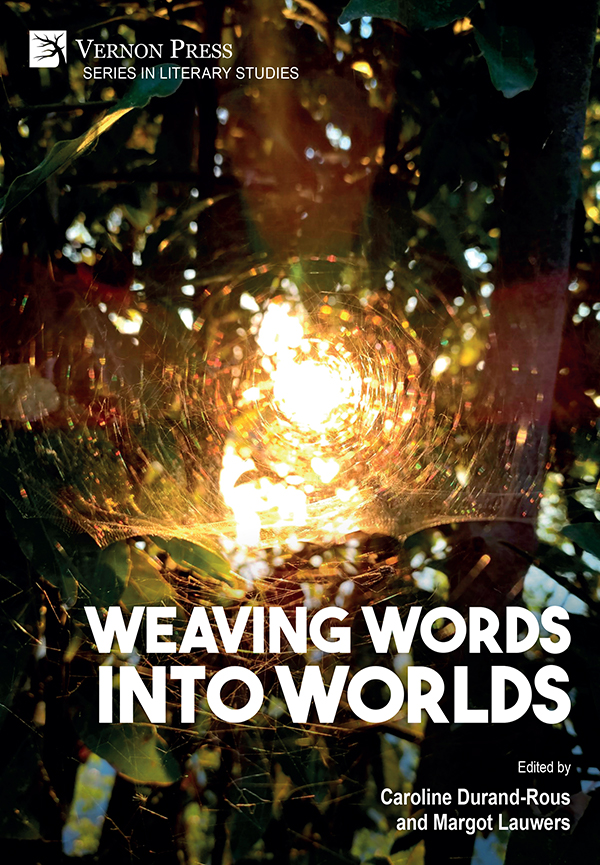
'Weaving Words into Worlds' comes as the third spinoff of the international ecopoetics conference organized in Perpignan in 2016. Reflecting upon how the many stories we tell directly influence the world we live in, each of the contributions in this international volume directs our attention to the constant, ecopoetic weaving of word to the world at work via the many entanglements between mind, matter, and meaning, whether on a local or a global scale. It encapsulates how the words, stories, and concepts we humans articulate as we try to make sense of the world we inhabit give part of its shape to the web of ecological relations that we depend on for survival. It seeks to cast light on the disenchanting and reenchanting powers of stories and poiesis in general—as stories retain the power to make us either become oblivious to and destroy or to feel and honor the many, complex ties between the multitudinous nature cultures intertwined within the fabric of a multispecies world always in the making. This book offers a total of fourteen articles written by international scholars in ecocriticism and ecopoetics who, by their analyses of literature and/or films and the political subtext they thus render visible, aim at showing how the study of environmentally minded media may renew our attention to the entangled agencies of the human and the more-than-human realm. Thus, this work offers to counter a reproach ecocriticism has often been met with, namely the over-presence of US scholars and the lack of diversity in subjects in the field, since the articles presented provide a wide variety of approaches and topics with examples of UK and Native American literature, Polynesian myth, graphic novels, or haiku. In doing so, the book expands on the fields of ecocriticism and ecopoetics, adding to this branch of study and enriching it with high-quality academic studies.