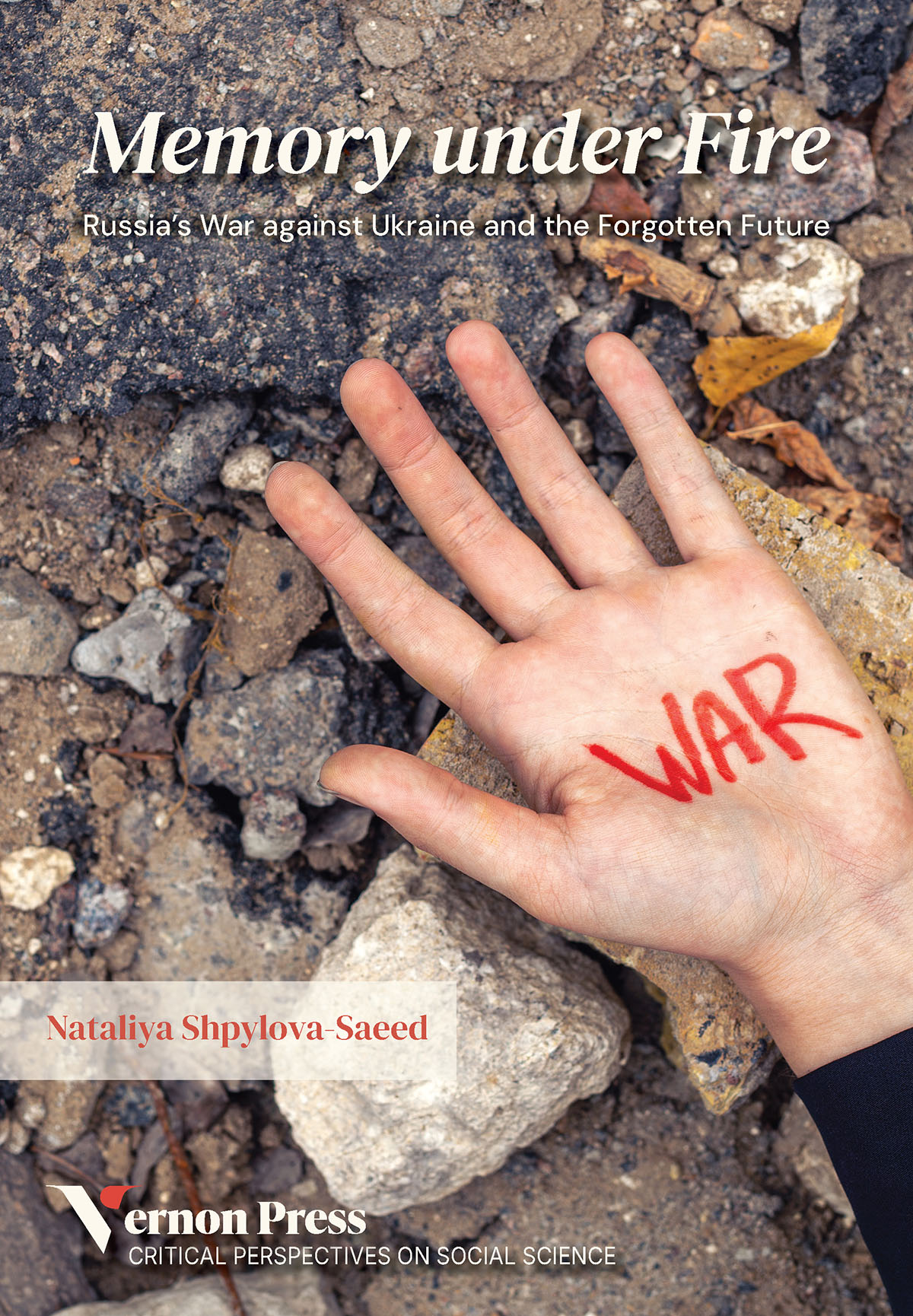
How did narratives denying Ukraine’s sovereignty and distinct identity become normalized within Russian society? How did the war against Ukraine come to be viewed as legitimate and even necessary by many in Russia? And what role has memory played in shaping Russia’s aggression against Ukraine?
This book examines how Russia’s mnemonic practices contributed to the normalization of war against Ukraine and to efforts aimed at erasing Ukrainian identity in territories currently occupied by Russia. The Kremlin has spent more than two decades encouraging and strengthening a mnemonic system that glorifies the Russian Empire and the Soviet Union, cultivates narratives of national greatness, and combines a sense of historical victimhood with claims of strength, resilience, and invincibility. Drawing on presidential New Year addresses, televised entertainment programs, commemorative concerts, educational initiatives, and policies implemented first in Russia and later extended to Ukrainian territories, the book shows how memory became a strategic instrument of war, used not only to justify territorial expansion but also to challenge the very existence of Ukraine as an independent political and cultural community.
Complementing scholarship on propaganda, the book broadens the discussion and examines the deeper mnemonic and cultural foundations that helped normalize Russia’s war against Ukraine. Rather than viewing public support for the war solely as the product of state propaganda, it explores how political rhetoric, popular culture, education, and commemorative practices strengthen a broader worldview rooted in imperial nostalgia, national exceptionalism, and historical entitlement. The concepts of mnemonic abuse and memoricide reveal the progression from memory manipulation within Russia to attempts to erase Ukrainian identity in territories occupied by Russia since 2014, including Crimea, Donetsk, and Luhansk, as well as regions seized after 2022.
The analysis further develops the distinction between Russia’s uncontested memory and Ukraine’s contested memory. While Russia’s uncontested memory helps explain its persistent inability to recognize Ukraine as a distinct nation, Ukraine’s contested memory provides insight into the Ukrainians’ resistance to Russian domination. By combining analyses of political rhetoric, popular culture, and occupation policies, this book invites readers to examine Russia’s war against Ukraine as a war against the memory, identity, and existence of the Ukrainian nation. It will be of interest to scholars and students of memory studies, Ukrainian and Russian studies, media and propaganda studies, postcolonial studies, genocide studies, and Eastern European history.