Loading...
Please wait while we load the content...

Loading...
Please wait while we load the content...
Stay informed about our latest publications, calls for proposals, author news, events, and special announcements.
Join our community of scholars, librarians, authors, and readers and receive the latest updates from Vernon Press directly in your inbox.
Availability
Forthcoming
ISBN
9798261601395
Edition
1
Publication Date
January 5, 2027
Physical Size
236mm x 160mm
Number of Pages
246
Currency
Quantity
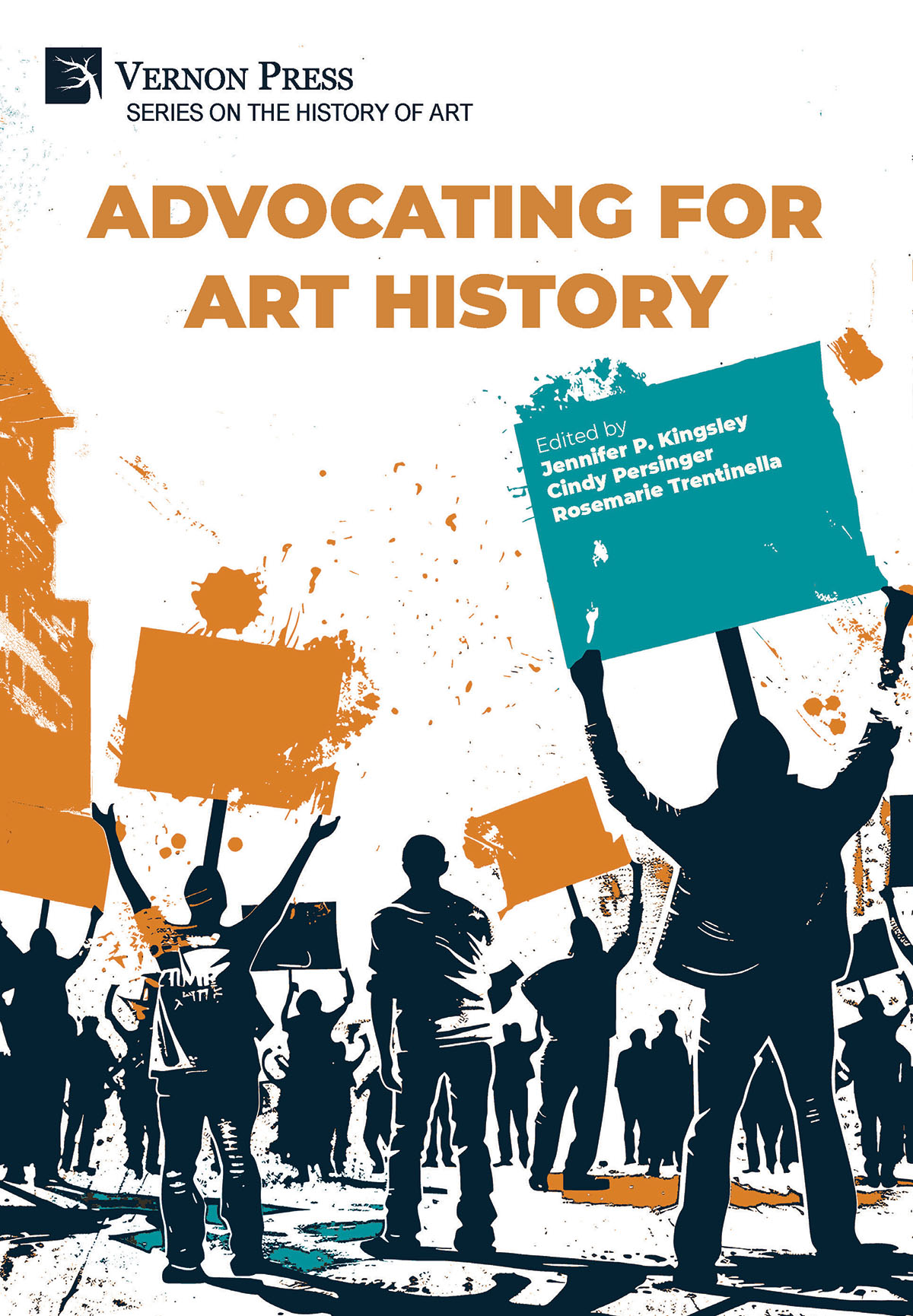
At a time when the most enlightened of recent Presidents questioned the usefulness of art history as a subject choice, it is exciting to see a group of early and mid-career art historians painting a striking and nuanced picture that shows why art history is essential in contemporary curricula. Inspired by a love of art and totally committed to their profession, while being hard-headed about realities on the ground and in the social imaginary, they make a clear case for the value of art history these days. They spell out the practicalities of pursuing their vocation at a range of institutions, from R-1 universities to local colleges, with vivid examples of successes and failures, and loads of useful advice. With advocates such as these, art history is in good hands. Join them!
Terry Smith
Slade Professor of Fine Arts, University of Cambridge, 2025-2026
Andrew W. Mellon Emeritus Professor of Contemporary Art History and Theory, University of Pittsburgh
Emeritus Professor of Art History, University of Sydney
Professor at Large, The Africa Institute,
Global Studies University, Sharjah
Professor in the Division of Philosophy, Art, and Critical Thought, European Graduate School, Saas-Fee
Faculty at Large, Curatorial Program, School of Visual Arts, New York
This collection of thoughtful essays and case studies makes a strong argument for art history’s relevance in difficult times. Attentively engaged with the realities of the discipline—especially its relationships to its enabling institutions and to the broader political climate—the contributing authors bring perspicacious insight from a welcome range of viewpoints concerning why art history counts, how to advocate for it, and where best to act on its behalf. Editors Jennifer P. Kingsley, Cindy Persinger, and Rosemarie Trentinella are to be commended for assembling a volume that is as unafraid to ask tough questions about the status of the discipline as it is to proffer honest answers that locate its value both in and out of the academy, occasionally in surprising places. Of special note, the book avoids abstractions and platitudes about the fraught state of higher education and current politics by diving into the lived intricacies of art history’s practice and enactment—as research, as teaching, and otherwise—without forfeiting theoretical acumen or losing sight of fundamental values. An invigorating and truly helpful text for those who care about art history’s role in the world.
Robert Bailey
School of Visual Arts
University of Oklahoma
Original and timely, "Advocating for Art History" is the first organized effort or call to collective action for the vital role of art history at a time when the discipline and the humanities, more broadly, are under increased threat in higher education. Guided by an understanding of the specific institutional structures and dynamics that shape each case study, the volume brings together a wide range of perspectives and methodologies. Contributors share both successful and failed endeavors, while imparting locally responsive advocacy strategies and cultivating belonging to a broader North American art history community.
Izabel Galliera
Department of Media, Art and Design
School of Humanities and Social Sciences
University of Missouri – Kansas City
Cindy Persinger, Jennifer Kingsley and Rose Trentinella’s “Advocating for Art History” is a timely publication. The project began in response to the financial pressures that emerged in institutions of higher education because of the COVID-19 pandemic and delves into the ongoing and more recent challenges scholars in the field face at their home institutions. Showcasing a series of effective case studies, the text argues for collective action in support of the discipline of art history rather than continuing to put our energies into institutionally specific advocacy work through the collection and publication of empirical data. “Advocating for Art History” is a must-read for any department chair or dean who oversees art history programs as well as all art historians in the field.
Carolyn Butler-Palmer
Art History & Visual Studies
University of Victoria
Discover books that expand on the themes explored in this work—titles that engage with similar questions, intersecting disciplines, and complementary perspectives to deepen understanding and broaden the conversation.
Browse all titles