Loading...
Please wait while we load the content...

Loading...
Please wait while we load the content...
Stay informed about our latest publications, calls for proposals, author news, events, and special announcements.
Join our community of scholars, librarians, authors, and readers and receive the latest updates from Vernon Press directly in your inbox.



Availability
In stock
ISBN
9781622734856
Edition
1
Publication Date
January 31, 2019
Physical Size
236mmx160mm
Number of Pages
250
Currency
Quantity
Here is a book in which philosophy is done while introducing the reader into the under-investigated philosophy of Max Scheler (1874-1928). Edward Hackett proves the relevance of Scheler’s work on persons and values for moral philosophy, connecting it with that of William James (1842-1910). He clarifies the necessity of combining phenomenology and pragmatics against the background of the works of Heidegger, Husserl, and other relevant thinkers. The author argues that pragmatism and phenomenology are to be combined into a ‘participatory realism’, which can answer metaphysical questions that persist in (meta-)ethics from the days of G.E. Moore until now. Hackett thus creates – convincingly – a discourse that moves beyond the continental-analytic divide, to capture issues concerning values and persons in both traditions. As the persistence of this divide is halting progress in philosophy, 'Persons and Values in Pragmatic Phenomenology' is groundbreaking. It makes analytical-ethical concerns comprehensible to continental-minded readers and vice versa. Its philosophical analysis of the James–Scheler connection was also much-needed. Persons and Values invites for more work to be done on the central issue of religion in (moral) philosophy. Its characterization of ‘spiritual feelings’ as disembodied and the corresponding interpretation of the Catholicism that influenced Scheler should be further discussed. Also, the focus on ‘moral metaphysics’ in Hackett’s study has the effect that the sociological, cultural and historical analyses in Scheler’s philosophy of values are neglected. But this only makes further research into this compelling philosopher’s work more urgent.
Angela Roothaan, Vrije Universiteit Amsterdam, Netherlands
Discover books that expand on the themes explored in this work—titles that engage with similar questions, intersecting disciplines, and complementary perspectives to deepen understanding and broaden the conversation.
Browse all titles
Simon Smith and James Beauregard (Eds.)
View more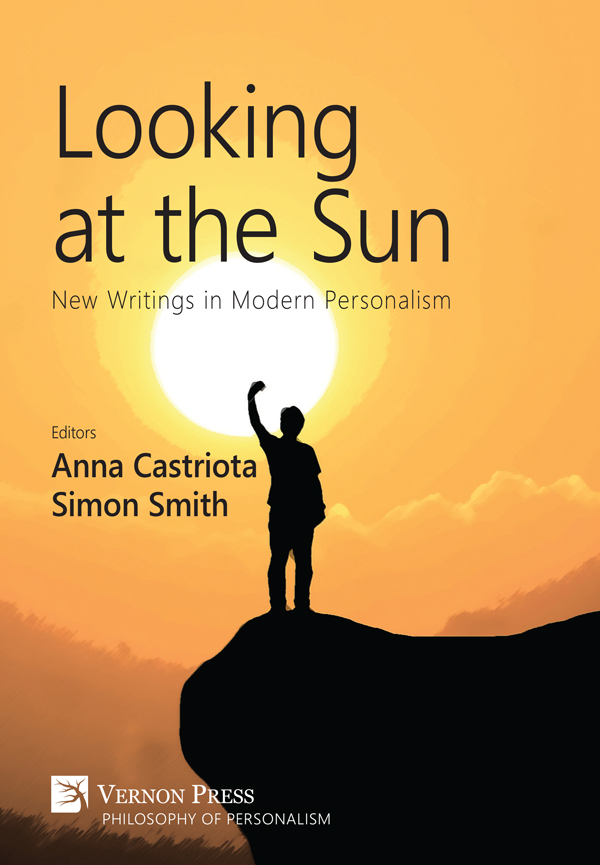
Simon Smith and Anna Castriota (Eds.)
View more