Loading...
Please wait while we load the content...

Loading...
Please wait while we load the content...
Loading...
Please wait while we load the content...
Explore peer - reviewed titles across the humanities and social sciences - rigorous research, fresh perspectives, and scholarship that inspires dialogue across disciplines.
Stay informed about our latest publications, calls for proposals, author news, events, and special announcements.
Join our community of scholars, librarians, authors, and readers and receive the latest updates from Vernon Press directly in your inbox.
From special discounts and global distribution partners to downloadable catalogs, flyers, and high-resolution covers, we make it easy to enrich your library’s collection. Access bibliographic data, explore subject-specific listings, and stay updated on forthcoming titles.
Become part of our librarian network and access dedicated tools, discounts, and resources to support collection development and promote new titles to your patrons.

Partner with Vernon Press to provide your customers with high-quality, peer-reviewed scholarship. We offer flexible ordering options, reseller agreements, and promotional materials to support your sales and outreach.

Vernon Press provides dedicated resources to help instructors adopt our books for courses and to support students with affordable access to high-quality scholarship. From desk and examination copies to tailored student editions, we aim to make our titles accessible in the classroom.
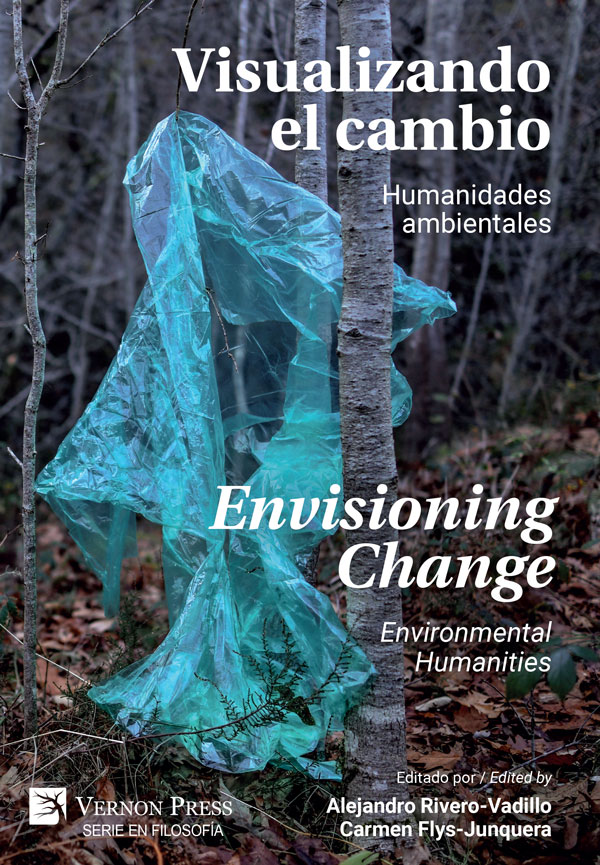
Edited by: Carmen Flys-Junquera (University of Alcalá, Spain; Instituto Franklin, Spain) and Alejandro Rivero-Vadillo (University of Alcalá, Spain; Instituto Franklin, Spain)
The 21st century has been described by many environmental scholars as the one in which humanity will need to face its greatest challenge. The diverse ramifications of the climatic crisis are perhaps the most evident proof of this. This dual-lingual multiauthor volume reflects different perspectives of envisioning an eco-social change towards a more sustainable and just society. Musings on the philosophical implications of utopias, ecofeminism, biopolitics, and biomimicry come together with photography and participatory documentaries. "Envisioning Change: Environmental Humanities" opens with an essay from one of Spain’s foremost essayists on environmental philosophy, Jorge Riechmann. Literary analyses run from classic myths to oral traditions, including references to frequently neglected traditions such as Bhutan or Croatia, in addition to Spain and the United Kingdom. Rather than emulate theoretical and overarching studies, as several of the recent books on environmental humanities, this volume has many original features, including the abundant references to myths and chapters on eco-translation. This volume reflects a wide variety of approaches and particularly highlights the search of younger scholars for new approaches to envision a better world. It would hold appeal for scholars, researchers and teachers interested in the environmental humanities from either a philosophical, literary or artistic perspective. Moreover, environmentalists, activists, artists, and local politicians may also be interested in how the humanities can contribute to the wider environmental cause. El siglo XXI ha sido descrito por muchos académicos medioambientales como el siglo en el que la humanidad tendrá que enfrentarse a su mayor reto, y la prueba más evidente quizás sean las ramificaciones de la crisis climática. Esta colección bilingüe refleja perspectivas diferentes de visualizar un cambio eco-social hacia una sociedad más justa y sostenible. Reflexiones sobre las inferencias filosóficas de las utopías, el ecofeminismo, la biopolítica y la biomímesis se juntan con fotografía y documentales participativos. “Visualizando el cambio: Humanidades ambientales” comienza con un texto escrito por uno los ensayistas sobre filosofía ambiental más importantes de España, Jorge Reichmann. Los análisis literarios van desde mitos clásicos a tradiciones orales, incluyendo referencias a tradiciones frecuentemente olvidadas como las de Bután o Croacia. En lugar de imitar estudios teóricos y globales como han hecho libros recientes que versan sobre humanidades ambientales, esta colección tiene varias características originales, que comprenden abundantes referencias a mitos y capítulos sobre eco-traducción. Esta colección refleja una amplia variedad de enfoques; destaca la búsqueda de nuevas perspectivas para visualizar un mundo mejor por jóvenes académicos, y será de interés para académicos, investigadores y profesores interesados en las humanidades ambientales desde puntos de vista filosóficos, literarios o artísticos. Además, ecologistas, activistas, artistas y políticos locales pueden encontrar información sobre cómo las humanidades pueden contribuir a la causa medioambiental.
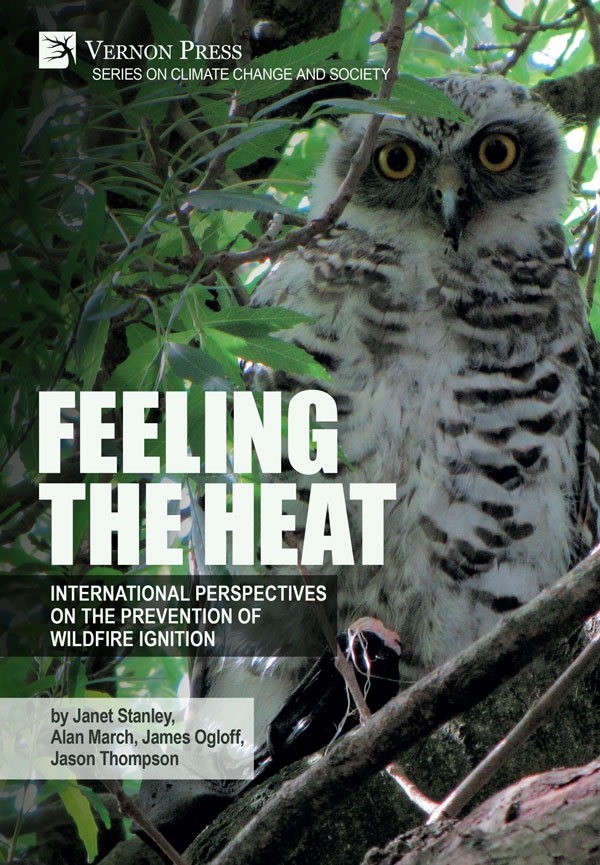
By: Alan March (University of Melbourne), Janet Stanley (University of Melbourne), Jason Thompson (University of Melbourne), and James Ogloff (Swinburne University of Technology)
| Highly recommended by CHOICE, July 2021 Vol. 58 No. 11 In the context of climate change, world population growth and crashing ecological systems, wildfire is often a catastrophic and traumatic event. Its impact can include loss of life, life-changing injuries, long-term psychological stress; increases in domestic violence; destruction of properties, business and livestock; long-term housing insecurity; increased insurance premiums, fire-fighting, legal and health costs; as well as significant changes and species losses in the natural environment. In Australia, an average of 4,500 wildfires occur weekly. Yet how to prevent these wildfires, 85% of which are caused by human activities, has received extraordinarily little attention. The current approach to the prevention of arson can be summarised as small in scale, uncoordinated and rarely evaluated. ‘Feeling the heat: International perspectives on the prevention of wildfire ignition’ is the culmination of over a decade of research into wildfires and arson; taking an interdisciplinary approach to comprehensively understand the topic. This book reviews current international knowledge and presents new findings on political, spatial, psychological, socio-ecological and socio-economic risk factors. It argues that if we are to reverse the increasing occurrence and severity of wildfires, all prevention approaches must be utilised, broadening from heavy reliance on environmental modification. Such prevention measures range from the critical importance of reducing greenhouse gases to addressing the psychological and socio-economic drivers of arson. In particular, it calls for a coordinated and collaborative approach across sectors, including place-based, state and country coordination, as well as an international body. It will hold appeal for researchers and students from a range of disciplines and interests, government planners and policymakers, emergency services, counsellors and NGOs, and those in agriculture and forestry.

By: Francesco Tonucci (Institute of Cognitive Sciences and Technologies of the National Research Council, Italy)
The city, born to be a place of meeting and exchange, has for several decades taken as a default model the strong citizen, man, adult and worker, thereby transforming it into a hostile space for the weakest: the elderly, the disabled, the poor and the children. The automobile, the toy of choice for the privileged citizen, is also taken to be the principal 'citizen' of the city, thus endangering the health, aesthetics and mobility of the rest of us. This book proposes a new philosophy of city governance that takes children as the default citizens, with the confidence that a city sensitive to the needs of childhood will be healthier for everybody. This work recovers elements of the 1989 Convention of the Rights of the Child that recognize the full citizenship of children to suggest two principle axioms for optimal city design: the participation of children in city governance and the restitution of their autonomy, which allows them to stay with their friends and play freely. Boys and girls, in this way, represent all those excluded from decisions and power. This book is primarily written for politicians and city managers so that they can take on board the ideas within. Yet it is also important for teachers and parents so that they can respect the rights provided in the convention. City of Children should be made available to students on teacher-training courses, and also to the children who are the book’s true protagonists. At present, more than two hundred cities in Spain, Italy, Argentina, Uruguay, Colombia, Peru, Chile, Mexico, Dominican Republic, Brazil and Costa Rica have joined this project. This book is a translation of “La città dei bambini” and was translated as part of the Bridging Language and Scholarship initiative. The English edition by Vernon Press follows previous editions of this important work in Italian and the four languages of the Spanish nation (Galego, Basque, Catalan and Castilian), French and Portuguese to make available for the first time this important work to a broader international audience.
By: Anelí Bongers (Universidad de Málaga, Spain), Trinidad Gómez (Universidad de Málaga, Spain), and José Luis Torres Chacon (Universidad de Málaga, Spain)
This book presents an introduction to computational macroeconomics, using a new approach to the study of dynamic macroeconomic models. It solves a variety of models in discrete time numerically, using a Microsoft Excel spreadsheet as a computer tool. The solved models include dynamic macroeconomic models with rational expectations, both non-microfounded and microfounded, constituting a novel approach that facilitates the learning and use of dynamic general equilibrium models, which have now become the principal tool for macroeconomic analysis. Spreadsheets are widely known and relatively easy to use, meaning that the computer skills needed to work with dynamic general equilibrium models are affordable for undergraduate students in Advanced Macroeconomics courses.
Edited by: Gregory L. Thompson (Brigham Young University) and Scott M. Alvord (Brigham Young University)
This edited volume provides state of the art research on developing areas of Spanish in contact with other languages. This manuscript is unique in its broad yet coherent approach to the study of Spanish in bilingual contexts by investigating current issues in the field through well-designed research and innovative analyses. In addition, this book concludes with research on how languages in contact are reflected in individuals in educational settings as well as insights on how to teach bilinguals raised in contact with English and Spanish. This manuscript is divided into three major themes that focus on the overall issues of Spanish in bilingual contexts: 1. The first section, titled "Language and Identity," is composed of four chapters that focus on the connection between language and identity in unique settings. 2. The second section of the manuscript is titled "Language and Dialectal Contact" and is composed of six chapters that analyze the dialectal and linguistic changes in languages in contact in a variety of settings. 3. The final section is titled "Language in Educational Settings" and consists of four chapters with a focus on heritage speakers and second language students of Spanish in different classroom settings as well as abroad. This volume contributes original research in these areas in a way so as to fill valuable gaps in the current knowledge in the field especially in the innovative ways of approaching areas such as teaching heritage learners, understanding diachronic and synchronic dialectal and linguistic changes as well as innovations in language use, and how language contributes to the formation of identity.
By: Anelí Bongers (Universidad de Málaga, Spain), Trinidad Gómez (Universidad de Málaga, Spain), and José Luis Torres Chacon (Universidad de Málaga, Spain)
Este libro presenta una introducción a la macroeconomía computacional, utilizando un nuevo enfoque para el estudio de los modelos macroeconómicos dinámicos. Para ello resolveremos numéricamente una gran variedad de modelos en tiempo discreto, utilizando como herramienta informática una hoja de cálculo; en particular, Excel de Microsoft. Los modelos resueltos incluyen tanto modelos macroeconómicos dinámicos con expectativas racionales no microfundamentados, como modelos microfundamentados, constituyendo un enfoque que facilita el aprendizaje y uso de los modelos de equilibrio general dinámico, los cuales se han convertido en la principal herramienta para el análisis macroeconómico en la actualidad. Las hojas de cálculo son ampliamente conocidas y relativamente fáciles de usar, lo que supone que los conocimientos informáticos necesarios para poder trabajar con modelos de equilibrio general dinámico son asequibles para alumnos de grado.
By: Tsion Avital (Holon Institute of Technology, Israel)
En Arte Versus No- Arte: Arte Fuera de la Mente, Tsion Avital plantea la pregunta, ¿Es el arte moderno realmente arte? Él argumenta que todo el arte no-representacional que se ha producido en el siglo XX no ha sido arte, sino más bien la ruina de la tradición visual que le reemplazó. El arte moderno ha prosperado sobre la total confusión entre el arte y el seudo-arte y la inhabilidad de muchos de distinguir entre ambos. Tal como lo demuestra Avital, el arte moderno ha servido como una etapa intermedia entre el arte del pasado y el arte del futuro. Este libro propone una nueva forma de definir el arte, anclando la naturaleza del arte en la naturaleza de la mente, resolviendo así uno de los mayores problemas del arte y de la estética para los cuales hasta ahora no se ha dado aún una solución. La definición novedosa del arte propuesta en este libro, pavimenta el camino hacia un nuevo y promisorio paradigma para el futuro del arte.