Loading...
Please wait while we load the content...

Loading...
Please wait while we load the content...
Loading...
Please wait while we load the content...
Explore peer - reviewed titles across the humanities and social sciences - rigorous research, fresh perspectives, and scholarship that inspires dialogue across disciplines.
Stay informed about our latest publications, calls for proposals, author news, events, and special announcements.
Join our community of scholars, librarians, authors, and readers and receive the latest updates from Vernon Press directly in your inbox.

From special discounts and global distribution partners to downloadable catalogs, flyers, and high-resolution covers, we make it easy to enrich your library’s collection. Access bibliographic data, explore subject-specific listings, and stay updated on forthcoming titles.
Become part of our librarian network and access dedicated tools, discounts, and resources to support collection development and promote new titles to your patrons.

Partner with Vernon Press to provide your customers with high-quality, peer-reviewed scholarship. We offer flexible ordering options, reseller agreements, and promotional materials to support your sales and outreach.

Vernon Press provides dedicated resources to help instructors adopt our books for courses and to support students with affordable access to high-quality scholarship. From desk and examination copies to tailored student editions, we aim to make our titles accessible in the classroom.
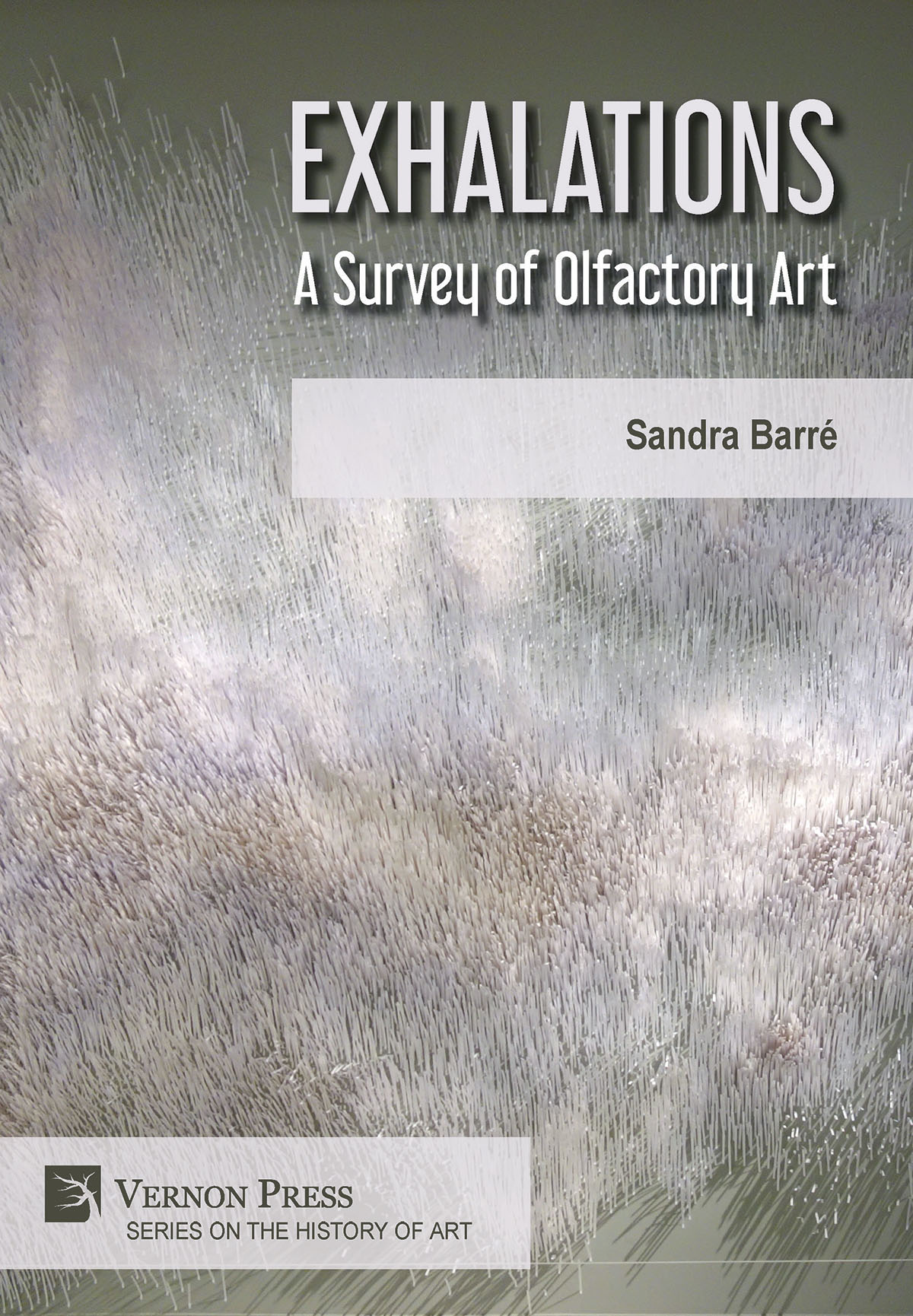
A Survey of Olfactory Art
By: Sandra Barré (Université Paris 1 Panthéon-Sorbonne, France)
What if art history were written through the nose? 'Exhalations: A Survey of Olfactory Art' is the first comprehensive English-language book to trace a century of olfactory practices in art, from the Futurists’ early experiments with scent to the bacterial installations of Anicka Yi, from Marcel Duchamp’s sealed vial of Parisian air to the ecological interventions of Peter de Cupere. Through the analysis of more than one hundred works, Sandra Barré demonstrates the extent to which smell has shaped modern and contemporary artistic practice, despite its persistent marginalization within criticism and institutions. Neither a medium nor a unified movement, olfactory art spans from Dada, Arte Povera, Fluxus, body art, Land Art, feminist practices, to postcolonial critique. Its concerns are equally wide-ranging: memory, desire, decay, gender, and ecological crisis. In doing so, it unsettles the ocularcentrism that has dominated Western art history since the Enlightenment, the assumption that vision constitutes the primary mode of aesthetic knowledge. Smell operates differently. It enters the body immediately, resisting stable interpretation and singular meaning. Two individuals may encounter the same smell and experience entirely different realities, neither of which can be fully privileged over the other. Drawing on archival research, conversations with artists, and years of curatorial practice, 'Exhalations: A Survey of Olfactory Art' is both a historical survey and a history of encounters. The book advances a compelling and overdue argument: that smell has always been present within artistic practice, that it has always carried meaning, and that attending to it transforms our understanding of art history itself. Originally published in French in 2021 by 'Les Éditions de la Lettre Volée', 'Exhalations: A Survey of Olfactory Art' is translated into English by artist Emilie McDermott.
History & Impact
Edited by: Ellen C. Schwartz (Eastern Michigan University)
No description available
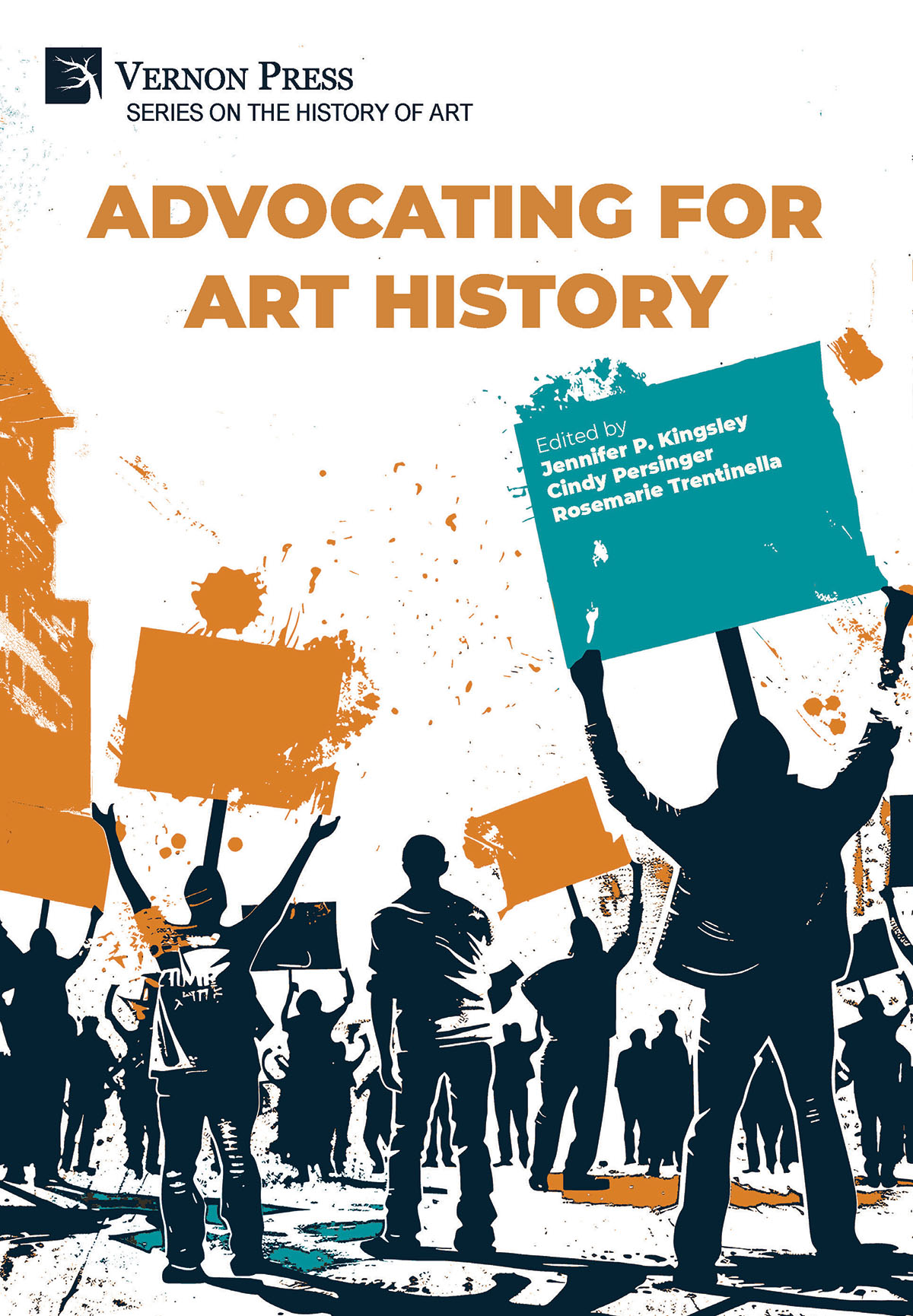
Edited by: Jennifer P. Kingsley (Johns Hopkins University), Cindy Persinger (Pennsylvania Western University), and Rosemarie Trentinella (The University of Tampa)
At a moment when various uncertainties surround higher education, 'Advocating for Art History' offers theory-informed investigations, case studies, and actionable strategies to empower art historians to assess their individual policy environments and institutional contexts, recognize their spheres of influence, and develop strategic approaches to advocacy that leverage their expertise as educators and researchers. Edited by Jennifer P. Kingsley, Cindy Persinger, and Rosemarie Trentinella, the volume draws on its contributors’ decades of experience across diverse types of public and private institutions—from R-1 universities to liberal arts colleges as well as a medical school and military academy. Chapters share successes and failures, strategies for securing and maintaining institutional support, analysis of art history’s distinctive contributions to skill and professional development as well as of the discipline’s broader value as a social good. Together, the chapters present a nuanced picture of the current moment, in which art history’s perceived vulnerabilities intersect with (and serve) broader narratives about the humanities and higher education’s supposed failures—complexities the book examines and largely counters. Capturing a broad spectrum of contemporary art historical advocacy, 'Advocating for Art History' argues that the discipline’s future depends on art historians actively participating in shaping their institutions’ priorities, making their work visible across a variety of stakeholders both within and beyond the academy, and building collective momentum. Above all, it aims to spark reflection and essential conversations about the discipline’s future, and champions the potential for positive action. It is an essential resource for anyone invested in sustaining the humanities in higher education.
A Historical & Philosophical Appraisal
By: M. Andrew Holowchak
The Declaration of Independence is alive, because its sentences are crafted with elegance and concision—and the Congress much contributed to its concision—and because the author, not just the drafter, of the document captured things commonly known, yet profound, concerning human nature and human wellbeing. The Declaration of Independence, thus, is not just a proclamation to the world, of Americans’ independence and of the reasons for it, but it is also, and most singularly, a moral document that grounds a rich and robust liberal political philosophy. The bedrock of that political philosophy, argues Holowchak, is human equality, not human liberty.
Martyrs, Narratives and Social Change in 20th Century Latin America
Edited by: Marisol Lopez-Menendez (Universidad Iberoamericana-Mexico City, Instituto Nacional de Antropologia e Historia-DEH, México)
In a century stained by revolution, dictatorship, and neoliberal violence, ordinary men and women became extraordinary witnesses—dying so that others might live free. From the bullet-riddled Cristero battlefields of Mexico to the bloodied streets where Óscar Romero fell, from Chico Mendes’s Amazonian stand to the unmarked graves of Chile’s forgotten priests and the deadly migrant trails of today’s Via Crucis—this collection rewrites the meaning of martyrdom for our time. Edited by Marisol Lopez-Menendez, 'Dying for the Dawn' brings together leading scholars to reveal how martyrial stories are not relics of the past but living weapons: shaping politics, igniting social movements, redefining gender and memory, and challenging the very border between faith and resistance. Here you’ll meet worker-martyrs, children saints, environmental prophets, disappeared priests, and the “neo-liberal martyrs” dying at the hands of borders and cartels—figures whose deaths still fuel protests, pilgrimages, and demands for justice across Latin America and its diaspora. Blending riveting history, sharp sociology, and unflinching cultural analysis, this is the book that finally connects the dots between ancient sacrifice and today’s struggles for human rights, migration justice, and democratic dignity. Perfect for readers of liberation theology, Latin American history, religious studies, and anyone who believes that courage can outlast bullets.
Navigating Identity, Loyalty, and Resistance in Puerto Rico
By: Denise Zubizarreta
'Colonial Stockholm Syndrome: Navigating Identity, Loyalty, and Resistance in Puerto Rico” by Denise Zubizarreta offers a critical examination of Puerto Rico’s enduring colonial legacy under both Spanish and American rule. This book explores the profound psychological and sociopolitical effects of centuries of colonization on Puerto Rican identity, illuminating how the island’s people have been conditioned to navigate complex loyalties and resistances in the face of systemic oppression. Through the innovative framework of Colonial Stockholm Syndrome, Zubizarreta analyzes how Puerto Ricans have historically reconciled their dual loyalties—first to the Spanish Empire and later to the United States—while confronting the ongoing challenges of inequality and dependency. The narrative delves into pivotal moments in Puerto Rican history, from the Spanish colonial era and the struggle for autonomy, to the American occupation beginning in 1898, and the current debates surrounding statehood and independence. Positioned within the broader discourse on colonialism and postcolonial studies, this work stands out for its unique approach to understanding Puerto Rico’s complex colonial history. By integrating historical analysis, personal narratives, and critical theory, Zubizarreta provides a comprehensive and accessible exploration of how colonial power dynamics continue to shape Puerto Rico’s national identity and political future. This book is an invaluable resource for scholars, students, and professionals in Latin American and Caribbean studies, political science, history, and cultural studies. It serves as a key reference for understanding the psychological and cultural dimensions of colonization, making it suitable for classroom adoption, academic research, and broader discussions on decolonization, identity, and resistance. 'Colonial Stockholm Syndrome: Navigating Identity, Loyalty, and Resistance in Puerto Rico' is an essential contribution to the literature on colonialism and its enduring impacts, offering new insights into one of the oldest colonies in the modern world.
Femicide and migration in early 20th century Barbados - Brazil
By: Elaine P. Rocha (The University of the West Indies, Cave Hill Campus, Barbados)
'Millie Gone to Brazil' is the title of one of the most popular folk songs in Barbados. Written in the early 20th century by an unknown author, the song has travelled with Barbadian migrants to Cuba, the United States of America, Canada and England. It tells the story of a young woman – Millie – killed by her lover, who claimed that she had left Barbados to go to Brazil. This book focuses on the killings of Millicent Gittens, murdered in Barbados in 1916 and of Christine Minggs, a Barbadian immigrant murdered in Brazil in 1924. As a backdrop to those crimes, it depicts the poverty and marginality among Black populations during the post-abolition period in Barbados and Brazil, emphasizing the low status of black women and their vulnerabilities. To understand the vulnerability of Black Barbadian women. At the turn of the 20th century, economic, social and political exclusion drove thousands of people to emigrate from the small islands of the Caribbean in search of a better life. Black immigrants, although much necessary labor force, faced discrimination and limited opportunities to improve their lives, for women, life was harder. Who speaks on behalf of the dead women? In criminal processes, they are the victim, the corpse, not a person. 'Millie Gone to Brazil' sheds some light on the anonymous lives of Black people from lower classes in Barbados and examines a not well-known migration path of West Indians to the rainforest region of Brazil. Women and men struggled to make a life in Barbados and in Brazil, working, loving, building families, facing conflicts. Some survived, some perished. Scraps of their stories were registered in the pages of newspapers, in police reports, in criminal processes, and in popular songs. Some of those stories are narrated in this book.
An Englishman in the Confederate States Navy
By: Robert Thorp
Captain John Low (1836 -1906) earned his place in history through four years of service in the Confederate States Navy (1861-1865). He served on CSS 'Fingal', 'Florida', and 'Alabama', and commanded CSS 'Tuscaloosa' and 'Ajax'. However, it would be wrong to define the man simply by his Civil War record. His seventy-year life was full of adventures, triumphs, tragedies, and altruistic philanthropy. He led a good life and was known as a good man, respected and revered by all who knew him. This book contains a detailed account of Captain Low’s whole life from cradle to grave. Using primary source documents, not available to earlier biographers, the author delves into John Low’s life to a much greater depth than any preceding work has been able to achieve. For the first time ever, his genealogy is fully divulged, allowing previously misunderstood relationships to be challenged and corrected, and the roles of his previously unknown siblings to be fully explored. Description of his military service is based on his personal log books and the eye witness accounts of his contemporaries. Along the way, the book sheds new perspectives on the roles played by his relations, Charles Green and Andrew Low of Savannah, in facilitating purchase of CSS 'Fingal'; it unmasks the mysterious Thomas Byrne, Louisiana’s secret agent, and explains the hitherto unrecognised role of Liverpool’s Isaac, Low & Co. The captain’s post-war life, firstly as a manager of Lancashire cotton mills, and latterly as a successful Liverpool businessman, is similarly illuminated with many previously unwritten facts. Anyone with an interest in Civil War history will find a wealth of new and unique material between these covers. Those who just enjoy a good biography should also be delighted.
Volume 1
Edited by: Katy Deepwell
It could be said all new research contains a “re-evaluation” of past work but these two volumes attempt a re-evaluation of feminist research in contemporary art as it has developed over the last 50 years in relation to different local/global dynamics and/or about certain artists, artworks or exhibitions. Feminism(s) aim was to interrogate existing histories and provide significant corrections to what constitutes “history”. The two volumes explore some of the ways feminism(s)’ challenges have changed museums’ curatorial practices, critical writing and art history and how feminism itself has been transformed over time and its presence in many locations. Feminism’s absence from the stories told today about the recent past and present of contemporary art represents a starting point for these essays to explore the different strategies that have been attempted in cultural and political terms and to offer fresh assessments. Their re-evaluation of artists, artworks and exhibitions goes beyond questions of reputation or recognition, to embrace questions about identifying issues in feminist research, engaging in collective work and re-examining the personal in relation to politics/aesthetics. These volumes include different voices and perspectives on feminism and contemporary art from many parts of the world by academics, critics, artists, curators and researchers. Volume 1 has three sections that each address local and transnational issues in interpretations of feminism and amongst exhibiting artists through considering local/global dynamics and/or national frameworks (section 1); feminist cultural politics within exhibitions and writing exhibition histories (section 2) and within histories of conflicts in different local/national situations (section 3). The writers come from North Macedonia, UK, Iran, USA, China, Poland, Austria, The Netherlands, Italy, Spain, Ukraine, Latin America and Latvia – and their work engages work undertaken in Japan, Thailand, France, Vietnam, Mexico, Argentina and Brazil.