Loading...
Please wait while we load the content...

Loading...
Please wait while we load the content...
Stay informed about our latest publications, calls for proposals, author news, events, and special announcements.
Join our community of scholars, librarians, authors, and readers and receive the latest updates from Vernon Press directly in your inbox.
Stay up to date with the latest from Vernon Press. Browse recent reviews, author interviews, awards, and upcoming events in our news carousel—highlighting the milestones that shape our community of authors, readers, and partners.
Review / 20 October 2026
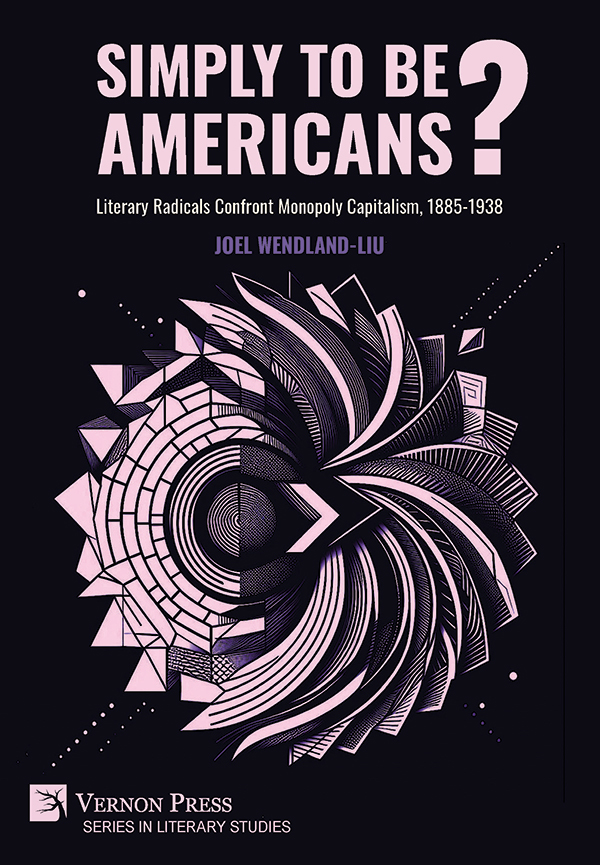
We are pleased to announce that 'Simply to Be Americans? Literary Radicals Confront Monopoly Capitalism, 1885-1938 ' by Joel Wendland-Liu has been reviewed by Elisabeth Armstrong (Smith College, Northampton, MA) in ‘Socialism and Democracy’, Vol. 40, No. 2, 174–177. (Published online on 18 Aug 2026):Joel Wendland-Liu picks up the gauntlet thrown down by W.E.B. DuBois in the ambitious cultural history, “Simply to Be Americans?”. DuBois posed the question at an NAACP dinner in 1926 of whether his audience aspired simply to be Americans or sought a more emancipatory future. DuBois answered the question with a resounding no, to be simply American on its terms would never suffice. “’America,’” as Wendland-Liu describes, “configured as a collectivity composed of white, racially pure human beings, although fraught with the presence of non-beings, substantiates, mystifies, and fetishizes racial whiteness as a metonym for the perfectible nation, state power, and ‘bad faith’ required by 100% Americanism” […] Wendland-Liu places in conversation a wide range of radical authors and their literary production between 1885 and 1938 to develop the deeper, and more difficult answer to DuBois’s question. […] Each chapter skillfully weaves together close readings of several authors on key themes of fugitivity, anti-patriarchy, anti-capitalism, anti-Black...
Review / 19 October 2026
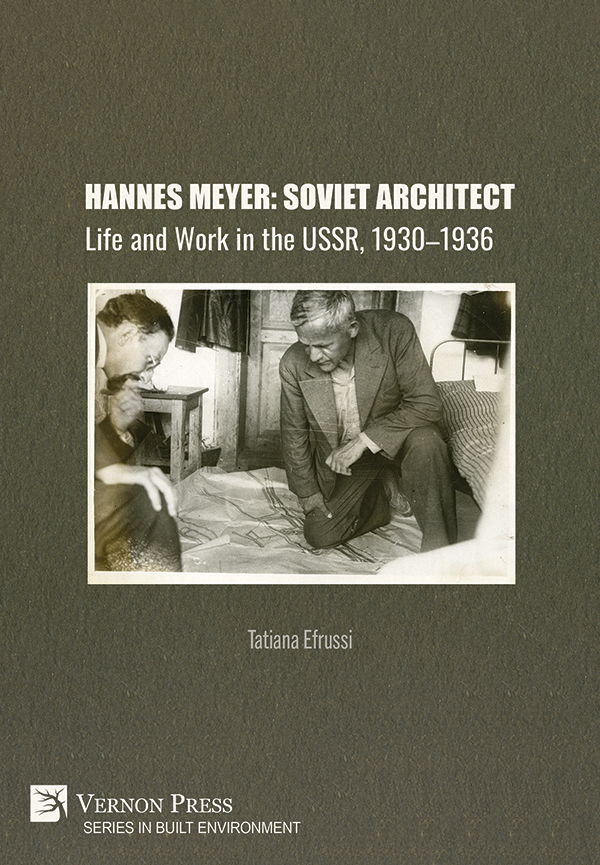
We are pleased to announce that 'Hannes Meyer: Soviet Architect. Life and Work in the USSR, 1930–1936 ' by Tatiana Efrussi has been reviewed by Daniel Talesnik (University of Bath) in 'The Russian Review', Vol. 85, No. 4.:In this outstanding book, Tatiana Efrussi follows Swiss architect Hannes Meyer through his Sovietness in the making, unfolding Meyer’s political activities and architectural and urban projects chronologically through six intense years that coincided with a tumultuous period. Meyer was a con- vert who had embraced militant Marxism after being expelled from the directorship of the Bauhaus and moved to Moscow—initially with a group of Bauhaus graduates—and we learn from his texts and letters details of his newfound belief and efforts, which involved rebranding his Bauhaus tenure as already a Marxist pedagogical project. This political allegiance would be with him for the rest of his life, even if he eventually understood that there was no place for him in the Soviet Union, as he leaves before the first show trials in 1936.[…] A necessary book about the history of foreigners, in particular architects, in the Soviet Union during the 1930s. And really, relevant for everybody with an interest in history curious about how Stalinism...
Review / 15 September 2026
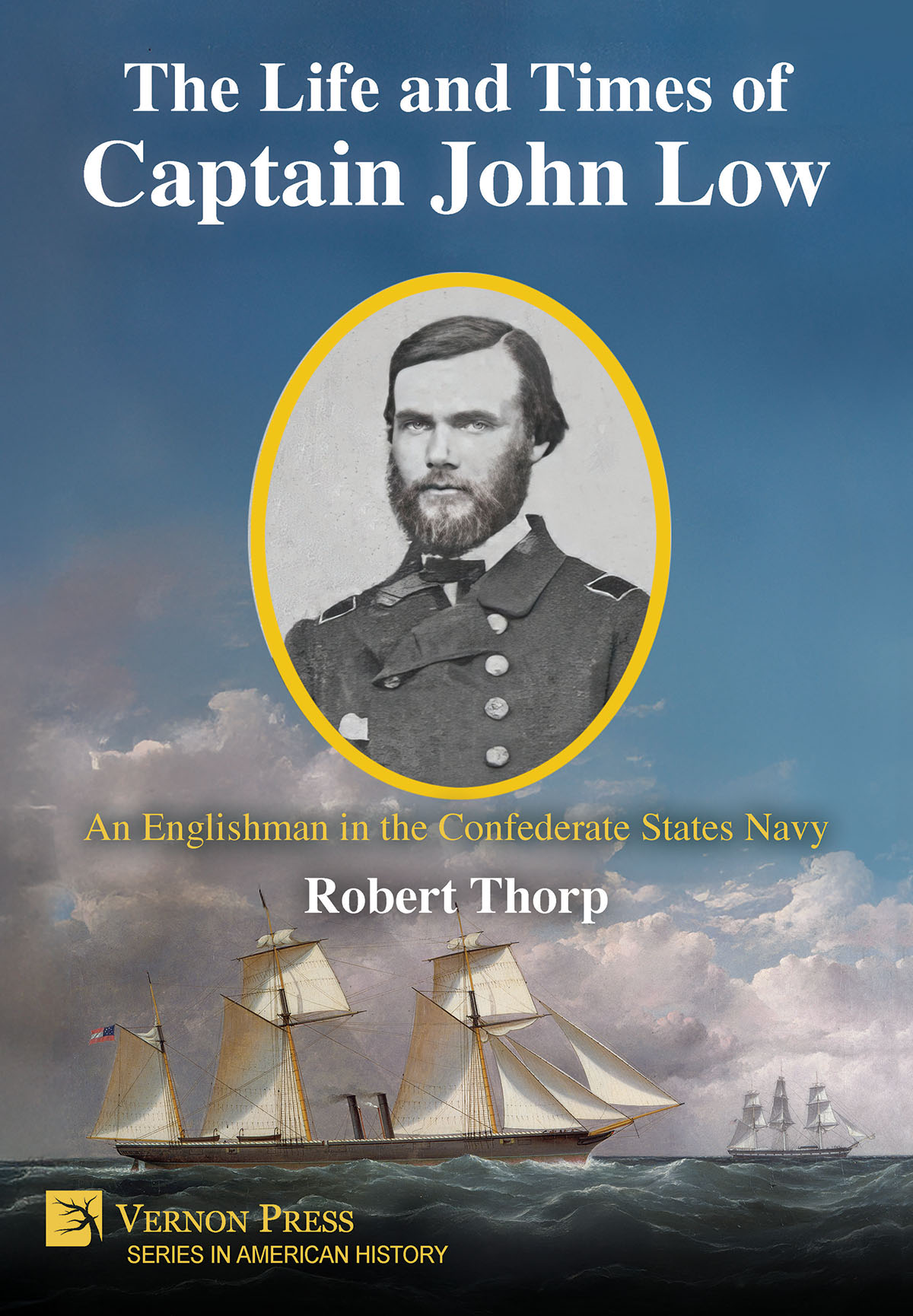
We are pleased to announce that 'The Life and Times of Captain John Low' by Robert Thorp has been reviewed by Dr. David F. Winkler in 'Emerging Civil War', Posted online on September 8, 2026:[...] Thorp has produced a very readable history of the CSN that broadens our understanding of the war at sea. For British readers, the chapters covering Low’s life in England before and after the American Civil War are an added bonus with Thorp’s insights regarding life during the industrial age. Well Done.[Extract from book review published on the platform 'Emerging Civil War', Posted online on September 8, 2026. Reviewer: Dr. David F. Winkler. https://emergingcivilwar.com/2026/09/08/book-review-the-life-and-times-of-captain-john-low-an-englishman-in-the-confederate-states-navy/ ]Find out more about the book and order your copy here: The Life and Times of Captain John LowCaptain John Low (1836 -1906) earned his place in history through four years of service in the Confederate States Navy (1861-1865). He served on CSS 'Fingal', 'Florida', and 'Alabama', and commanded CSS 'Tuscaloosa' and 'Ajax'. However, it would be wrong to define the man simply by his Civil War record. His seventy-year life was full of adventures, triumphs, tragedies, and altruistic philanthropy. He led a good life and was known as a good man,...
Review / 7 August 2026
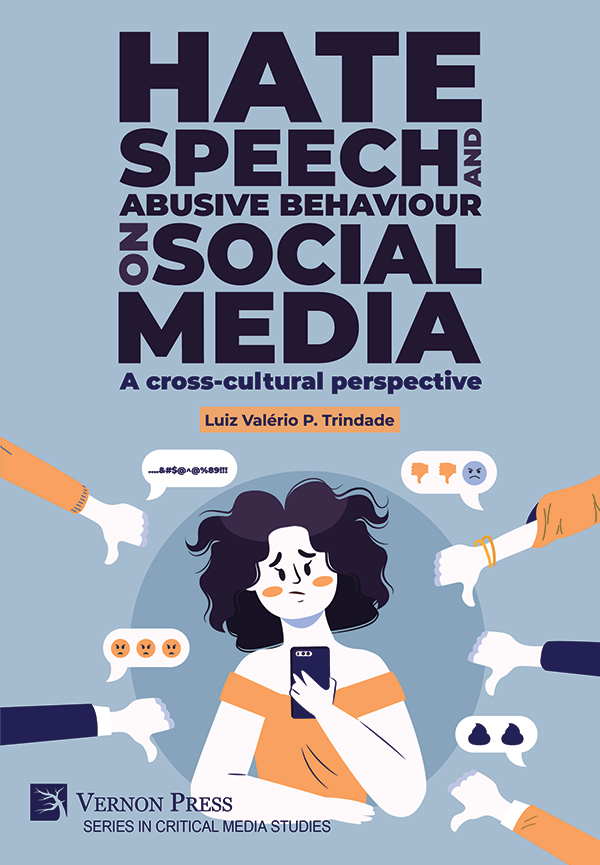
We are pleased to announce that 'Hate speech and abusive behaviour on social media: A cross-cultural perspective' by Luiz Valério P. Trindade has been reviewed by Pragyan Chaturvedi (Banaras Hindu University, India) in 'Network' (British Sociological Association) | Issue 153, Summer 2026. Page 58:Luiz Valério de Paula Trindade is an eminent scholar in critical media studies and his intellectual oeuvre analyses the intersection of digital communication, race and structural inequality. His “Hate Speech And Abusive Behaviour On Social Media: A Cross-Cultural Perspective” represents an epistemological inquiry into contemporary digital media scholarship. […][…] the book is particularly germane for policymakers, scholars, postgraduate students and digital media activists who are interested in regulatory regimes such as platform governance and media regulation. Its epistemic critique and transcultural orientation help in developing holistic understanding of how hate speech asymmetrically influences marginalised communities, thereby jeopardising their democratic values. Holistically, Trindade’s work amounts to a substantive intervention and advances a refined interpretation in critical social media studies for assessing structurally embedded phenomena.[Extracted from book review published on 'Network' (British Sociological Association) | Issue 153, Summer 2026. Page 58. Reviewer: Pragyan Chaturvedi (Banaras Hindu University, India). https://www.britsoc.co.uk/media/27245/network_summer2026.pdf]Find out more about the book and order your copy here:...
News / 22 July 2026
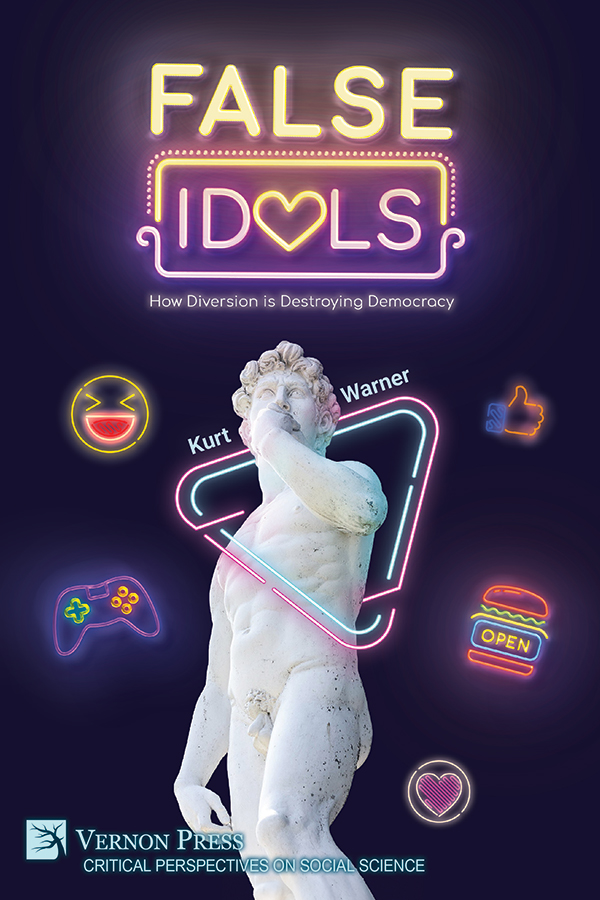
Vernon Press is pleased to announce a new episode on the New Books Network featuring Kurt Warner, author of 'False Idols: How Diversion is Destroying Democracy' (Vernon Press, 2025). Hosted by Dessy Vassileva, the episode explores the book’s timely examination of distraction, civic life, critical thinking, and the pressures currently shaping democratic responsibility. A timely discussion on diversion and democracy 'False Idols: How Diversion is Destroying Democracy' examines how modern forms of diversion shape civic life and weaken democratic responsibility. Drawing on the ancient Roman idea of “bread and circuses,” Warner explores how contemporary society is saturated with distractions that keep citizens focused on what is immediate, pleasurable, profitable, or spectacular, rather than on what is politically and socially meaningful. In the episode, Warner discusses how celebrity culture, consumerism, economic pressures, sports, politics, art, music, literature, the internet, social media, and video games can become “false idols.” These forces do not merely entertain us; they influence how we think, what we value, and how we understand our responsibilities to one another. From ancient Rome to contemporary civic life A key point of discussion is the book’s comparison between ancient Rome and the contemporary United States. Warner uses “bread and circuses”...
Review / 22 June 2026
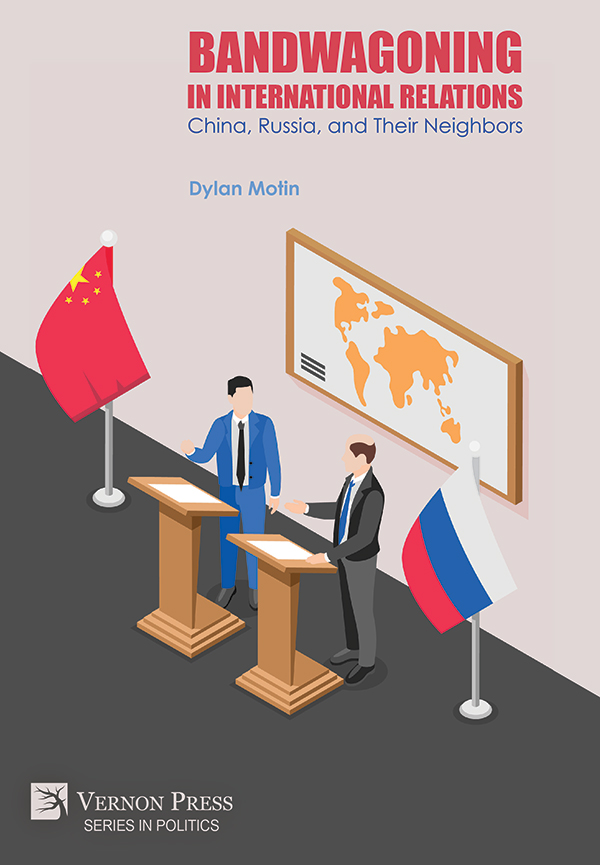
We are pleased to announce that 'Bandwagoning in International Relations: China, Russia, and Their Neighbors' by Dylan Motin (Kangwon National University, Korea) has been reviewed by Christophe Kerdodé in 'Cahiers du Comité Asie Pacifique’ (Jeunes IHEDN association (in French)), 24e Édition. P. 146:[...] En somme, le livre apporte un éclairage novateur sur le débat entre la stratégie de l’équilibre et celle du ralliement, tout en exploitant de façon originale la littérature néoréaliste existante. Il a également le mérite d’explorer des cas souvent oubliés. L’auteur aborde frontalement des enjeux de politique internationale et propose des recommandations claires pour les décideurs. Cependant, les chercheurs non réalistes et les spécialistes des États ou régions concernés risquent de rester indifférents aux généralisations et recommandations de Motin. Le débat entre l’équilibre des puissances et le bandwagoning reste bien vivant.[Extract from book review on ‘'Cahiers du Comité Asie Pacifique’ (Jeunes IHEDN association (in French)), 24e Édition. P. 146. Reviewer: Christophe Kerdodé. https://www.jeunes-ihedn.org/2026/les-cahiers-du-comite-asie-pacifique-n24-la-guerre-hors-limites/]Find out more about the book and order your copy here: Bandwagoning in International Relations: China, Russia, and Their NeighborsWhether states balance against or bandwagon with threatening great powers remains an unsolved problem for international relations theory. One school argues that military power compels minor...
News / 17 June 2026
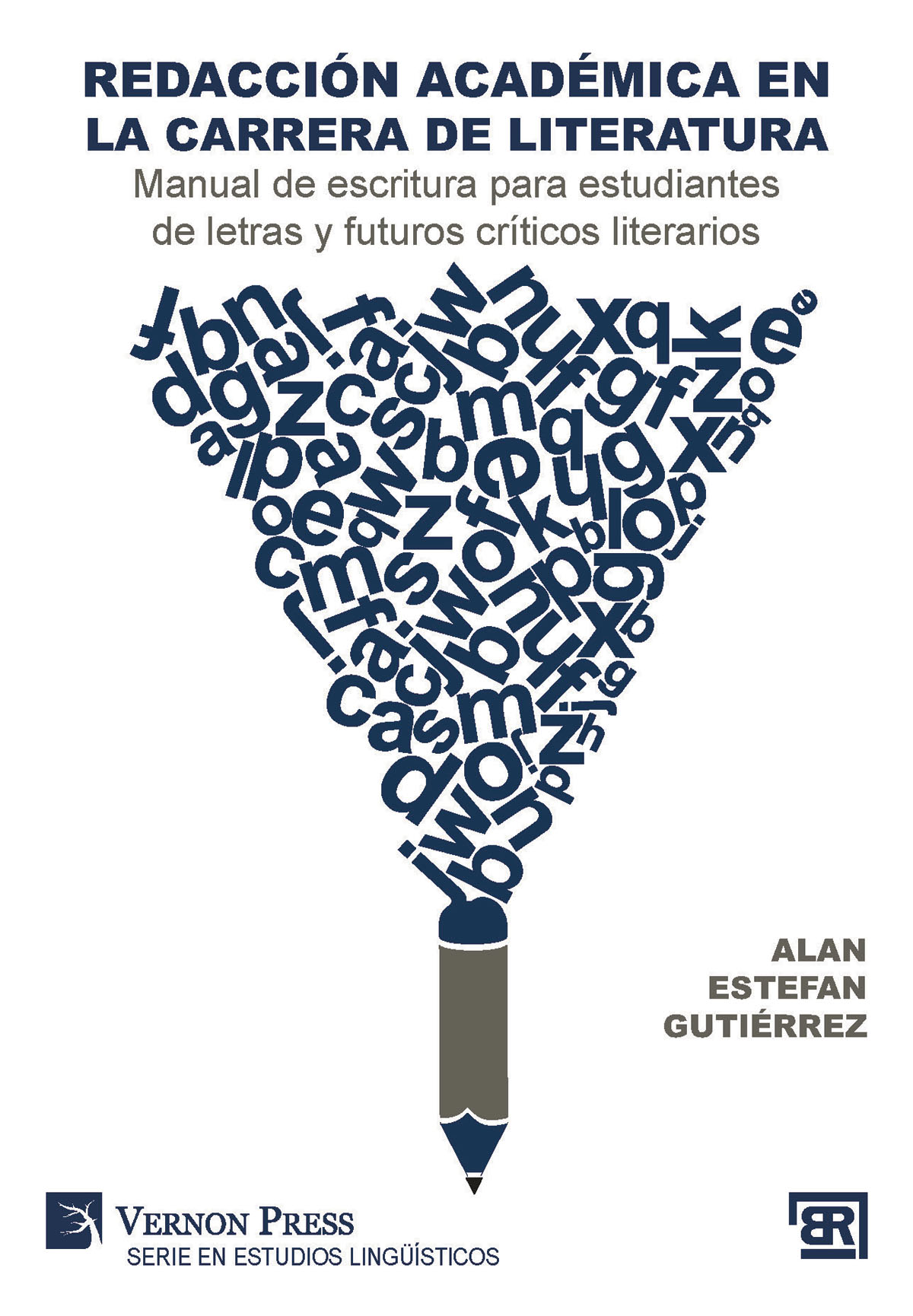
Vernon Press is pleased to share that author Alan Estefan Gutiérrez recently presented his book, Redacción académica en la carrera de literatura, at the Feria del Libro de la Frontera 2026 (FELIF) in Ciudad Juárez, Chihuahua, Mexico.Held at the Centro Cultural Paso del Norte, FELIF is one of the most important literary and cultural gatherings in northern Mexico. The 2026 edition brought together writers, publishers, scholars, cultural promoters, and readers for a rich program of book presentations, conversations, workshops, and artistic activities. Within this vibrant setting, Gutiérrez’s presentation offered an opportunity to discuss the role of academic writing in literary education and the importance of developing clear, rigorous, and reflective writing practices among students of literature.Redacción académica en la carrera de literatura addresses a central challenge in higher education: how to guide students in the production of academic texts that are not only formally correct but also intellectually meaningful. By focusing on writing within the context of literary studies, the book contributes to ongoing conversations about pedagogy, critical reading, argumentation, and the formation of students as researchers and writers.The presentation at FELIF featured the participation of Dr. Thelma García Jovita, full-time professor at the Universidad Autónoma de Ciudad Juárez (UACJ),...
Review / 9 June 2026
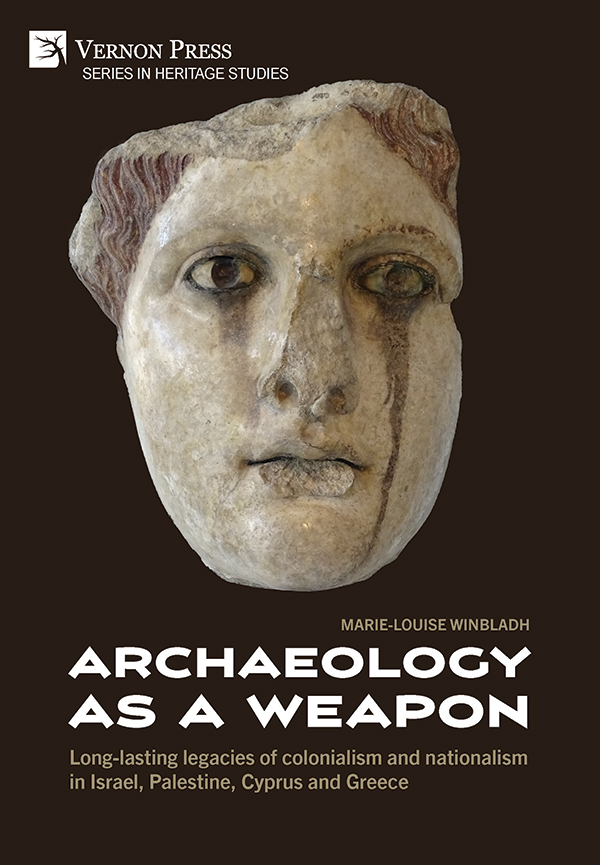
We are pleased to announce that 'Archaeology as a Weapon: Long-lasting legacies of colonialism and nationalism in Israel, Palestine, Cyprus and Greece' by Marie-Louise Winbladh has been reviewed by Yannis Hamilakis in ‘Antiquity’, 2026, Vol. 100 (411): 876–878:[…] Winbladh’s heart is in the right place, she is motivated by the desire to react to social injustices implicating past materialities, and has produced a book that contains valuable information. […][Extract from book review on ‘Antiquity’, 2026, Vol. 100 (411): 876–878. Reviewer: Yannis Hamilakis. https://doi.org/10.15184/aqy.2026.10316 ]Find out more about the book and order your copy here: Archaeology as a Weapon: Long-lasting legacies of colonialism and nationalism in Israel, Palestine, Cyprus and GreeceIn Israel, Palestine, Cyprus and Greece, the reconstruction of the past through archaeology has been used to strengthen national identity. Narratives about the past and origin myths have been constructed for political purposes. Cyprus and Palestine have both suffered from British colonialism since the early twentieth century, which has had a profound influence on their cultural heritage. Through nationalism, archaeology has been exploited by far-right movements and political parties to claim ownership of heritage and has become an efficient political tool.In Israel, archaeology and religion have been exploited to construct the...
Review / 3 June 2026
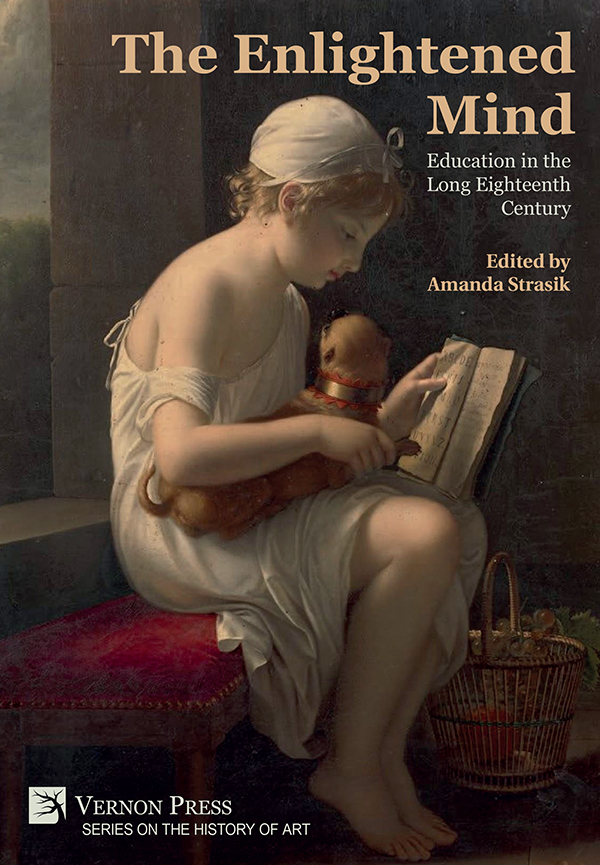
We are pleased to announce that 'The Enlightened Mind: Education in the Long Eighteenth Century' by Amanda Strasik has been reviewed by Katherine Arpen (Auburn University) in 'XVIII New Perspectives on the Eighteenth Century', Vol. 21, Summer 2024, pp. 103-105:[...] the volume covers an impressive diversity of material, including lesser-studied texts, artists, and art practices, as well as a recurring focus on women’s cultural contributions. The authors effectively demonstrate how eighteenth-century artworks and texts were shaped by period ideas while also serving as tools to extend those lessons within bourgeois and elite society. The essays included in the volume, in turn, enhance the reader’s knowledge on subjects of interest to multiple specializations, including eighteenth-century culture, art history, literature, and gender studies.[Extract from book review on 'XVIII New Perspectives on the Eighteenth Century', Vol. 21, Summer 2024, pp. 103-105. Reviewer: Katherine Arpen (Auburn University) https://www.seasecs.org/npec]Find out more about the book and order your copy here: 'The Enlightened Mind: Education in the Long Eighteenth Century'The rise of Enlightenment philosophical and scientific thought during the long eighteenth century in Europe and North America (c. 1688-1815) sparked artistic and political revolutions, reframed social, gender, and race relations, reshaped attitudes toward children and animals, and...
Review / 20 May 2026
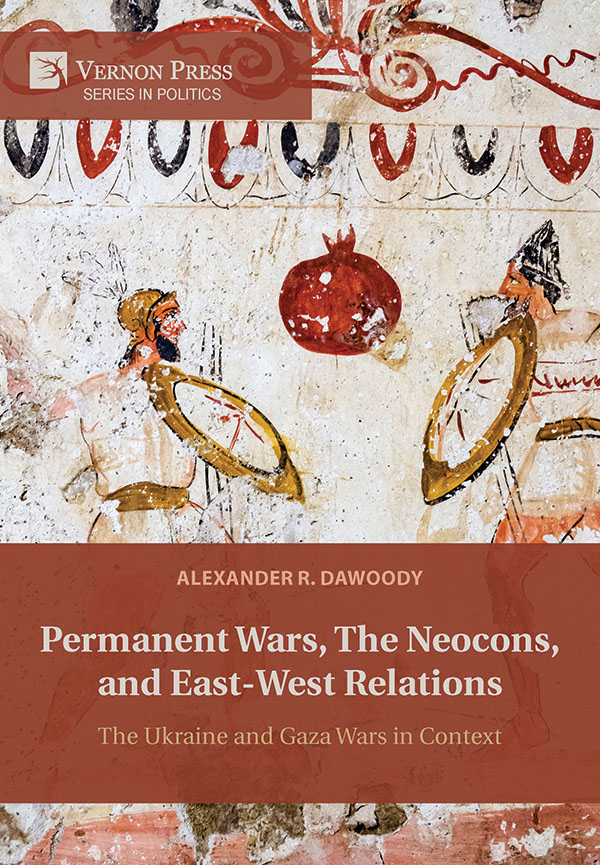
We are pleased to announce that 'Permanent Wars, The Neocons, and East-West Relations' by Alexander R. Dawoody has been reviewed by Shahub Tossi in 'The Innovation Journal: The Public Sector Innovation Journal', Volume 31(1) 2026, article 5:[...] Overall, “Permanent Wars, The Neocons, and East-West Relations” is a thoughtful and well-developed contribution that not only challenges conventional approaches to international relations but also advances a more dynamic and systems-oriented understanding of global conflict. By integrating complexity theory with contemporary case analyses, Dr. Dawoody provides a compelling framework for rethinking how conflict is analyzed and addressed. For scholars and practitioners interested in innovation, public policy, and global governance, the book offers both a critique of existing paradigms, such as traditional state-centric and linear models of international relations, and a meaningful step toward more adaptive, systems-based approaches.[Extract from book review at 'The Innovation Journal: The Public Sector Innovation Journal', Volume 31(1) 2026, article 5. Reviewer: Shahub Tossi. https://innovation.cc/document/permanent-wars-the-neocons-and-east-west-relations-the-ukraine-and-gaza-wars-in-context/ ]Find out more about the book and order your copy here: Permanent Wars, The Neocons, and East-West RelationsThe focus in this book is not on the various distinctions between classic liberalism and orientalism. Such traits are specific to normative values than hurt, suffering, and victimhood...
Review / 5 February 2026
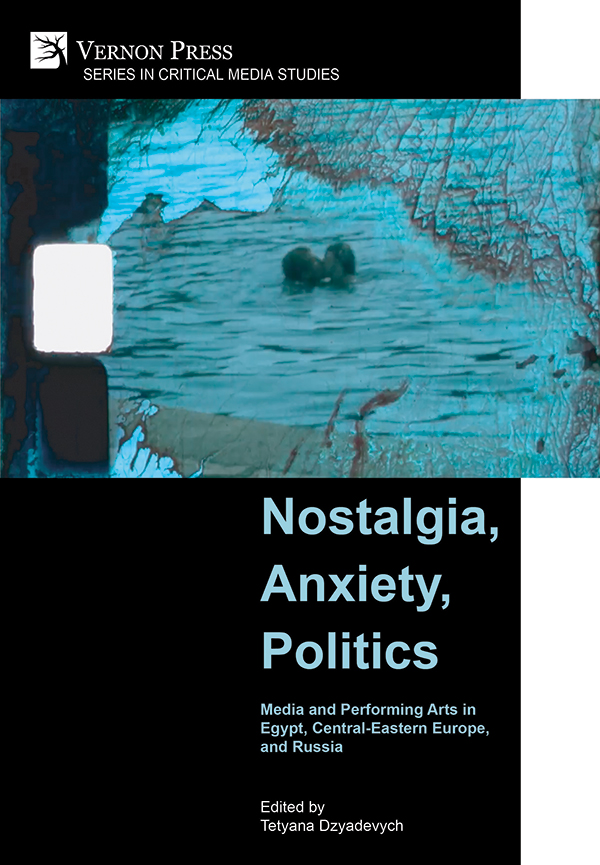
We are pleased to announce that 'Nostalgia, Anxiety, Politics: Media and Performing Arts in Egypt, Central-Eastern Europe, and Russia' edited by Tetyana Dzyadevych has been reviewed by Aijan Sharshenova (Rīga Stradiņš University, Latvia) and published in the ‘Europe-Asia Studies’, 78:1, pp. 133-135. Published online: 30 Jan 2026:
[…] This fascinating collection of diverse works at the intersections of memory, nostalgia, cultural production, propaganda and political mythmaking offers an invaluable contribution to the ongoing global scholarly and public debates on how the past informs and shapes the present and the interplays of reality and imagination in matters of remembrance. Exploring collective political memory and mythmaking, entertainment and propaganda, the authors offer kaleidoscopic accounts of unique and under-researched cases. […]
This book is recommended for students and researchers of political sociology, anthropology, culture studies and political studies, as well as for any lay reader. It will be of particular interest to those who come from or study the postsocialist world, as the book’s cultural references largely originate from there. Each contribution provides a unique glimpse of collective emotions and imaginations in specific times and places.[Extract from book review on the journal ‘Europe-Asia Studies’, 78:1, pp. 133-135. Published online: 30 Jan 2026. Reviewer: Aijan Sharshenova (Rīga Stradiņš University, Latvia.) DOI: 10.1080/09668136.2025.2589625]
Find out more about the book and order your copy here: Nostalgia, Anxiety, Politics: Media and Performing Arts in Egypt, Central-Eastern Europe, and Russia
This volume shows that the cultural production of nostalgia is a major tool for structuring feelings of resentment and anxiety. The current volume is concerned with collective nostalgia as it has been elicited, channeled, and weaponized by media production agents. The book aims to analyze how the performing arts and media (music, cinema, TV, etc.) generate and shape the feeling of collective nostalgia. It shows how the cultural production of nostalgia reflects distinct social-political contexts and serves particular political purposes. The collective monograph prioritizes cases from the post-Soviet context. However, the authors do not argue that the collapse of the socialist bloc in general, and the USSR in particular, has established some unique nostalgic precedent. The book claims that mechanisms of producing nostalgia and marshaling it for political purposes are broadly similar in most (modern or postmodern) settings. It is not our intent to demonize Russia, nor do we want Russia to be our dominant frame of reference, even if, in most of our cases here, 'nolens volens' appeared first in Russia-centric post-Soviet discourse. The “Russian bloc” has been placed in the second part of the book in order to give primacy to non-Russian subjects.