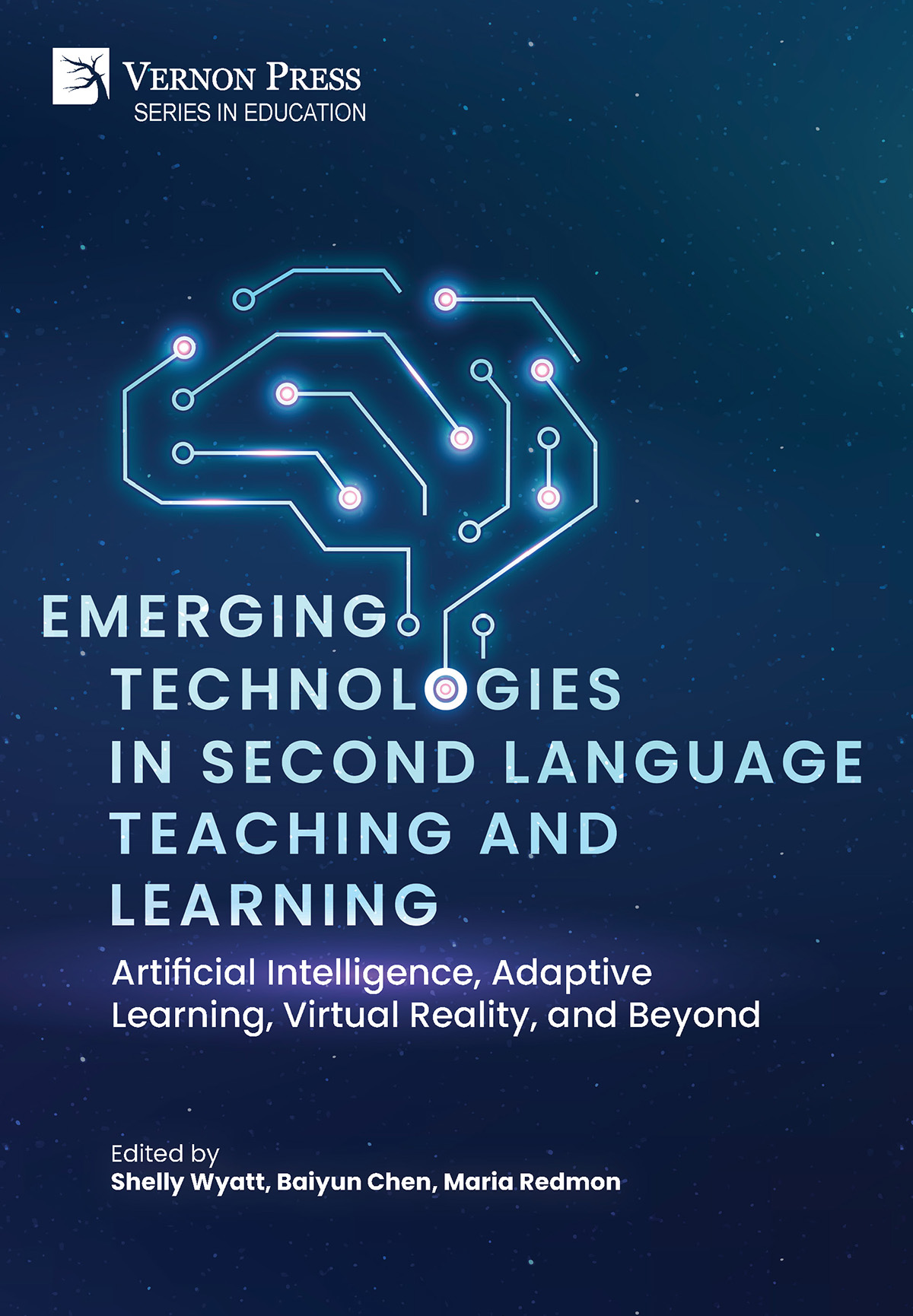
Emerging Technologies in Second Language Teaching and Learning
Artificial Intelligence, Adaptive Learning, Virtual Reality, and Beyond
Shelly Wyatt, Baiyun Chen, Maria Redmon (Eds.)
by Nebahat Badem (Kahramanmaras Sutcu Imam University, Turkey), Oyinkansola Sodiya (University of Texas at Arlington), Kacie Tartt (University of Central Florida), Anne Prucha (University of Central Florida), S. M. Sabra (University of California, Irvine), Chan Wing Shan (National Coalition of Independent Scholars), Rebecca Bias (The Ohio State University), Kevin Richards (The Ohio State University), Samanta Buffa (The Ohio State University), Jessica Tojo-Raible (University of Central Florida), Xiaoxuan Li (Pennsylvania State University), Omer Ozer (Adana Alparslan Turkes Science and Technology University, Turkey), Shelly Wyatt (University of Central Florida), Belle Li (Purdue University), Su-Je Cho (Fordham University), Xiaying Li (Fordham University), Xiaoqing Gu (East China Normal University, China), Fang Cao (Seoul National University, Corea), Jiawen Zhu (East China Normal University, China), Başak Eda Hancı-Azizoğlu (Mediterranean (Akdeniz) University, Turkey), Ömer Buğra Hamzaoğlu (Mediterranean (Akdeniz) University, Turkey), Vera Sotirovska (Seattle University), Jess Smith (Bellarmine University), Baiyun Chen (University of Central Florida)
Purchase this book
(click here to change currency)
A masterpiece in scholarly communication -- Relevant…clear…engaging!
Prof. Dr. Michael Simonson
Fischler College of Education and School of Criminal Justice
Nova Southeastern University
This is a great book written by second language and foreign language educators, for all educators, regardless of their discipline. […] The book bridges the gap and provides just-in-time professional development opportunities for language educators, while emerging technologies (such as Artificial Intelligence and Virtual Reality) and pedagogies (such as Personalized Adaptive Learning) keep pushing the boundaries for educators and learners and reshaping the new norms of the educational landscape. This is also a great book for students in pre-service language teacher preparation and training programs at both undergraduate and graduate levels.
Dr. Yunhong “Tom” Tu
Statewide Programs Coordinator
Florida Virtual Campus
'Emerging Technologies in Second Language Teaching and Learning' examines how artificial intelligence and other digital innovations are remaking language education across K–12 and higher education contexts. As technologies such as generative AI, adaptive learning systems, virtual reality, and digital storytelling become increasingly integrated into classrooms, educators face new opportunities—and challenges—in designing meaningful language-learning experiences.
This edited volume brings together international scholars and practitioners to explore how emerging technologies can support multilingual learners through personalized learning, immersive environments, and innovative pedagogical approaches. Grounded in established theories of second language acquisition, applied linguistics, and instructional design, the chapters combine research-based analysis with real-world classroom applications. Contributors examine topics including AI chatbots for language practice, AI-generated instructional materials, adaptive learning platforms, culturally adaptive digital storytelling, virtual reality–based language tasks, and open educational resources that expand access to language learning.
Aside from technological innovation, the volume critically addresses the pedagogical and ethical issues of AI-enhanced education. Chapters explore issues such as algorithmic bias, academic integrity, digital equity, and teacher agency, as well as the importance of maintaining human-centered learning environments in increasingly automated educational systems. Across a variety of contexts—from secondary classrooms to university language programs—the contributors highlight how instructors can thoughtfully integrate technology to enhance interaction, creativity, and communicative competence.
Integrating theory, research, and practice, this book offers a timely resource for language educators, instructional designers, teacher educators, and researchers in TESOL, applied linguistics, multilingual education, and educational technology. It also serves as a valuable guide for graduate students and academic leaders seeking responsible, evidence-informed approaches to innovation in language teaching.
List of figures
List of tables
Abbreviations
Introduction
Part I. Foundations of artificial intelligence and instructional innovation in second language acquisition
Chapter 1 Implementing AI in second language acquisition: opportunities and challenges
Jess Smith
Bellarmine University
Chapter 2 Teacher in the loop: critically evaluating AI’s role in language teacher preparation
Vera Sotirovska
Seattle University
Chapter 3 Digital storytelling across cultures: empowering multilingual minds
Ömer Bußra Hamzaoßlu
Mediterranean (Akdeniz) University
Bađak Eda Hancı-Azizoßlu
Mediterranean (Akdeniz) University
Chapter 4 Empowering Chinese language teachers through AIGC and digital literacy
Jiawen Zhu
East China Normal University
Fang Cao
Seoul National University
Xiaoqing Gu
East China Normal University
Part II. Research studies on emerging technologies in second language acquisition
Chapter 5 Impact of AI on language teaching pedagogy: a participatory action study
Xiaying Li
Fordham University
Su-Je Cho
Fordham University
Belle Li
Purdue University
Chapter 6 AI chatbots in EFL teaching and learning: insights from teachers and learners
Nebahat Badem
Kahramanmaras Sutcu Imam University
Omer Ozer
Adana Alparslan Turkes Science and Technology University
Chapter 7 Exploring ChatGPT’s role in enhancing English speaking proficiency
Xiaoxuan Li
Pennsylvania State University
Chapter 8 Faculty perspectives on adaptive learning in foreign language courses
Shelly Wyatt
University of Central Florida
Baiyun Chen
University of Central Florida
Jessica Tojo-Raible
University of Central Florida
Part III. Pedagogical strategies and reflections for language educators
Chapter 9 Best practices and challenges in the use of VR in the language classroom
Samanta Buffa
The Ohio State University
Kevin Richards
The Ohio State University
Rebecca Bias
The Ohio State University
Chapter 10 Enhancing second language learning with captions
Wing Shan Chan
National Coalition of Independent Scholars
S. M. Sabra
University of California, Irvine
Chapter 11 Adaptive learning in second language teaching: insights for practice
Anne Prucha
University of Central Florida
Kacie Tartt
University of Central Florida
Chapter 12 AI and second language education: A pedagogical perspective
Oyinkansola Sodiya
University of Texas at Arlington
Contributors
Index
Shelly Wyatt is a Senior Instructional Designer at the University of Central Florida’s Center for Distributed Learning. In 2013, she received her PhD in Instructional Technology and Design (IDT) at UCF, with a research focus on technology and second language acquisition. Dr. Wyatt has been an active contributor to the scholarship of IDT, presenting at conferences in the US and Europe on topics related to technology and second language learning. She has also received several awards for her work in IDT, including a Research Incentive Award (UCF, 2023), a Quality Impact Award (UCF, Center for Distributed Learning, 2022), and Excellence in Distance Learning Research – Bronze level (United States Distance Learning Association, 2024).
Baiyun Chen is the Program Director for the Personalized Adaptive Learning team at the Center for Distributed Learning at the University of Central Florida (UCF). She earned her PhD in Instructional Technology and Design from UCF, and she has published widely on topics related to online and adaptive instruction, including 23 peer-reviewed journal articles, book chapters, and editorial-reviewed articles. She has also delivered more than 50 presentations at international and local conferences since 2006.
Maria Redmon is a Professor of Spanish Language and Culture at the University of Central Florida (UCF). Her research interests and publications include enhancing learning through the innovative use of technologies such as 360 ° videos, universal design, augmented reality, artificial intelligence, digital storytelling, and collaborative online international learning (COIL), among others. Professor Redmon has received teaching and learning awards at UCF; she has also been awarded NSF, Fulbright-Hays, Title VI, and NEH grants for her research and curriculum development. Professor Redmon has published in international and national journals focused on teaching, innovation, and learning. She holds degrees from the Universidad Complutense de Madrid and the Madrid Chamber of Commerce and Industry, Spain. Professor Redmon initiated the Translation and Interpretation Certificate program, the Elementary Spanish Honors, Business Spanish, and High Impact courses in Latin American Studies and Business at UCF.
Adaptive captioning
Adaptive learning systems
AI-assisted language learning
AI chatbots in language learning
Artificial intelligence in language education
Digital literacy for educators
Ethical AI in Education
Extended reality
Gamified language learning
Eye-tracking research in language learning
Human-AI collaboration in education
Immersive language environments
Inclusive language education
Intelligent tutoring systems
Learner autonomy in language learning
Student engagement in language learning
Technology-enhanced language learning
Virtual reality in language education
Vocabulary and listening development
VR instructional design
Subjects
Education
Philosophy
Series
Series in Education
Related services
Download print-friendly flyer Download HQ coverSee also
Bibliographic Information
Book Title
Emerging Technologies in Second Language Teaching and Learning
Book Subtitle
Artificial Intelligence, Adaptive Learning, Virtual Reality, and Beyond
ISBN
979-8-2616-0058-9
Edition
1st
Number of pages
330
Physical size
236mm x 160mm