Loading...
Please wait while we load the content...

Loading...
Please wait while we load the content...
Stay informed about our latest publications, calls for proposals, author news, events, and special announcements.
Join our community of scholars, librarians, authors, and readers and receive the latest updates from Vernon Press directly in your inbox.
Availability
In stock
ISBN
9798261600756
Edition
1
Publication Date
August 4, 2026
Physical Size
236mm x 160mm
Illustrations
25 B&W
Number of Pages
202
Currency
Quantity
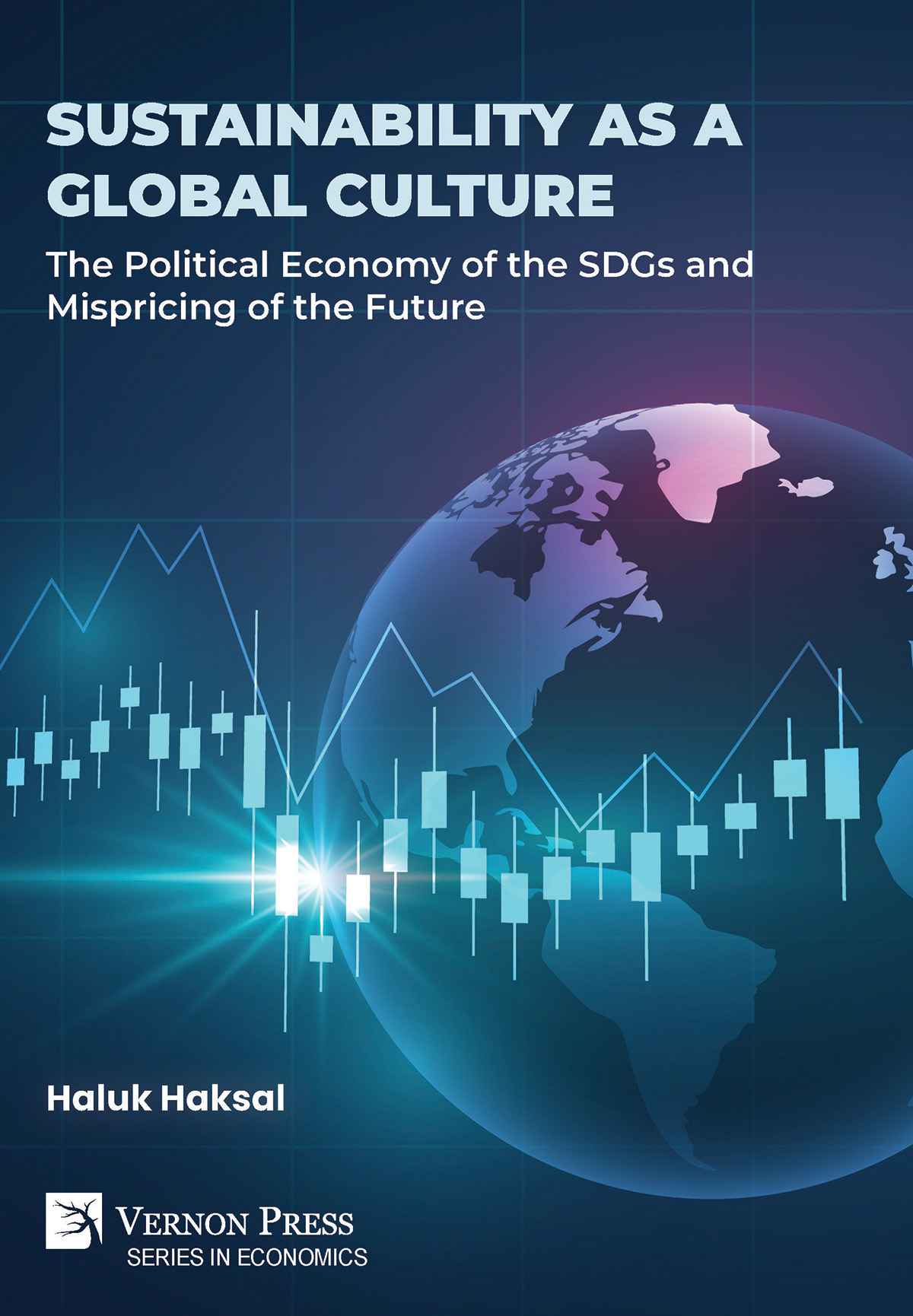
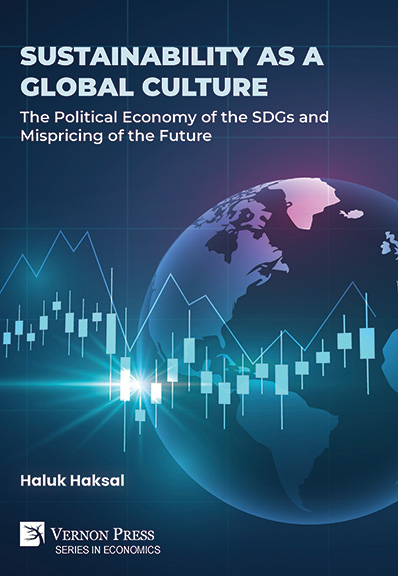
Here is a book that treats sustainability from a political economy and finance perspective. It adopts a Green Keynesian approach and gives pricing and investments a key role, and thus provides a fresh perspective on sustainable investments.
Professor Rick van der Ploeg
Director of Research, Professor of Economics
University of Oxford, UK
This book offers a compelling reframing of sustainability. Rather than treating it as a trade-off among competing objectives, Haluk Haksal presents it as a global culture that shapes how we invest, govern, and live. By tracing the path from mispriced markets through sustainable investment to macroeconomic policy, he provides both a sharp diagnosis of why current systems fall short and a coherent framework for aligning them with ecological limits and long-term human well-being. The clarity and structure of the analysis make this book particularly valuable for teaching in sustainability and environmental economics, as well as ecological economics.
Professor Karl Schmedders
Professor of Finance
IMD Lausanne, Switzerland
This book provides a comprehensive perspective on sustainability and environmental economics, making it a valuable resource for both teaching and research.
Professor Sevil Acar
Professor of Economics
Boğaziçi University, Istanbul, Türkiye
Sustainable finance has travelled a long way, but genuine sustainability is nowhere close. With this book, Dr. Haluk Haksal provides a comprehensive overview to readers interested in the history and future of sustainable finance. You will find yourself immersed between analytical detail and appeal to sustainability as a precondition for human freedom and dignity.
Philipp Censkowsky
Faculty of Business and Economics (HEC Lausanne)
University of Lausanne, Switzerland
This is an intellectually rich book that diagnoses the global pricing system's failure to internalize ecological and social costs, and builds a credible analytical framework for correcting it. Dr. Haksal offers an original analytical architecture that shows what follows when we stop treating sustainability as a trade-off and start treating it as the frame within which economic choices are made. This book is well-suited as a textbook in ecological economics or sustainability.
Professor Murat Tarakci
Professor of Innovation Strategy
IMD Lausanne, Switzerland
What distinguishes this book is its clarity on what actually changes behavior: culture, not compliance. By treating the SDGs as shared ethical coordinates rather than bureaucratic milestones, Haksal delivers an educational foundation we urgently need. The critique of GDP orthodoxy and the case for post-GDP economics are not tangential; they are overdue. Pluridisciplinary thinking has become the baseline.
Dr. Nathan Delacrétaz
Research Fellow, Center for Risk Management Lausanne (CRML)
Faculty of Business and Economics (HEC Lausanne)
University of Lausanne, Switzerland
Discover books that expand on the themes explored in this work—titles that engage with similar questions, intersecting disciplines, and complementary perspectives to deepen understanding and broaden the conversation.
Browse all titles