Loading...
Please wait while we load the content...

Loading...
Please wait while we load the content...
Stay informed about our latest publications, calls for proposals, author news, events, and special announcements.
Join our community of scholars, librarians, authors, and readers and receive the latest updates from Vernon Press directly in your inbox.


Availability
In stock
ISBN
9781622738809
Edition
1
Publication Date
January 5, 2021
Physical Size
236mm x 160mm
Number of Pages
264
Currency
Quantity
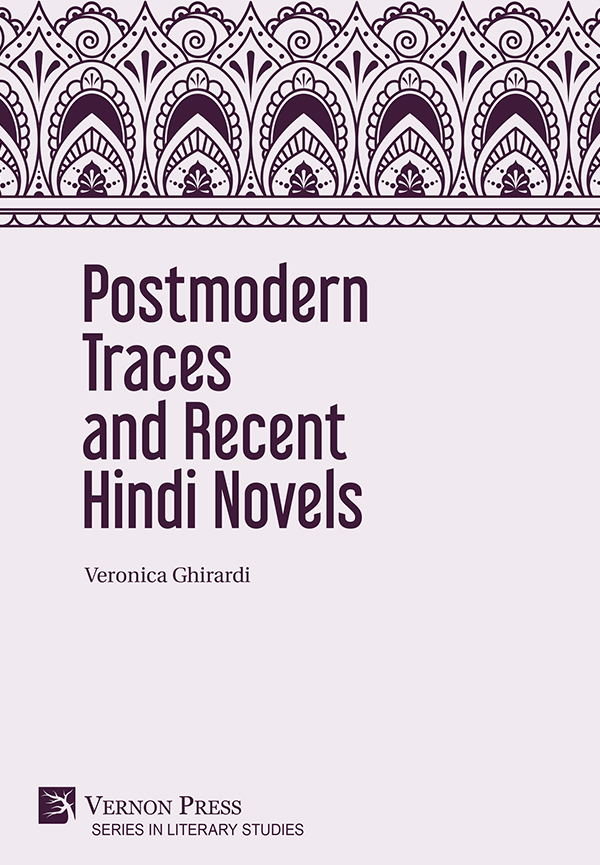
This fascinating book by Veronica Ghirardi is the result of a very original and innovative research on Hindi literature. For this book, Veronica Ghirardi has used as sources an impressive amount of contemporary Hindi novels, which are not renowned for their readability and which remain untranslated for most of them. The question of postmodernism, at the very heart of this book, is a sensitive topic, often misunderstood: either it is overused and turns out to be, in the end, nothing more than a hollow concept, or it is criticized and rejected on the grounds that it does not apply to the South Asian context and only represents a new form of intellectual colonialism. In this case, however, Veronica Ghirardi succeeds perfectly in avoiding both of these pitfalls. She demonstrates the usefulness of exploring this concept, or more precisely its traces, in a literary and cultural context that is still largely unknown to Western readers and even scholars. What is more, she does so in a very clear and convincing manner. This is undoubtedly a seminal book in the field of Indian literary studies.
Dr Nicola Pozza
Faculty of Arts, South Asian Studies
University of Lausanne, Switzerland
Ms. Ghirardi’s work on post-modernism in contemporary hindi literature is the outcome of a thorough research fueled by the author’s genuine interest in and passion for the subject under investigation, which developed in the course of her research for her PhD thesis.
[…] the author’s quality of scholarship becomes evident in the wide range of works analyzed for the purpose of making her point. The many quotations from the original hindi texts not only betray her sound knowledge of the hindi language but bear witness of Ms. Ghirardi’s capacity to ‘read’ the Indian mind structure and decode it while inserting it into a western academic discourse.
[…] For those interested in and already familiar with Indian literature, it provides an stimulating and in many ways original way of looking at a kind of literature which too often remains at the margins of attention of the larger public. The merit of the way the book is organized is to address non only the specialized academic scholar familiar with Indian literary traditions, but the contextualization of the topic that attempts to insert the hindi novel first into the wider context of Indian literature in general and then, even more ambitiously, into world literature in an increasingly globalized society.
Dr Thomas Dahnhardt
Department of Asian and Mediterranean African Studies
Ca’ Foscari University of Venice, Italy
Discover books that expand on the themes explored in this work—titles that engage with similar questions, intersecting disciplines, and complementary perspectives to deepen understanding and broaden the conversation.
Browse all titles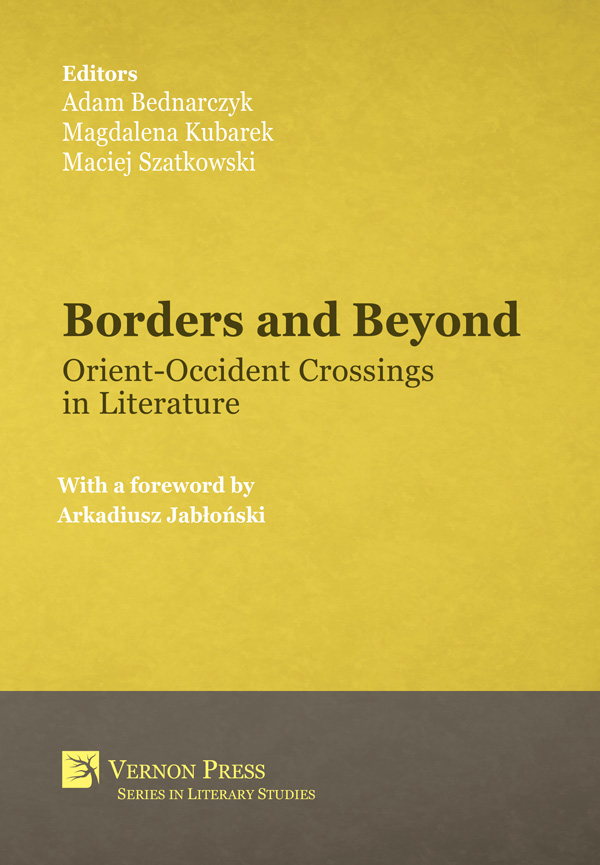
Adam Bednarczyk and Magdalena Kubarek (Eds.)
View more
Chi P. Pham, Chitra Sankaran, and Gurpreet Kaur (Eds.)
View more