Loading...
Please wait while we load the content...

Loading...
Please wait while we load the content...
Loading...
Please wait while we load the content...
Explore peer - reviewed titles across the humanities and social sciences - rigorous research, fresh perspectives, and scholarship that inspires dialogue across disciplines.
Stay informed about our latest publications, calls for proposals, author news, events, and special announcements.
Join our community of scholars, librarians, authors, and readers and receive the latest updates from Vernon Press directly in your inbox.

From special discounts and global distribution partners to downloadable catalogs, flyers, and high-resolution covers, we make it easy to enrich your library’s collection. Access bibliographic data, explore subject-specific listings, and stay updated on forthcoming titles.
Become part of our librarian network and access dedicated tools, discounts, and resources to support collection development and promote new titles to your patrons.

Partner with Vernon Press to provide your customers with high-quality, peer-reviewed scholarship. We offer flexible ordering options, reseller agreements, and promotional materials to support your sales and outreach.

Vernon Press provides dedicated resources to help instructors adopt our books for courses and to support students with affordable access to high-quality scholarship. From desk and examination copies to tailored student editions, we aim to make our titles accessible in the classroom.
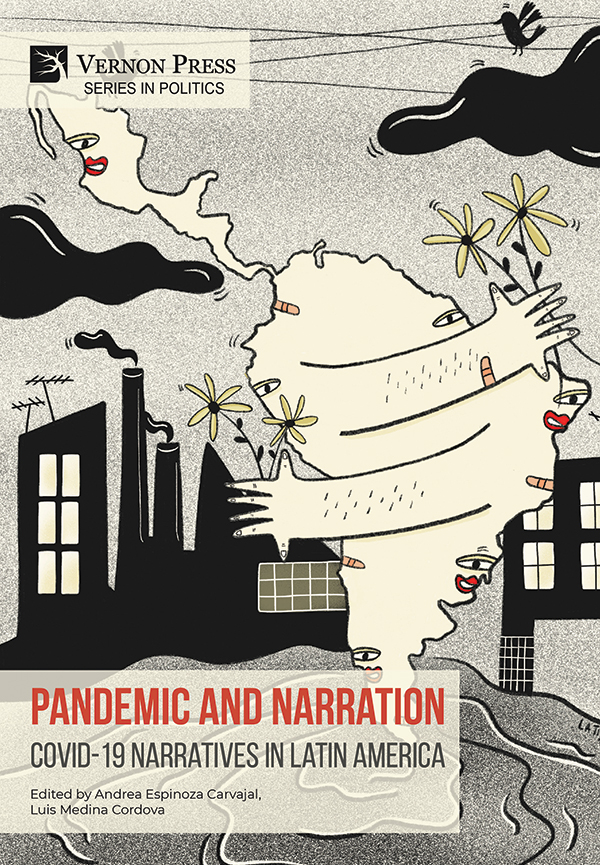
Edited by: Luis A. Medina Cordova (University of Birmingham) and Andrea Espinoza Carvajal (University of Exeter)
'Pandemic and Narration: Covid-19 Narratives in Latin America' sheds light on how, as Covid-19 spread, infecting and killing millions across the world, life not only continued to be experienced but also continued to be narrated. By putting together this volume, we help understand what happened in the region from a perspective in which, unlike most of what we saw during the health emergency, numbers, statistics and percentages are not at the centre of the analysis. The essays gathered here foreground something else: the manifold ways Covid-19 was subjectively and collectively narrated in the news, government reports, political speeches, NGO communications, social media, literature, songs and many other media. From a wide range of disciplinary approaches, the contributors to this edition pay attention to how fictional and non-fictional stories, official discourses, as well as personal and political accounts, documented, represented and shaped the health crisis, laying bare how —in Latin American countries— the spread of the virus intersected with corruption, gender-based violence, inequality and exclusion, as with community, solidarity and hope. Readers will find that the focus on narrative provides an alternative source of knowledge on Latin America’s Covid-19 experience. Our perspective contrasts with the usual emphasis on death tolls, infection rates, weekly cases, vaccination counts, and the plethora of statistics that illustrated the gravity of the situation in the build-up to, during, and after the peak of the crisis. While extremely important to understand the situation, numbers do not tell the whole story. A comprehensive picture of the pandemic can only be achieved when the stories of the virus are accounted for. Health, after all, is no stranger to narrative. And neither is Latin America.
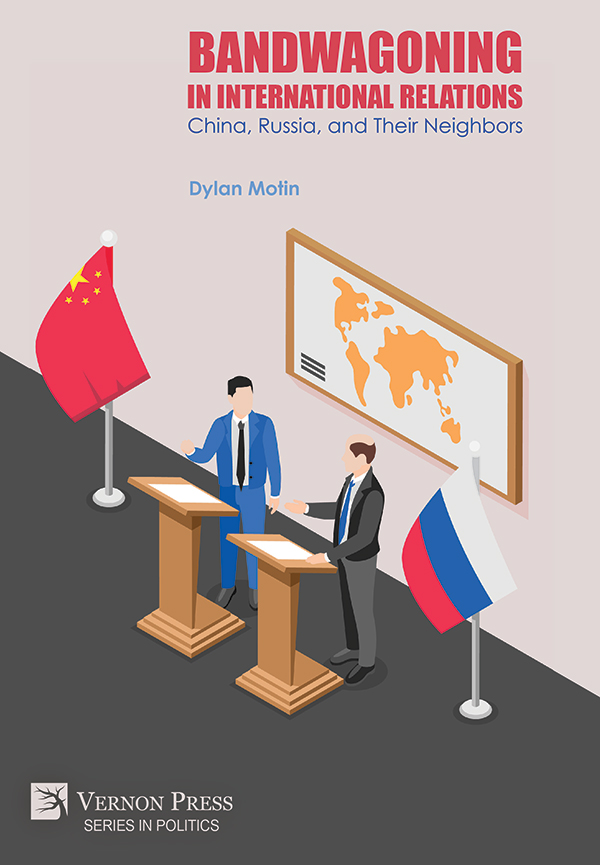
By: Dylan Motin (Kangwon National University, Korea)
Whether states balance against or bandwagon with threatening great powers remains an unsolved problem for international relations theory. One school argues that military power compels minor powers to accommodate threats, while another defends that it elicits balancing instead. With the emergence of potential hegemons in both Asia and Europe — namely China and Russia — understanding state alignment is more urgent than ever. This book shows that bandwagoning has been a rare choice in contemporary Asia and Europe. The only states that chose bandwagoning with China or Russia faced both conflicts with third rivals and low levels of U.S. assistance. Going further, I divide bandwagoning between full alignment, survival accommodation, and profit accommodation. Bandwagoners choose among these three options based on the severity of the threat posed by the potential hegemon, the intensity of third conflicts, and the level of U.S. assistance. I test this novel theory against three European (Armenia, Belarus, and Serbia) and four Asian (Cambodia, Myanmar, North Korea, and Pakistan) cases. This study is the first to provide an exhaustive and compelling explanation of bandwagoning fully compatible with neorealism and adds to the balancing-bandwagoning debate. Beyond scholarly implications, this research’s findings offer advice for policymakers concerned with the changing balance of power in Asia and Europe and how to counter China and Russia’s influence.
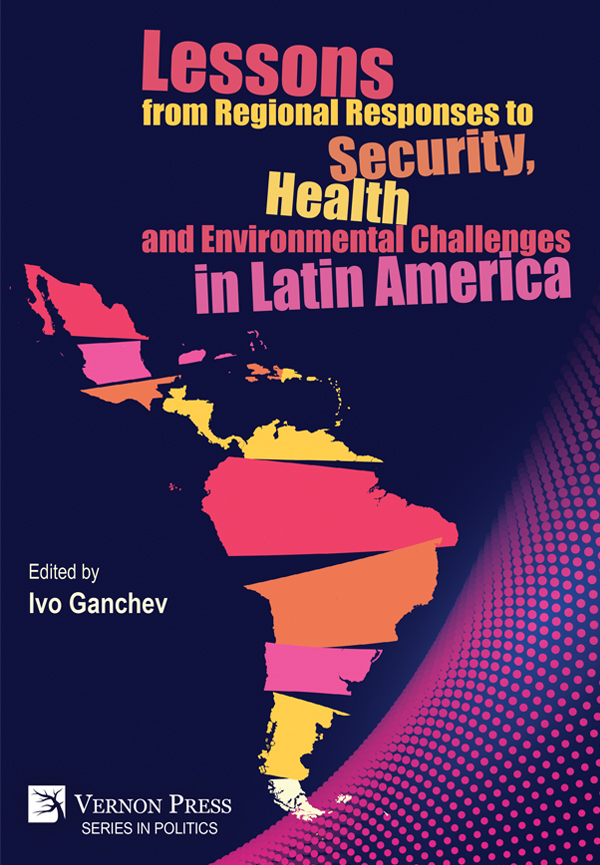
Edited by: Ivo Ganchev (Founder of the Centre for Regional Integration, UK)
What is the role of regional organizations in maintaining security across different parts of Latin America and the Caribbean (LAC)? How did COVID-19 impact states in the region and what types of collective action have helped respond to public health emergencies? In what way is LAC environmental policy formulated and what broader lessons can be drawn for the Global South? This edited volume addresses these questions, revealing the reasons behind the successes and failures of LAC regional responses to collective challenges as well as their limitations and potential for future improvement. It contains 11 chapters, authored by 16 authoritative academics who employ methodologically-diverse perspectives. Each chapter provides insights that would be of interest to scholars, students and policy-makers working on the regional governance of LAC and the Global South. The contributions are thematically organised in three parts and produced with pragmatic considerations in mind, discussing existing and potential real solutions to pressing issues.
By: Johanna M. Lems (Universidad Complutense de Madrid, Spain)
'Tomar la palabra' es un análisis basado en la búsqueda de justicia social por medio de la participación sociopolítica, que aborda con cuidado muchos de los temas que determinan y contribuyen a reproducir las situaciones de subalternidad y subordinación a las que se ven sometidas las personas musulmanas en España. Desde un posicionamiento novedoso sobre el islam en el contexto español, al abordar su estudio desde la existencia de musulmanidades diversas, contribuye al avance de los estudios sobre la realidad social y política de las poblaciones musulmanas en nuestro país. El principal objetivo de la autora ha sido identificar los procesos mediante los que las personas musulmanas – o aquellas leídas como tales– tratan de ganar voz y reclamar los derechos que les son negados sistemáticamente. Todo ello con el fin de contribuir a una comprensión más crítica y menos estigmatizadora sobre el islam y las personas musulmanas que viven en España. Se trata de un trabajo interdisciplinario que parte de una investigación etnográfica llevada a cabo entre 2017 y 2020 en distintas partes del territorio estatal. Puede resultar de gran interés como monografía para profesores y estudiantes de cursos de grado y posgrado en disciplinas como sociología, antropología, ciencias políticas, ciencias de las religiones. Igualmente, será de utilidad como obra de consulta en estudios de subalternidad, feministas y de migraciones o para trabajadores sociales, líderes y comunidades religiosas, instituciones gubernamentales y aquellas personas u organizaciones centradas en los derechos humanos, el diálogo interreligioso o las que, en general, quieren estar informadas sobre el escenario político contemporáneo español.
By: Alexei Anisin (Anglo-American University)
What sets a single bout of state repression apart from a longer trajectory of political violence? Why does state repression of protesters sometimes result in discrete events of violence while, in other cases, it spurs larger cascades of political violence such as politicide, genocide, or civil war? This book introduces a new framework for state repression and its relationship to different forms of civil resistance. It argues that state repression in the modern era of history is an empirical phenomenon that has been marked by singularity. Through taking the law of coercive responsiveness as a starting point, this book reveals that when political status quos are challenged by civilians, states do respond in law-like ways, but the impact that state repression has on social change is more heterogeneous than previously considered. State repression has brought about indeterminate effects and outcomes across space and time. Through analyzing event-based data featuring 24 variables on a cross-national sample of 171 different protest massacres that arose from 1819-2022, this book provides among the more wide-reaching comparative inquiries into repression and dissent to date. It draws on comparative sequential analysis to identify three different processes in which the sample of cases is matched alongside causal mechanisms and sequence types. The mixed methodological approach drawn in this book features quantitative analysis, process tracing, and qualitative case studies. Readers are taken on a journey through tumultuous periods of political violence that range from 19th-century massacres in the U.S. to 1928 Colombia and 1970s Apartheid, 1990s China, the Arab Spring, and contemporary Syria and Myanmar, among a diverse range of other cases. Along with identifying new quantitative insights into civil resistance strategies and various geographic and temporal dynamics associated with repression, the analyses presented in this book offer timely insight into policies that can aid the prevention of human rights violations.
By: Andre Smith
This book continues an exploration begun by Charles Mills and Carole Pateman with their examinations of the nuisances of the Western social contract. The work examines the social contract within the variable of space or proximity and incorporates concepts first proposed by Benedict Anderson, that of concepts of shared communal belonging or imagined. The social contract is explored as a dynamic sociopolitical instrument that is influenced by the context of human interactions, specifically, space. Space or proximity exists as a variable, either increasing interactions and challenging sociopolitical norms, or decreasing interactions and reinforcing sociopolitical norms. We can trace proximity within a sociopolitical model, with connections becoming more and more abstract as proximity increases and group membership becomes more abstract — global, global region, nation, religion, ethnicity, national region, city, town/village, and kin. We accept that kinship or hereditary connections are the most atomistic. And within this tree of proximity, as proximity increases the ties of group membership become more tenuous, and the incentive of collective action decreases production is the binding glue of the world economic system, and the framework of the study, but it is within the bounds of the productive system that the challenge of proximity and membership collide. The collision occurs as the proximity of production increases, and the reaction is a dynamic response within the social contract, witnessed as a retraction.
By: Jeremiah Rozman (Association of the United States Army)
The twentieth and twenty-first centuries have seen states engaged in long-term conflicts with asymmetrically weaker non-state actors (NSA). States aim to end these conflicts as quickly as possible by combining force and diplomacy to socialize these militants—meaning give them the characteristics of states—in order to make a credible bargain achievable. The militant’s characteristics determine the state’s optimal strategy. In times of conflict, politicians and pundits often march out an oft-cited phrase in support of negotiations: “if you want to make peace, you don't talk to your friends. You talk to your enemies.” This is only possible when the opponent is willing to make peace under acceptable terms and able to enforce abidance. Some opponents have an ideologically driven fundamental purpose that precludes renouncing violence under terms that a state could accept. Others have reasonable demands and are structured in a way that allows productive negotiations. In other cases, the non-state militant is not yet the type that can be bargained with but can be socialized into this type through a state’s correct application of force and diplomacy. I call this “socialization logic.” I argue that optimally, states tailor their strategy to socialize with their opponent, to make it possible to successfully negotiate peace. In practice, the state’s strategy is often distorted by its internal and external constraints. Socialization logic provides a novel typology of non-state militants based on how well interstate conflict bargaining concepts can be applied to them. It looks beyond tactics, to systematize a framework for understanding how leaders tailor strategy towards non-state opponents based on their characteristics. Socialization logic examines the NSA type as endogenous to the strategy that the state employs and provides a framework for leaders to design a strategy to end the conflict. Finally, socialization logic synthesizes critical NSA attributes (ideology, leadership structure, and governance function) and the state’s strategy (distorted by constraints) into in an interactive model. Through 41 interviews, primary and secondary source data, I analyze the United States’, Russia’s and Israel’s asymmetric conflicts with militants and demonstrate that socialization logic most comprehensively explains their strategies throughout those conflicts.
Edited by: Uche Onyebadi
'Political Messaging in Music and Entertainment Spaces across the Globe' uniquely expands the frontiers of political communication by simultaneously focusing on content (political messaging) and platform (music and entertainment). As a compendium of valuable research work, it provides rich insights into the construction of political messages and their dissemination outside of the traditional and mainstream structural, process and behavioral research focus in the discipline. Researchers, teachers, students and other interested parties in political communication, political science, journalism and mass communication, sociology, music, languages, linguistics and the performing arts, communication studies, law and history, will find this book refreshingly handy in their inquiry. Furthermore, this book was conceptualized from a globalist purview and offers readers practical insights into how political messaging through music and entertainment spaces actually work across nation-states, regions and continents. Its authenticity is also further enhanced by the fact that most chapter contributors are scholars who are natives of their areas of study, and who painstakingly situate their work in appropriate historical contexts.
Edited by: Marie-Josée Lavallée (University of Montréal)
In the face of recent trends like growing authoritarianism and xenophobic nationalism, the rise of the Far Right, the explosion of economic and social inequalities, heightened geopolitical contest and global capitalism’s endless crisis, and the impacts of shocks like the Covid-19 pandemic, discourses about the ‘decline of the West’ no more look like mere ruminations of a handful of cultural depressives and politically disillusioned; they sound increasingly realistic. This volume addresses this issue by mapping and analyzing the forms, mechanisms, strategies, and effects, in the past, the present, and the future, of Western hegemonies, namely, asymmetrical relations that bring advantages or, at least, secure the superiority of Western state and non-state actors in politics, economics, and culture broadly understood. Over the past decades and centuries, Westerners never ceased claiming supremacy in all these spheres. A host of these relations were initiated through colonialism and imperialism, and perpetuated through informal imperialism, but there are other channels: political interference, inequalities between countries, and attempts at affirming the supremacy of the so-called Western way of life was also secured through the military might and economic power of great Western actors. This book explores sites of Western hegemonies and contributes to understanding the mechanisms through which international hierarchies are formed and maintained. Bringing together the research of scholars from various fields in the humanities and social sciences, political science, international relations, political philosophy, sociology, history, postcolonial studies, criminology, and linguistics, this volume develops a multidisciplinary outlook on the issue of Western hegemonies that allows uncovering resemblances between various forms of asymmetrical relations and their mechanisms.