Loading...
Please wait while we load the content...

Loading...
Please wait while we load the content...
Loading...
Please wait while we load the content...
Explore peer - reviewed titles across the humanities and social sciences - rigorous research, fresh perspectives, and scholarship that inspires dialogue across disciplines.
Stay informed about our latest publications, calls for proposals, author news, events, and special announcements.
Join our community of scholars, librarians, authors, and readers and receive the latest updates from Vernon Press directly in your inbox.

From special discounts and global distribution partners to downloadable catalogs, flyers, and high-resolution covers, we make it easy to enrich your library’s collection. Access bibliographic data, explore subject-specific listings, and stay updated on forthcoming titles.
Become part of our librarian network and access dedicated tools, discounts, and resources to support collection development and promote new titles to your patrons.

Partner with Vernon Press to provide your customers with high-quality, peer-reviewed scholarship. We offer flexible ordering options, reseller agreements, and promotional materials to support your sales and outreach.

Vernon Press provides dedicated resources to help instructors adopt our books for courses and to support students with affordable access to high-quality scholarship. From desk and examination copies to tailored student editions, we aim to make our titles accessible in the classroom.
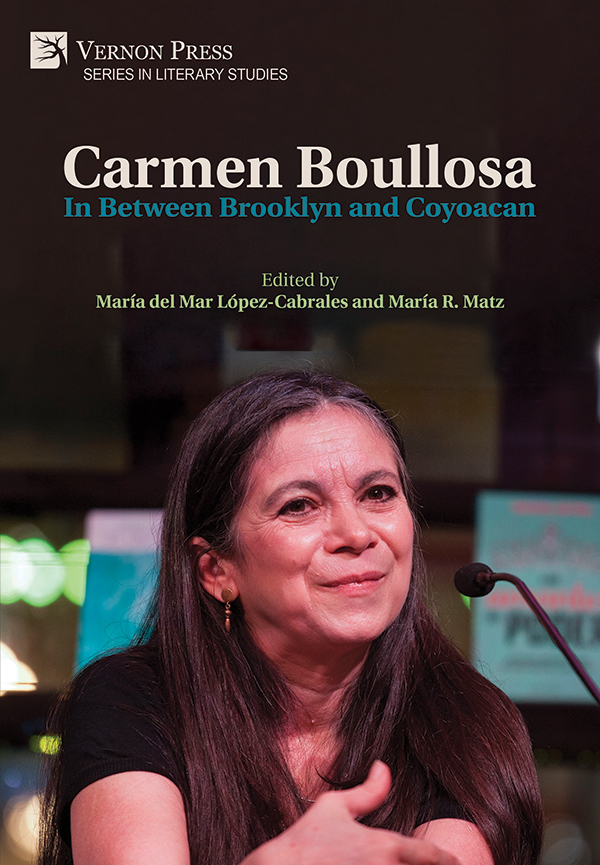
Edited by: María Rosario Matz (University of Massachusetts Lowell) and María del Mar López-Cabrales (Colorado State University)
Focusing on the works of Mexican writer Carmen Boullosa for the English reader, this volume provides access to a critical analysis of Boullosa’s writings. Her daily writing has produced an enormous and varied literary corpus that includes narrative, theater, and poetry, in addition to her work in television. This volume is divided into three different segments. The initial part is composed of six essays that analyze Boullosa’s narrative and theatrical works. In these essays contributors evaluate and analyze Boullosa’s literary production, covering many of her novels, including 'Antes' (1989), 'Llanto: novelas imposibles' (1992), 'La Milagrosa' (1993) 'Cielos de la Tierra' (1997), 'La otra mano de Lepanto' (2005), 'La novela perfecta' (2006), 'El complot de los Románticos' (2009), 'Cuando me volví mortal' (2010), 'Las paredes hablan' (2012), 'Texas' (2014), and 'El libro de Ana' (2019) as well as her 'Teatro herético' (1987). By analyzing her literary corpus, contributors explore how she reshapes historical narratives and offers thought-provoking commentaries on our modern society and its problems. Boullosa’s writings invite an in-depth analysis due to their rich complexity and explorations of various themes, therefore this volume presents how her work has a significant social impact, prompting discussions on the topics of gender, power, history, social inequality, and cultural diversity while encouraging critical thinking and empathy. These critical essays are followed by an interview with the author. We decided to also include the Spanish version of this interview for those able to read it. Boullosa’s essay, 'Épica mía/ Mi épica (My Epic)' concludes this volume. When reading this essay, we suggest to the reader to keep in mind how often her works provide a voice to characters for whom History refused to grant one. This volume will provide its reader with a key to discovering the many layers present in Boullosa’s writing.
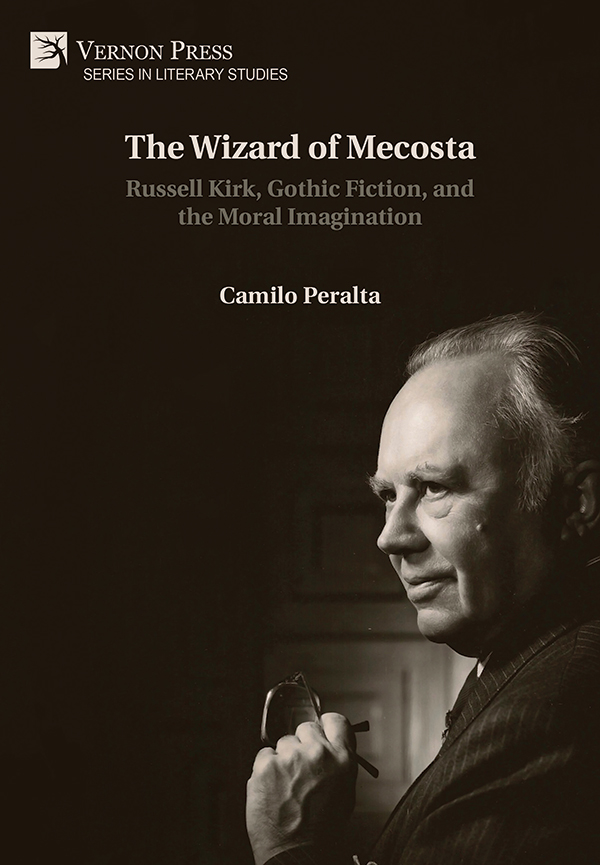
By: Camilo Peralta (Joliet Junior College)
"The Wizard of Mecosta" offers an extended analysis of the fiction of Russell Amos Kirk (1918-1994), a central figure in modern American conservatism who is often referred to as “the father” of the same. Born and raised in Michigan, Kirk was also a prolific writer of fiction, who published almost two dozen short stories and three novels over the course of his long career. At the heart of everything Kirk wrote was what he referred to as the “moral imagination,” a phrase he borrowed from Edmund Burke and often used to describe the instructive and enlightening purposes of great literature. Despite his prominent reputation as a public man of letters and the respect of fellow authors including Ray Bradbury and Stephen King, Kirk’s fiction was never very popular, and has fallen into almost complete obscurity in the present. "The Wizard of Mecosta" is the first full-length study ever published about Kirk’s fiction, and the only work of any length to consider the entirety of his output, including all of the stories and novels he wrote. By emphasizing how Kirk’s fiction illuminates certain aspects of his social and political theory, "The Wizard of Mecosta" distinguishes itself from the half-dozen or more studies of the author’s life and work that have been published since his death in 1994. It should appeal to anyone with an interest in American conservatism, as well as fans and scholars of the sort of Gothic horror in which Kirk, unexpectedly, excelled. Through his stories of avenging ghosts and timeless journeys through the afterlife, he reminds us of the existence of “permanent things,” the core values and beliefs of Western society, which he strove all his life to preserve. It is high time that his fiction found a more appreciative, and larger, audience.
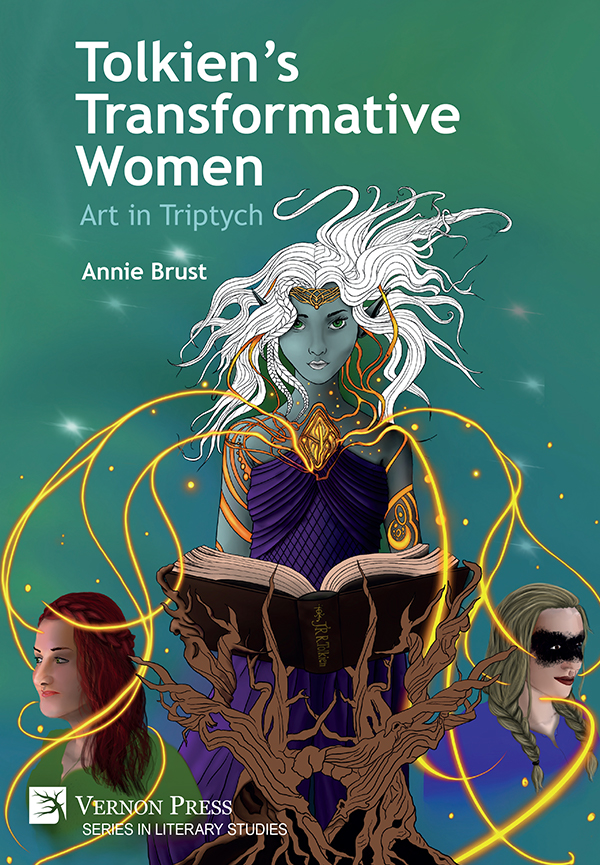
By: Annie Brust (Kent State University)
J.R. R. Tolkien has been revered as the father of twentieth-century fantasy; however, many initially criticized him for his handling of the textual matter as male-centric magical lands that did not feature prominent female roles or significant female characters. This book will highlight the vast community of powerful female figures that Tolkien created in his fantasy writing, stemming from the distinct and dominant female forces he created in his academic translation and poetry. These fierce women serve as a culmination of the powerful forces of women and female character that originated in Medieval, Norse, and Celtic traditions. They help to create the framework from which Tolkien shaped his female community, not merely as singular figures, as previously featured, but as a dynamic network of figures who shape Tolkien's creative art. For the first time, this discussion looks at the entire community of women, featuring previously excluded figures from his academic works and highlighting translation bias in modern manuscripts of the extant medieval works that influenced these women. It also seeks to create a comprehensive guide and detailed appendices exploring the female characters and influences throughout his writing portfolio. This book seeks to uncover the hidden voices of the past to find their rightful home in the strong female voices of the present, rewriting history to regain a sense of the past.
By: Raj Chandarlapaty
The primary purpose of 'Psychedelic Modernism: Literature and Film' is to trace the development of ideas and perspectives from the writing and private ambitions of 20th-century modernist writers, including Aldous Huxley. The purpose of the book is to offer a rough chronology during which ideas were first given a literary imagination, then transposed onto discussions of science and psychology, and then theoretically democratized to bring fruit to a relatively de-centered process where images, text, and interviews could re-conceptualize the modern Being from an admixture of modernist, historical, and pop roots that could express a greater moment in the human action. The work includes discussions from scientists such as Swiss chemist Albert Hofmann, rock stars such as Jerry Garcia, and unconfirmed mystics such as Carlos Castaneda. The primary focus of this work isn’t literature per se, but the literary imagination as it may correspond to greater, wider, and more impactive goals than the writing of 20th-century fiction. While there is some outreach that favors de-centered models such as the Beat Generation, the author’s primary purpose is to assemble an anthology covering the study and quests for knowledge from as many sides as could power the relative 1960s countercultural movement.
By: Alberto Castelli (Hainan University, China)
'Eros and Thanatos' is about the deadly nature of love. It is remarkable that literary critics have paid so little attention to the combination between love and death in literature. This book seeks to address this significant scholarly lacuna by exploring key literary texts of the last two hundred years as exemplary of a consistent tendency toward love and death. Its emphasis on singular characters and close readings suggests the spectrum of an arbitrary dichotomy never fully resolved. The existential discussion triggered by each plot is so intense that the erotic and the merely sexual seem inappropriate. Indeed, each writer chose to reduce it to the setting and background of a story that takes place elsewhere. With this in mind, the author intends to reflect love’s paradoxical nature. If love is triggered by beauty, beauty can be immoral and love must die to preserve the illusion of beauty.
A Transatlantic Perspective of European, Latin American, and American Narratives
By: José F. Rojas-Viana (Louisiana State University)
In this book, Rojas explores comparatively the representations of deviant and criminal women in the late nineteenth and early twentieth centuries from Transatlantic perspectives in literary productions of the first-wave feminist writers of the New Woman movement and writers of Radical Naturalism. This work addresses how the writers' sex is relevant in depictions of social constructions of female characters and how they established a dialogue based on gender through the themes of 'femme fatale', marginal spaces, eugenics, and social Darwinism in the novels of Emilia Pardo Bazán's 'La piedra angular' (1891), 'La gota de sangre' (1911), and "Tio Terrones" (1920); Refugio Barragán de Toscano's 'La hija del bandido o los subterráneos del nevado' (1887); Federico Gamboa's 'Santa' (1903); Kate Chopin's (Katherine O'Flaherty) 'The Awakening' (1899); Thomas Hardy's 'Tess of the D'Urbervilles' (1891); and 'Grand's Ideala' (1888). There is a good volume of research on different aspects of these novels, but this book addresses issues of the social constructions of deviant and criminal women from an interdisciplinary and metatheoretical perspective often missed from established criticism. This work is not only reachable for the non-expertise reader, graduate, or undergraduate students but also it is sufficiently elaborated for the expert reader in different fields. It provides a detailed analysis of the social, historical, philosophical, and scientific background that shows how the treatment of the female characters converges and diverges from male and female writers of the New Woman and Radical Naturalism points of view. It can be a good contribution for references or classes in Hispanic studies, gender studies, women's studies, sexuality studies, nineteenth-century studies, and in other fields.
Edited by: Marko Miletich (SUNY Buffalo State University)
This book explores the uses of translation, translators, and interpreters in fiction as a gateway to introduce issues related to Translation Studies. The volume follows recent scholarship on Transfiction, a term used to describe the portrayal of translation (both a topic and a motif), as well as translators and interpreters in fiction and film. It expands on the research by Kalus Kaindl, Karleheinz Splitzl, Michael Cronin, and Rosemary Arrojo, among others. Although the volume reflects the preoccupation with translator visibility, it concentrates on the importance of power struggles within the translatorial task. The volume could be an invaluable tool to be used for pedagogical purposes to discuss theoretical aspects within Translation and Interpreting Studies.
Edited by: Önder Çakırtaş (Bingol University, Türkiye)
Literature does have an aspect that drags the readers, habitually burying them in its pages and blindly attaching them to itself. Blind devotion stems from the factors that are effective in determining the readers' faith. Theories of literature, similarly, might bring about the generation of blind adherence and dogmatic approaches. This book explores the existence of dogma in literature and some cult texts and writers and how dogmas in literature are conveyed to various audiences as a mission by some literary readers, experts, and academics. Generally, dogma is a word related mostly to religion. In this frame, Mathew Arnold's 'Dogma in Religion and Literature' is of great importance as far as religion is concerned. However, there are dogmas in every field, literature being no exception. Virginia Woolf, for instance, wrote stupendous works that turned out to be well-known, and in 1928, she delivered a lecture at Cambridge University, where women were once not allowed, that formed the basis for the celebrated 'A Room of One's Own' (1929). Roland Barthes' 1967 'La mort de l'auteur' ('The Death of the Author') essay might be another text that some of its literary readers have developed a dogmatic commitment to. In addition to revealing how dogma finds its place in literature, this book also discusses how literary writers and readers often unwittingly embrace 'literary missionary.' Focusing on the dogmatic elements of literature and the dogmatized literary theory and criticism through cult works of various authors, the book offers a striking and interesting contribution to literary theory and criticism and literature readings.
Edited by: Margot Lauwers (CRESEM, University of Perpignan, France) and Caroline Durand-Rous (CRESEM, University of Perpignan, France)
'Weaving Words into Worlds' comes as the third spinoff of the international ecopoetics conference organized in Perpignan in 2016. Reflecting upon how the many stories we tell directly influence the world we live in, each of the contributions in this international volume directs our attention to the constant, ecopoetic weaving of word to the world at work via the many entanglements between mind, matter, and meaning, whether on a local or a global scale. It encapsulates how the words, stories, and concepts we humans articulate as we try to make sense of the world we inhabit give part of its shape to the web of ecological relations that we depend on for survival. It seeks to cast light on the disenchanting and reenchanting powers of stories and poiesis in general—as stories retain the power to make us either become oblivious to and destroy or to feel and honor the many, complex ties between the multitudinous nature cultures intertwined within the fabric of a multispecies world always in the making. This book offers a total of fourteen articles written by international scholars in ecocriticism and ecopoetics who, by their analyses of literature and/or films and the political subtext they thus render visible, aim at showing how the study of environmentally minded media may renew our attention to the entangled agencies of the human and the more-than-human realm. Thus, this work offers to counter a reproach ecocriticism has often been met with, namely the over-presence of US scholars and the lack of diversity in subjects in the field, since the articles presented provide a wide variety of approaches and topics with examples of UK and Native American literature, Polynesian myth, graphic novels, or haiku. In doing so, the book expands on the fields of ecocriticism and ecopoetics, adding to this branch of study and enriching it with high-quality academic studies.