Loading...
Please wait while we load the content...

Loading...
Please wait while we load the content...
Loading...
Please wait while we load the content...
Explore peer - reviewed titles across the humanities and social sciences - rigorous research, fresh perspectives, and scholarship that inspires dialogue across disciplines.
Stay informed about our latest publications, calls for proposals, author news, events, and special announcements.
Join our community of scholars, librarians, authors, and readers and receive the latest updates from Vernon Press directly in your inbox.

From special discounts and global distribution partners to downloadable catalogs, flyers, and high-resolution covers, we make it easy to enrich your library’s collection. Access bibliographic data, explore subject-specific listings, and stay updated on forthcoming titles.
Become part of our librarian network and access dedicated tools, discounts, and resources to support collection development and promote new titles to your patrons.

Partner with Vernon Press to provide your customers with high-quality, peer-reviewed scholarship. We offer flexible ordering options, reseller agreements, and promotional materials to support your sales and outreach.

Vernon Press provides dedicated resources to help instructors adopt our books for courses and to support students with affordable access to high-quality scholarship. From desk and examination copies to tailored student editions, we aim to make our titles accessible in the classroom.
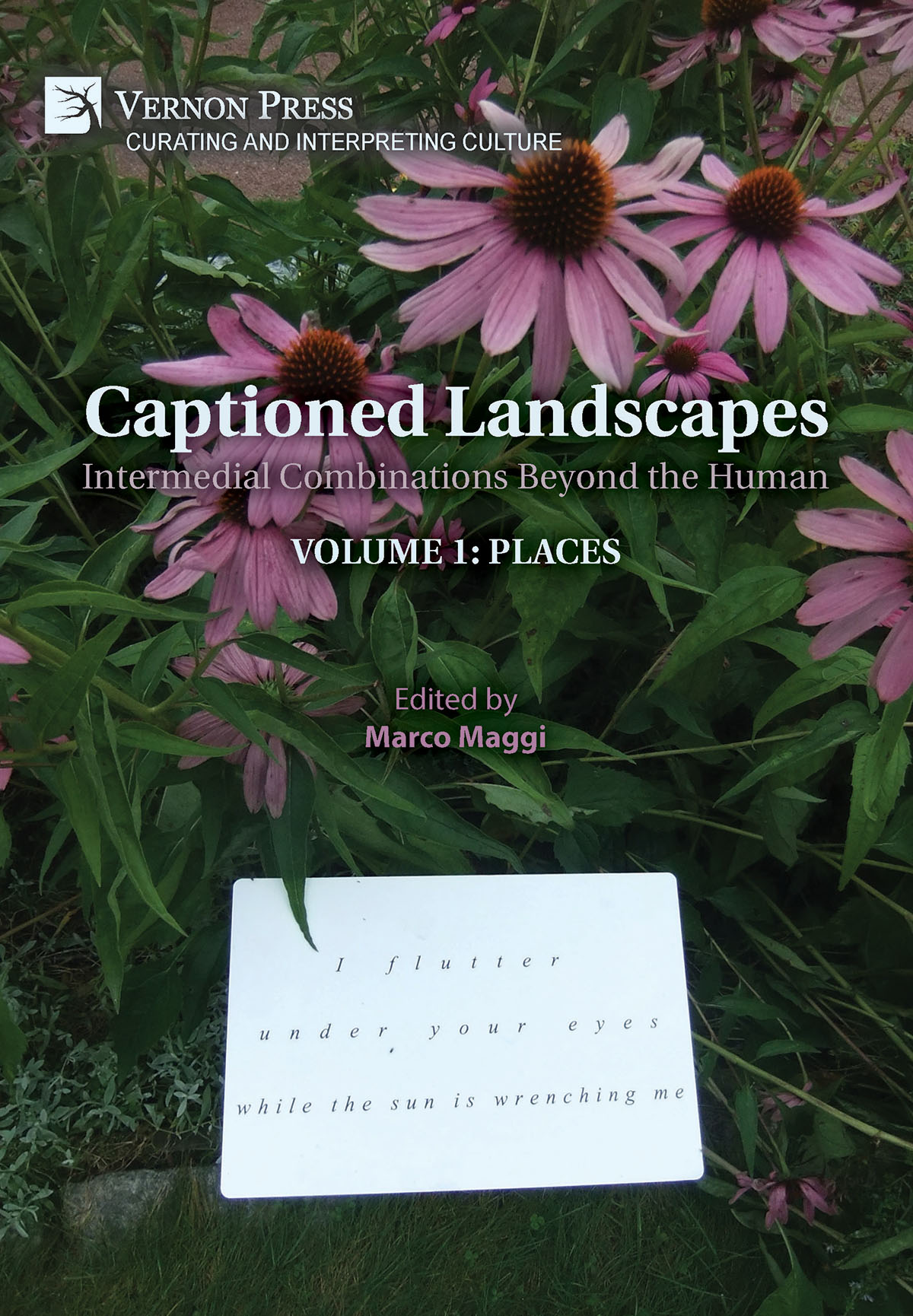
Volume 1: Places
Edited by: Marco Maggi (Università della Svizzera italiana, Switzerland)
'Captioned Landscapes' is the first comprehensive monograph on intermedial combinations between writing and natural environments. Writing is traditionally considered as a distinctive sign of the human; interrogating its interactions with the world beyond the human means questioning its presumed centrality and separateness. The multiple angles from which these combinations are studied in this two-volume anthology are relevant for questions regarding the ontologies that structure the relationships between human and non-human, as well as for questions of ideology, interculturality, memory, gender and the postcolonial. Landscape reception studies usually assume not only a distinction but also a separation between the human and the non-human, attributing the privilege of subjectivity only to the former. This dualistic paradigm has been recently replaced by intermedial ecocriticism, which conceives the relationship between human and non-human as a negotiation without rigid and pre-established roles. However, attention has been focused so far on the representations (verbal, but also visual) of these relationships. In this monograph, for the first time, instead of representations of natural environments (in writing or other media), intermedial combinations between writing and landscapes are taken into account; particular attention is also paid, in the second volume, to verbal and visual representations of these combinations. The book addresses Intermedial and Visual Studies and Environmental Humanities scholars. Because of the specific focus on combinations of writing, landscape, and verbal and visual representations of the latter, the book is also aimed at scholars of Literature, Garden and Landscape Design and History, and Visual Arts. By virtue of the case study approach in the chapters and the general theoretical framework provided in the introduction, the book also addresses students of all these disciplines.
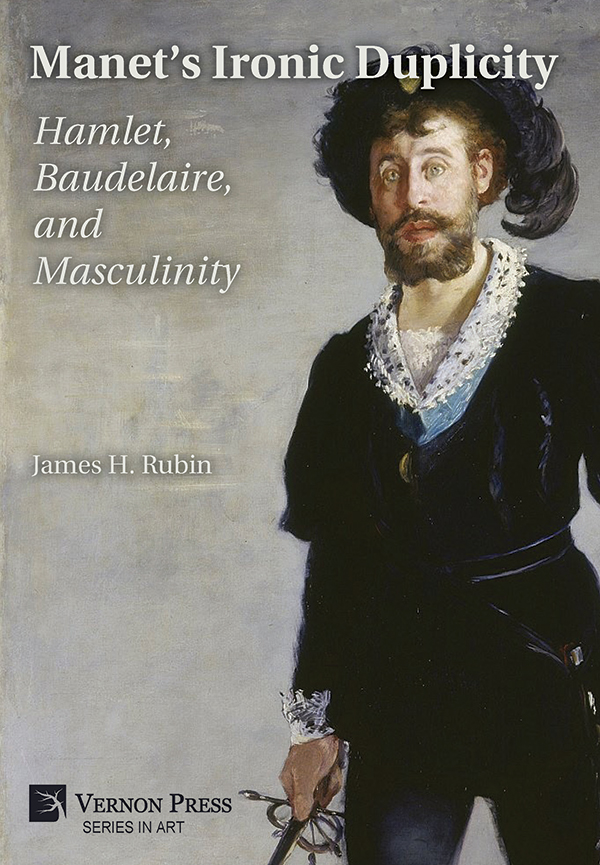
By: James H. Rubin (Stony Brook, State University of New York)
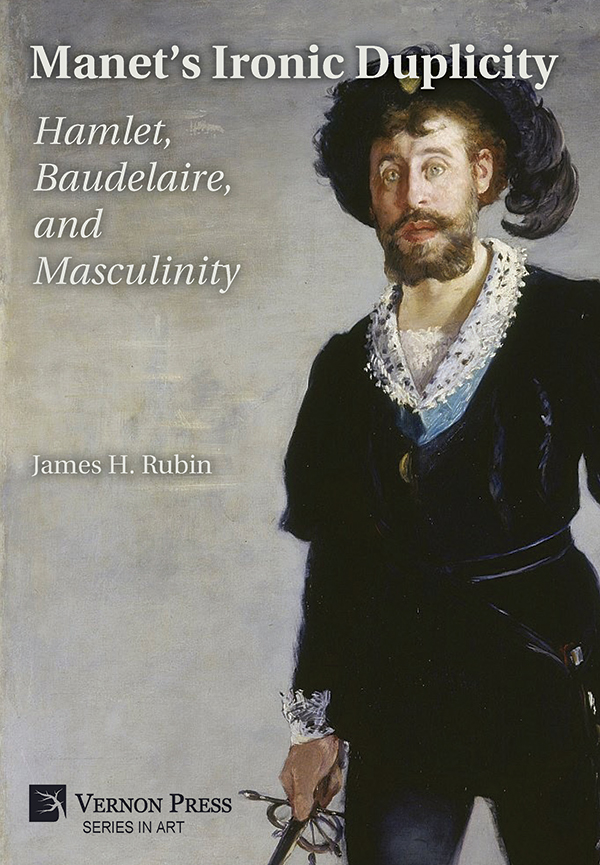
The painter Edouard Manet (1832-1883) was a central figure for momentous and lasting changes in the realm of art that still resound today. His art speaks directly to the philosophical issues and political conflicts of his own time and is therefore deeply embedded in the development of modernity. 'Manet’s Ironic Duplicity' focuses on that situation and the historically conscious artist’s sometimes ambivalent struggle for authenticity. Rather than another full chronological monograph, the book is an interdisciplinary study organized around key concepts. It reframes the major, and sometimes disparate issues in Manet scholarship by focusing on a never-before-considered overriding theme—duplicity—which itself is multiple in its manifestations and variants, hence 'duplicities'. Reversing the usual narrative, this study deconstructs and enlightens the myth of the heroic artist struggling for individual and original vision by revealing how so much of Manet’s creativity and irony was prompted by frustrations due to repressive politics, censorship, and challenges to his sense of self. A key aspect of the latter was his masculinity. Although Manet’s association with the ideas of the poet and critic Charles Baudelaire is well known, never has Baudelaire’s essay 'On the Essence of Laughter and the Comic in the Visual Arts' been brought to bear on the concept of irony in Manet’s work. Given Baudelaire’s rapprochement between actors and artists, as well as Manet’s familiarity with the theatrical milieu, the book focuses on Manet’s two little-studied representations of 'Hamlet' as both the starting and end point of its analysis. It then concludes with a re-reading of the painter’s illustrated letters to women as a dissimulation of his final, fatal illness in order to maintain his masculine honor.
By: James H. Rubin (Stony Brook, State University of New York)
The painter Edouard Manet (1832-1883) was a central figure for momentous and lasting changes in the realm of art that still resound today. His art speaks directly to the philosophical issues and political conflicts of his own time and is therefore deeply embedded in the development of modernity. 'Manet’s Ironic Duplicity' focuses on that situation and the historically conscious artist’s sometimes ambivalent struggle for authenticity. Rather than another full chronological monograph, the book is an interdisciplinary study organized around key concepts. It reframes the major, and sometimes disparate issues in Manet scholarship by focusing on a never-before-considered overriding theme—duplicity—which itself is multiple in its manifestations and variants, hence 'duplicities'. Reversing the usual narrative, this study deconstructs and enlightens the myth of the heroic artist struggling for individual and original vision by revealing how so much of Manet’s creativity and irony was prompted by frustrations due to repressive politics, censorship, and challenges to his sense of self. A key aspect of the latter was his masculinity. Although Manet’s association with the ideas of the poet and critic Charles Baudelaire is well known, never has Baudelaire’s essay 'On the Essence of Laughter and the Comic in the Visual Arts' been brought to bear on the concept of irony in Manet’s work. Given Baudelaire’s rapprochement between actors and artists, as well as Manet’s familiarity with the theatrical milieu, the book focuses on Manet’s two little-studied representations of 'Hamlet' as both the starting and end point of its analysis. It then concludes with a re-reading of the painter’s illustrated letters to women as a dissimulation of his final, fatal illness in order to maintain his masculine honor.
Edited by: Aine Norris (Old Dominion University) and Mariaelena DiBenigno (William & Mary)
'Recasting the Bygone Witch: Representations of Lesser-Known Witches in Popular Culture' is an interdisciplinary collection that explores witches across time, culture, and scholarly space. It brings together voices and perspectives from literature, game studies, political science, history, and more to examine the overlooked or misrepresented. Timely and profoundly relevant, the collection asks readers to participate in conversations about the bygone witch as a historical, cultural, and political figure while examining who gets remembered or labeled as a witch, and why. 'Recasting the Bygone Witch' features scholarship from an interdisciplinary, international cohort of scholars using a variety of methods to analyze and contextualize bygone witches in discussions of power, identity, and resistance. From biographical examinations of Pamela Colman Smith, Marjorie Cameron, Sybil Leek, and Urška Klakočar Zupančič, to art and literary analyses of The Fires of Bride, Thomas Middleton, and William Hogarth, and reimagining the witch’s presence in college classrooms, scholars place the bygone witch in conversation across disciplines. The collection also examines how witches manifest in popular culture, specifically the depiction of witches in (and on) social media, video games, and film. With a blend of rigorous research and accessible examples of bygone witches across socio-cultural spaces, 'Recasting the Bygone Witch: Representations of Lesser-Known Witches in Popular Culture' is an act of reclamation and preservation.
Edited by: Ana M. Corbalán (The University of Alabama)
‘¿Invisibles? Trans-identidades en la España contemporánea’ analiza la experiencia, corporeidad, identidad y representación de las personas trans en las producciones culturales españolas. Este volumen examina los fenómenos culturales que giran en torno a las trans-identidades, analizando la visibilidad del colectivo en los últimos 50 años y respondiendo a estas preguntas: ¿Cómo se representa a la comunidad trans en España? ¿Qué modelos de referencia hay en las producciones culturales? ¿Cómo combatir la transfobia existente? El libro denuncia la ausencia de un espacio realmente inclusivo en el panorama cultural y plantea la necesidad de aumentar la agencia y derechos de las identidades trans en el discurso público. Sus trece capítulos ofrecen una variedad de referentes sobre la diversidad genérico-sexual para visibilizar a unas personas vulnerables cuyas experiencias se han visto reducidas en numerosas ocasiones a rechazo y discriminación.
Edited by: Mariangela Ugarelli
When asked if being a woman had a negative impact on her ability to succeed as a writer, Argentine poet Alejandra Pizarnik stated that, even if not a physical impediment, being a woman in a patriarchal society is ‘a tragedy’ in itself. She followed this comment by saying: ‘What matters is what we do with our own tragedies’. Beyond sex assigned at birth, feminized bodies around the world share a similar phenomenological experience, which is dictated by a complicated relationship to space. Before setting pen to paper, the woman writer, a monster herself within patriarchal discourse, must confront the role society has set for her. For a writer in a feminized body, thus, the act of writing never begins with a tabula rasa but with a refusal and a challenge, an ushering out of the supposed ‘eden’ of the domestic. The question of the women-writer’s space is further exacerbated when considering matters of intersectionality. The poetics of space and place change within the confines of different geopolitical structures and their relations amongst each other. How do they shift when the center becomes de-centered and writing stems not from a place of political power but from the quieted voices of minor literature, queer and racialized bodies or subalternized latitudes? This volume will attempt to address these questions with input from a diverse group of scholars dealing with an equally diverse corpus. North and Latin America converse with Europe while ‘genre’ literature, minor literature and ‘gendered’ literatures take center stage. By taking into account a wide array of cultural objects, from poetry and children’s literature to Gothic tales and television shows, this collection of articles reveals the profound link between space and the female experience through the lens of art and literature.
Edited by: Anne Marie Butler (Kalamazoo College), Donna Roberts (University of Helsinki, Finland), and Iveta Slavkova (American University Paris, France)
'Surrealism and Ecology' is the first volume to consider the intersections of these two fields. It addresses the contribution of the avant-gardes in thinking about the relationship of humans with their environment in the context of massive environmental upheaval in the twentieth century. This volume explores the significant role of Surrealist artists and writers within the history of critical thinking about nature and environment over the last hundred years. It approaches ecology both as a mode of thinking about the many interconnections of life and as a way of experiencing and knowing the world. The relationship of humans with their environment is of paramount significance within contemporary discourse, and the contribution of the historical avant-gardes to this topic remains largely underexplored. In addressing this gap, the book presents a diverse selection of analyses of the ways in which the Surrealists have thought about and represented nature and the human place within it. It emphasises how Surrealism’s interventions in connecting seemingly distinct domains of thought and phenomena can be understood as relevant to more recent developments in the practice of ecological thought. Surrealist practices and the academic field of Surrealism studies are broad in scope and include not only visual art, but also poetry and literature, film, philosophy, exhibition design, and experimental practice. This volume includes contributions from established and developing scholars working across disciplines and locations, who address such varied practices and engage with analyses from multiple perspectives. The international and trans-Atlantic history of Surrealism is well-represented in this book, with over half the texts exploring the work of European Surrealists in exile during the Second World War or the art and environmental and political activism of Surrealists in the Caribbean and throughout the Americas.
Edited by: Mary Hegedus (York University) and Jessica Mulvogue (University of St Andrews)
Motivated by the exigency of climate change, 'Cinematic Ecosystems: Screen Encounters with More-than-Humans in the Era of Environmental Crisis' takes cinema to be an audiovisual form whose creation and meaning are deeply connected to more-than-human worlds. As part of the third wave of ecocinema studies, this collection gathers contributions on multiple cinema forms from an international group of scholars and artists who offer diverse, critical perspectives that respond to the question: How does cinema help or hinder us in coming to know the more-than-human world? The collection homes in on the concept of the ecosystem as a biological and technological system that comprises a network of inter-relational living and their inanimate elemental affordances to explore encounters with cinema as a material object and practice, a spectatorial experience, and a representational text. The chapters cover environmental topics that span five continents and multiple histories. This book will be of special interest to film studies scholars and artists interested in cinema and climate change, environmental justice, and posthumanism.
Edited by: Kenna Libes (Bard Graduate Center)
'Fashion’s Missing Masses' fills a gap in literature on museums and fashion collections and focuses on the display of clothing and fashion that has historically been left out of the canon. The fifteen essays in this volume span topics on Indigenous and traditional dress; disabled and fat bodies; and queer and ethnic identities. Their authors study the ways that dress and textiles have been collected, displayed, and often ignored across a century and a half of museum exhibitions. Representation and inclusion in fashion museums is a new and rapidly evolving area of research in the reexamination of dress history. These chapters provide unique information and perspectives on curation, collections management, conservation, and research, which will be valuable to a wide group of audiences working, teaching, and learning in and about museums. This volume touches on practical concerns of exhibition, including mannequin availability and difficulties of mounting dress, as well as broader questions of scholarship and activism that will be key for educators and researchers who wish to stay abreast of developments in this field. Diversity in fashion is a hot topic, and understanding the line between tokenization and representation in spaces of institutional authority is crucial to learning how we can better serve our diverse populations in the teaching of history.