Loading...
Please wait while we load the content...

Loading...
Please wait while we load the content...
Loading...
Please wait while we load the content...
Explore peer - reviewed titles across the humanities and social sciences - rigorous research, fresh perspectives, and scholarship that inspires dialogue across disciplines.
Stay informed about our latest publications, calls for proposals, author news, events, and special announcements.
Join our community of scholars, librarians, authors, and readers and receive the latest updates from Vernon Press directly in your inbox.

From special discounts and global distribution partners to downloadable catalogs, flyers, and high-resolution covers, we make it easy to enrich your library’s collection. Access bibliographic data, explore subject-specific listings, and stay updated on forthcoming titles.
Become part of our librarian network and access dedicated tools, discounts, and resources to support collection development and promote new titles to your patrons.

Partner with Vernon Press to provide your customers with high-quality, peer-reviewed scholarship. We offer flexible ordering options, reseller agreements, and promotional materials to support your sales and outreach.

Vernon Press provides dedicated resources to help instructors adopt our books for courses and to support students with affordable access to high-quality scholarship. From desk and examination copies to tailored student editions, we aim to make our titles accessible in the classroom.
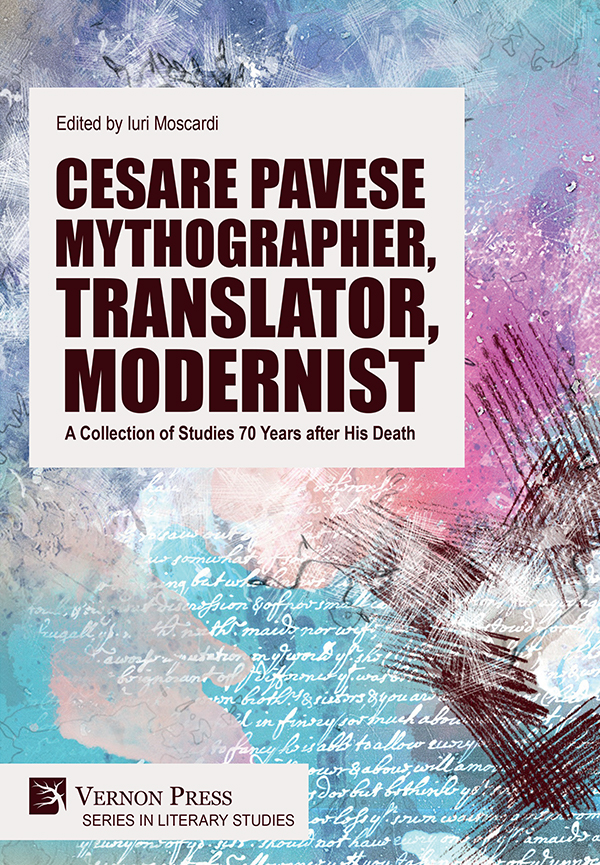
Edited by: Iuri Moscardi (The Graduate Center, CUNY)
This volume on Cesare Pavese is published on the 72nd anniversary of his death, and it aims to explore new perspectives to study this relevant intellectual. The multifaceted personality of Cesare Pavese took many different forms and allowed him to explore different aspects of literary production. He was a poet, a novelist, an essayist, a translator of some of the most important American writers of the 19th and 20th centuries. He also worked for 20 years at Einaudi Publishing House, where he became one of the most relevant figures of the company and the Italian literary and cultural scene between the 1930s and 1950s. This collection provides new perspectives of study by focusing on different aspects of his job and by analyzing the strong connections between his personal and professional life. It will appeal to graduate students and scholars in contemporary Italian literature.
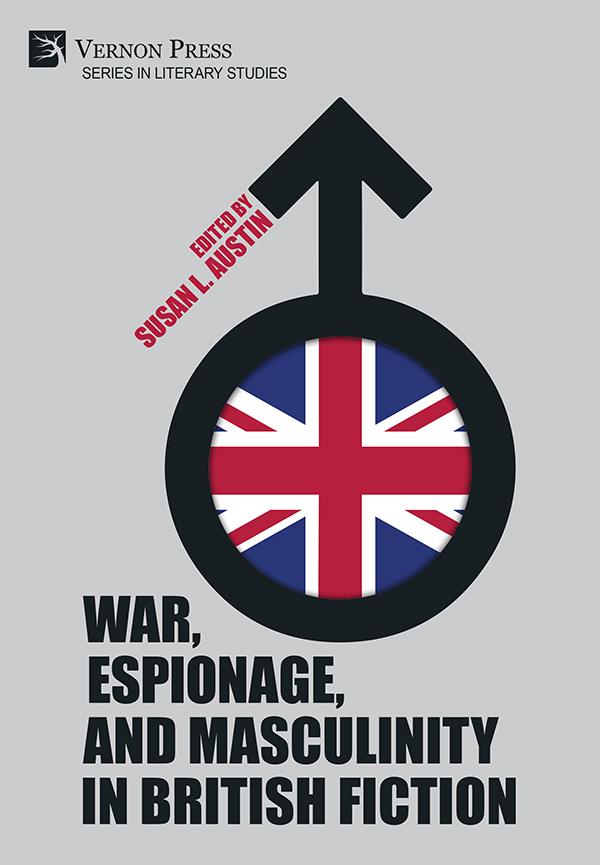
Edited by: Susan L. Austin (Landmark College)
'War, Espionage, and Masculinity in British Fiction' explores the masculinities represented in British works spanning more than a century. Studies of Rudyard Kipling’s 'The Light That Failed' (1891) and Erskine Childer’s 'The Riddle of the Sands' (1903) investigate masculinities from before World War I, at the height of the British Empire. A discussion of R.C. Sherriff’s play 'Journey’s End' takes readers to the battlefields of World War I, where duty and the harsh realities of modern warfare require men to perform, perhaps to die, perhaps to be unmanned by shellshock. From there we see how Dorothy Sayers developed the character of Peter Wimsey as a model of masculinity, both strong and successful despite his own shellshock in the years between the world wars. Graham Greene’s The Heart of the Matter (1948) and The Quiet American (1955) show masculinities shaken and questioning their roles and their country’s after neither world war ended all wars and the Empire rapidly lost ground. Two chapters on 'The Innocent' (1990), Ian McEwan’s fictional account of a real collaboration between Great Britain and the United States to build a tunnel that would allow them to spy on the Soviet Union, dig deeply into the 1950’s Cold War to examine the fictional masculinity of the British protagonist and the real world and fictional masculinities projected by the countries involved. Explorations of Ian Fleming’s 'Casino Royale' (1953) and 'The Living Daylights' (1962) continue the Cold War theme. Discussion of the latter film shows a confident, infallible masculinity, optimistic at the prospect of glasnost and the potential end of Cold War hostilities. John le Carré’s 'The Night Manager' (1993) and its television adaptation take espionage past the Cold War. The final chapter on Ian McEwan’s 'Saturday' (2005) shows one man’s reaction to 9/11.

Edited by: William G. Welty (Rutgers, The State University of New Jersey)
Much of the work done on the Post45 literary field carries an implicitly Americanist perspective. Even the name of the field suggests a certain literary history, with certain assumptions and blind spots about national spaces, identities, and histories. But what would Post45 look like when considered from outside of the United States? How do the current contours of the field exclude certain voices, either in the United States or elsewhere in the world? And how would such new perspectives shift the beginning and possible endpoint of that literary period? What new narratives of the contemporary emerge if we begin telling the story in a different year or from a different national or global perspective? This collection attempts to re-frame the discussions in Post45 by engaging with non-American writers, texts, and perspectives. Additionally, productive conversations emerge by attempting to think of canonical American writers like Mark Twain and Ishmael Reed from other national and global perspectives. The authors consider both the ways texts themselves as well as their reception histories approach and challenge our understandings of the contemporary. Ultimately, the collection interrogates prevailing narratives of history, culture, identity, and space within the Post45 field. In so doing, it re-considers the historical periodization of the field, which currently covers approximately 75 years of literary history. The resulting essays thus work towards a new intertwined narrative about what defines the contemporary and how national and global literatures fit into that moment of world history.
By: Jared A. Griffin (University of Alaska Anchorage)
'Common and Uncommon Quotes: A Theory and History of Epigraphs' is a prolegomenon to the study of epigraphic paratextuality. Building on the work of Gerard Genette’s paratextual studies, this volume contextualizes and traces the practice of epigraphy in Anglophone literary history, from the fifteenth to the early twentieth century. This study explores how epigraphs are used by author-functions as a hermeneutic for their text and to establish ethos with their audience, and how that paratextual relationship changed as publishing opportunities and literacy rates grew over four centuries. The first broad-reaching study of this kind, 'Common and Uncommon Quotes' seeks to understand how epigraphs work: through their privilege on the page, their appeal to conjured ideas of the past, and their calls to citizenship.
By: Nirjhar Sarkar (Raiganj University, India)
'Theatre as Alter/“Native” in Derek Walcott' attempts a close and detailed politico-aesthetic analysis of his major plays. At the core of this book lies the attempt to answer the question of how postcolonial artists and intellectuals have dared to imagine radically different ways of living in the face of oppositional, binary choices. And as the title suggests, Walcott’s plays carve out critical spaces for new narratives of “becoming” and alternative priorities, entangled in contesting identities inscribed by race, language and ethnicity. Theatre, as Walcott knew, would be instrumental in demystifying Caribbean “Absence” and “Void” and generating an alternative version of dominant reality. By a deliberate unseating of the Western texts, filled with banal stereotypes and their representational biases, and by triggering “re-action” to the scripts of the colonizers in profoundly paradoxical ways, Walcott’s plays affirm the Caribbean identity. This study seeks to demonstrate how his plays open an alter/“native” universe in terms of aesthetics, dramaturgy and the performative, and reclaims ‘New World’ identity in terms of negotiation rather than negation—undermining the claim of “solid”, “authentic” culture. Placing the arts at the forefront of nation-building, Walcott situated his plays at a crucial juncture between the passing of the Empire and the newly-born Federation in his archipelago.
Edited by: Carine Mardorossian (University of Buffalo) and Simona Wright (The College of New Jersey)
This volume celebrates fifty years of NeMLA’s important presence in the world of academia with a collection of essays that adopt a transnational critical lens. With the present selection, we intend to add our voices to the ongoing debate centered on the renegotiation of space, national, and cultural geographies; to foster both the re-thinking of language(s) and literature(s) not exclusively in English and the study of race, gender, sexuality, and class within and across national boundaries. Most pertinently for this collection, we hope to add meaningful material to produce new theoretical paradigms and to rethink the role and significance of the humanities in today’s world. In this light, 'Transnational Spaces: Celebrating Fifty Years of Literary, Cultural, and Language Intersections at NeMLA' offers a contribution to the study of our present, transnational condition, from the point of view of an organization, the 'Northeast Modern Language Association', that since its inception in 1969, has sought to provide a space of encounter, debate, and open intellectual exchange for all its members as well as for the academe at large. The essays contained in this volume emphasize the interdependency and interrelations engendered by the globalized world in which we live, highlighting the possibility to create new knowledge and forms of understanding across the boundaries of nationhood and region. At the same time, they remind us that the present situation calls for a radical self-examination of a history of systemic racism which continues to produce episodes of police brutality, rationalizes cultural and economic exclusion, and normalizes the incarceration of African Americans and “illegal” immigrants, including children and minorities. In this light, with this volume, we hope to have provided inclusive, egalitarian, and cosmopolitan spaces of encounter, exchange, and interrogation.
Edited by: Herlinda Flores Badillo (Universidad Veracruzana, Mexico)
La historia y cultura de México han sido transculturadas desde la época prehispánica. La mezcla surgida a partir de la llegada de los españoles dio lugar a un proceso de transculturación y al surgimiento de nuevas identidades, que se trasladaron a la literatura de esta época, dando cuenta de la transición vivida. La literatura se presenta en México como un producto heterogéneo y diverso, fruto del proceso de transculturación, no sólo en su literatura canónica, sino también en aquella de los otros Méxicos, o del México Profundo. “Transculturacion y trans-identidades en la literatura contemporánea mexicana” explora el juego de identidades en las obras de Pablo Soler Frost, Álvaro Enrigue o Fernanda Melchor, entre otros. Una colección de ensayos que abrirá un diálogo entre investigadores y académicos cuya área de estudio esté relacionada con la intersección de culturas, literaturas y escritores, así como un volumen de gran interés a todo público interesado en la literatura mexicana, los fenómenos de transculturación, migración, translacionalismo y políticas identitarias. Mexican history and culture have been transculturated since the pre-Hispanic era. The mixture that developed from the Spaniards arrival promoted the increase of transculturation and the development of new identities. Examples that can easily be spotted in Mexican contemporary literature, showing that due to this phenomena, Mexican literature is heterogeneous and diverse, not only in its canonic literature, but in that from the other Mexicos, or “deep Mexico”. “Transculturation and trans-identities in contemporary Mexican Literature” explores identities in the works of Pablo Soler Frost, Álvaro Enrigue or Fernanda Melchor, to only cite a few. A book that will open a dialogue among researchers, academics and students whose area of study is related to the intersection of culture, identities, spaces, literature and writers. An ambitious collection of essays, of great interest regarding Mexican culture, but also “border culture”, migration, transcultural issues and identity politics.
By: Jack M. Downs (Washington State University Health Sciences Spokane)
Developing a history of the English novel requires the inclusion of a vast range of cultural, economic, religious, social, and aesthetic influences. But the role of eighteenth-century English rhetorical theory in the emergence of the novel – and the critical discourse surrounding that emergence – has often been neglected or overlooked. The influence of rhetorical theory in the development of the English novel is undeniable, however, and changes to rhetorical theory in Britain during the eighteenth century led to the development of a critical aesthetic discourse about the novel in Victorian England. This study argues that eighteenth-century 'belles lettres' rhetorical theory played a key role in developing a horizon of expectation concerning the nature and purpose of the novel that extended well into the nineteenth century. There is a connection between the emergence of the English novel, eighteenth-century rhetorical theory, and Victorian novel criticism that has been neglected; this study attempts to recover and articulate that connection.
A Collection of Essays on Shakespeare in his Christian Context
Edited by: Michael J. Collins (Georgetown University) and Michael Scott (Blackfriars Hall, Oxford)
Christian Shakespeare? The question was put to each contributor to this collection of essays. They received no further guidance about how to understand the question nor how to shape their responses. No particular theoretical approach, no shared definition of the question was required or encouraged. Rather, they were free to join, in whatever way they thought useful, the extensive discourse about the impact that the Christian faith and the religious controversies of Shakespeare’s time had on his poems and plays. The range of responses points not only to openness of Shakespeare’s work to interpretation, but to the seriousness with which the writers reflected on the question and to their careful and sensitive reading of the poems and plays. The heterogeneity of Shakespeare’s world is reflected in the heterogeneity of the essays, each an individual response to the complex question they engage. In the end, what the plays and poems reveal about Shakespeare’s Christianity remains unclear, and that lack of clarity has also contributed to the variety of responses in the collection. All the essays recognize, to some degree or another, that the tension in Shakespeare’s world between old and new, medieval and early modern, Catholic and Protestant, brought uncertainty (and in some cases anxiety) to the minds and hearts of Shakespeare’s contemporaries. But what Shakespeare himself believed, how he responded in his work to the religious turmoil of his time remains uncertain. For some of the contributors Shakespeare’s plays are inescapably indeterminate (even evasive) and open to a multiplicity of possible readings. For others, Shakespeare takes a stand and, through the careful patterning of his plays, speaks more or less unambiguously to the religious and political issues of his time. Together the essays reflect the varied ways in which the question of Shakespeare’s Christianity might be answered.