Loading...
Please wait while we load the content...

Loading...
Please wait while we load the content...
Loading...
Please wait while we load the content...
Explore peer - reviewed titles across the humanities and social sciences - rigorous research, fresh perspectives, and scholarship that inspires dialogue across disciplines.
Stay informed about our latest publications, calls for proposals, author news, events, and special announcements.
Join our community of scholars, librarians, authors, and readers and receive the latest updates from Vernon Press directly in your inbox.

From special discounts and global distribution partners to downloadable catalogs, flyers, and high-resolution covers, we make it easy to enrich your library’s collection. Access bibliographic data, explore subject-specific listings, and stay updated on forthcoming titles.
Become part of our librarian network and access dedicated tools, discounts, and resources to support collection development and promote new titles to your patrons.

Partner with Vernon Press to provide your customers with high-quality, peer-reviewed scholarship. We offer flexible ordering options, reseller agreements, and promotional materials to support your sales and outreach.

Vernon Press provides dedicated resources to help instructors adopt our books for courses and to support students with affordable access to high-quality scholarship. From desk and examination copies to tailored student editions, we aim to make our titles accessible in the classroom.
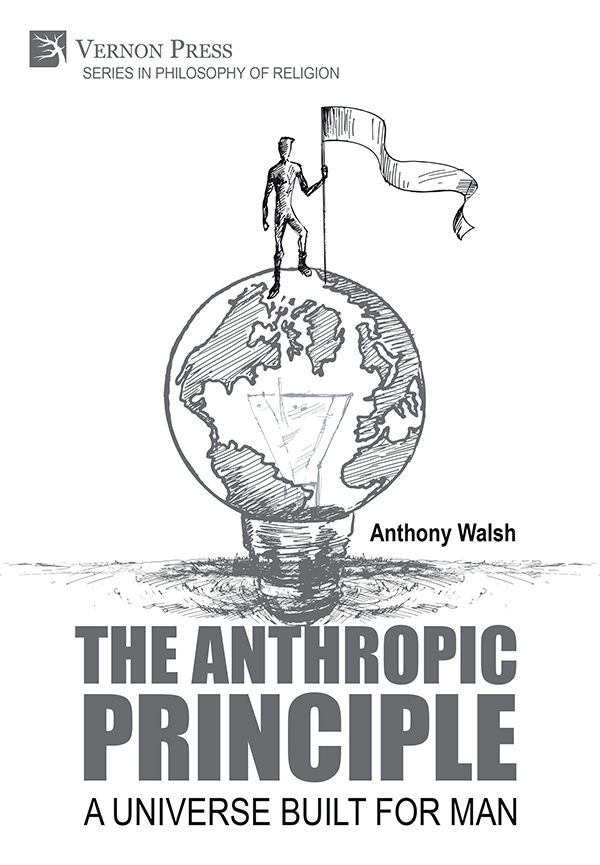
By: Anthony Walsh (Boise State University)
The Copernican Principle states that humankind is an insignificant assemblage of chemical scum living on an accidental planet in a suburb of a purposeless universe. Many prominent scientists, including Nobel laureate physicists, have questioned this scurrilous principle, which has led physicists to propose the Anthropic Principle. This principle posits a purposeful link between the structure of the universe and the existence of humankind and its specialness. The numerous features of the universe are so freakishly fine-tuned for the existence of intelligent life that physicists are beginning to come to grips with the notion that our universe is profoundly purposeful and that there is a powerful and incredibly intelligent Mind behind it all.
Edited by: William H. U. Anderson (Concordia University of Edmonton in Alberta)
Hollywood is a $40 billion annual business, one that is highly influential in culture. If we want to know who we are as individuals and a society, what we believe and what we value, we need to know and understand Hollywood and film. Make no mistake, Hollywood is neither philosophically, politically, nor morally neutral! Many studies demonstrate how movies “affect” us long before we have thought it through. In other words, Hollywood “smuggles” all kinds of ideas into our minds and hearts without us even knowing it. While Hollywood may be the biggest and most influential in the world, this book will demonstrate the growing international influence of film from India (Bollywood), Nigeria (Nollywood), Zimbabwe (Zollywood) and Yesilçam (Turkey). 'Film, Philosophy and Religion' explicitly and implicitly takes a philosophical approach to analyzing film theoretically and methodologically. There are topic and film-specific chapters that take a theological approach, and others that explore ideas like Affect, Axiology, Art Reflecting the Artist and Transcendence (Spirituality) of Film. Hermeneutics also have a central role in the book, including films based on biblical texts that act as interpretations of these texts and fill in the blanks (albeit speculatively by way of script and directors). Chapters also explore the philosophy of aesthetics and film realism which end with theology, while other chapters explore the incompatibility of science with religion, as well as a chapter on the timely topic of rape in Turkish film. The book’s scope goes from the “Horror of Evil in Ridley Scott’s Alien Universe” to “Love Can Thaw a Frozen Heart: The Philosophy of Love in the Frozen Films” (Disney Princess Narratives). This book represents international films and scholars. The diverse perspectives from theist to atheist—and everything in-between—are sure to spark thinking and generate talking points that provide something for everyone in an accessible format. It will be of great interest to university students and professors, scholars, seminaries, and the general public.
By: Frederick Mawusi Amevenku (Stellenbosch University, South Africa) and Isaac Boaheng (University of Free State, South Africa)
‘Biblical Exegesis in African Context’ explores how the Church in Africa can affirm its uniqueness in terms of the African identity and experiences, and at the same time, remain faithful to the gospel message. The volume begins with an explanation of exegesis and hermeneutics, and the agenda for the rest of the book is set. The second chapter deals with textual criticism, which is the task of determining the originality of a biblical text. In chapter three, issues related to the context of the text are considered, after which the volume proceeds to examine the various literary forms present in the Bible— prominent among them being— Narrative, Law, Poetry, Prophecy, Wisdom Literature, Gospels, Acts of the Apostles, Epistles and Revelation. The authors then dedicate the next chapter to discussions on socio-rhetorical interpretation. The final chapters of the book deal with matters solely related to the context of Africa; this part intends to equip readers to be able to interpret the Bible from African cultural perspectives and then apply the gospel message meaningfully to the life of African Christians. Chapter seven deals with the emergence and historical development of African Biblical Studies (ABS), noting its relevance and how Africans can benefit from it. The main contention of the chapter is that Africans will better understand and apply God’s word to their lives if they read the Scriptures in an African way. The volume then explores how African languages can be used to derive the meaning of scripture and apply it to real-life situations. Here, the authors contribute to the development of MTBH by developing a methodological framework for this interpretative tool. The next chapter of the volume deals with mother-tongue theologizing in Ghana. The final chapter considers the legitimacy of female leadership in the Church within the African context through the examination of two Pauline texts. This volume will be of interest to undergraduate and graduate seminary students, students of Biblical Interpretation in religions departments, as well as practicing pastors.
By: Irfaan Jaffer
"Traditional Islamic Ethics: The Concept of Virtue and its Implications for Contemporary Human Rights" concentrates on the subject of Islam and modernity and Islam and human rights, a topic that has become popular and relevant with the rise of globalization and the interest in Islamic extremism and human rights. This book distinguishes itself by operating within the framework of the traditional school of thought or ‘Islamic Traditionalism’. In doing so, it draws on Islam’s 1400-year-old spiritual and intellectual tradition and its understanding of ethics and virtue, along with truth, justice, freedom, and equality. This book argues that Islam’s pre-modern approach is indispensable in creating an organic and integral human rights model for Muslims. The first section argues that the current understanding and implementation of international human rights needs to be more flexible and inclusive if it truly aims to be universal in scope; this is because ‘The Universal Declaration’ and its offshoots are still underpinned by secular-liberal principles, and therefore, are at odds with other cultural traditions. To this end, this section critically explores popular human rights histories and contemporary ethical theories that attempt to justify human rights. The second section of this book provides a general overview on the subject of ‘Islam and Human Rights’. After explaining some of the main problems, this section examines various solutions offered by Muslim academics and scholars, focusing on four different types of Muslim responses to modernity and human rights: liberal, progressive, traditional, and fundamentalist. It concludes that there are ‘spaces of convergence’ between modern-liberal ethics and traditional Islamic virtue ethics while maintaining that there are also fundamental differences and that these differences should be welcomed by human rights theorists and advocates. The book’s intended audience is primarily post-graduate students and professional academics in the fields of Human Rights, Ethical Philosophy, and Islamic Studies (modern Islamic thought, Sufism, Islamic theology, Islamic Philosophy, and Traditionalism). It will also appeal to anyone interested in the subject of Islam and modernity in general and Islam and human rights in particular.
Goodness, Truth, and Meaning in the Midst of Today’s Mad Chase for Prosperity and Instant Feedback
By: Mark Ellingsen (Interdenominational Theological Center)
The flat world of our globalized economic order—with its information technology mandating the need for the labor force to compete globally—has led to turmoil, injustice, and growing unhappiness in our everyday lives. We need a way to find some mountaintops and fulfillment in our flat world, to have a sense that some moments can have eternal significance. Søren Kierkegaard, forerunner of Existentialism, provides us with a vision of life to help us cope and give us joy. Along the way, we’ll see how a lot of his insights connect with cutting-edge findings on brain research about the biological dynamics of joy and fulfillment. Finding Peaks and Valleys in a Flat World will be of interest to undergraduate Philosophy and Religion students as well as Kierkegaard specialists. It will also be a good reference work for people interested in social analyses and theologians of every denominational affiliation.
Edited by: William H. U. Anderson (Concordia University of Edmonton in Alberta)
Technology is growing at an exponential rate vis-à-vis humanity’s ability to control it. Moreover, the numerous ethical issues that technology raises are also troubling. These statements, however, may be alarmist—since Telus would tell us “The Future is Friendly”. The Modernist vision of the future was utopic, for instance Star Trek of the 1960s. But postmodern views, such as are found in Blade Runner 2049, are dystopic. Theology is in a unique interdisciplinary position to deal with the many issues, pro and con, that technology raises. Even theologians like Origen in the third century and Aquinas in the thirteenth century made forays into Artificial Intelligence and surrounding issues (they just didn’t know it at the time). Artificial Intelligence (AI) and Transhumanism raise questions about what it means to be human. What is consciousness? What is soul? What are life and death? Can technology really save us and give us eternal life? Theology is in a unique position to handle these questions and issues. This book also has practical applications in terms of ecclesiology (church) in the context of the COVID-19 pandemic—both in terms of what it means to be a church and in terms of the sacraments or ordinances. Is there such a thing as a “Virtual Church” or must we gather physically to constitute one? Are Baptism and Communion legitimate if one is not physically in a church building but are “online”? This book struggles with these and many other questions which will help the scholar or reader make up their own minds, however tentatively.
By: Anthony Walsh (Boise State University)
“It may seem bizarre, but in my opinion, science offers a surer path to God than religion…science has actually advanced to the point where what were formerly religious questions can be seriously tackled” (Paul Davies, Astrophysicist). Anthony Walsh’s latest riposte to atheistic arguments against God's existence draws on Natural Theology, a knowledge of God based on evidence from both the natural and social sciences. Covering everything from the Big Bang and the origins of life to the mystery of intelligent consciousness, Walsh makes even the most technical scientific writings accessible to the general reader and tackles a question few books on the relationship between science and religion have ever sought to address: how does Christianity positively affect societies, families, and individuals in terms of democracy, justice, happiness, health, and prosperity?
Edited by: William H. U. Anderson (Concordia University of Edmonton in Alberta) and Charles Muskego (Concordia University of Edmonton in Alberta)
Indigenous People and the Christian Faith: A New Way Forward provides detailed historical, cultural and theological background and analysis to a very delicate and pressing subject facing many people around the world. The book is “glocal”: both local and global, as represented by international scholars. Every continent is represented by both Indigenous and non-indigenous people who desire to make a difference with the delicate problematics and relationships. The history of Indigenous people around the world is inextricably linked with Christianity and Colonialism. The book is completely interdisciplinary by employing historians, literary critics, biblical scholars and theologians, sociologists, philosophers and ordained engineers. The Literary Intent of the book, without presuming nor claiming too much for itself, is to provide practical thinking that will help all people move past the pain and dysfunction of the past, toward mutual understanding, communication, and practical actions in the present and future.
By: Uri Wernik
Who was Jesus in real life? What inspired his ideas? What did he aim to achieve? What drew his disciples to him? How was he influenced by them? Unlike the many “quests for the historical Jesus”, as a psychologist, Wernik answers these questions from the perspectives of psychology and the social sciences. This book’s central axis is the theme of the father. It looks at the family constellation into which Jesus was born, where he was raised by a stepfather. It also investigates the relationship he develops with God, his father in heaven; and examines how he became a father figure to his disciples and followers. It is hoped that readers will also think about their own father when reading, the one usually called “dad”. Jesus and His Two Fathers sees Jesus’ love of peace and appeasement doctrine, as well as his difficulty with anger control, in the context of his upbringing and family constellation. Wernik offers a solution to the problem of the “missing years” which were unaccounted in the New Testament. He examines the internal conflicts in Jesus’ movement, and the tensions with the religious establishment, which led to his death. Jesus did not see himself as the Messiah, and Wernik shows him in fact as a great reformer of Judaism, who changed the notions of righteousness, the relation of the believers to God, and the status of the commandments. This book will be of interest to scholars, teachers and students in the humanities and social sciences, among others in the fields of religion, especially Christianity and Judaism. It is aimed at interested discerning readers of non-fiction in these areas.