Loading...
Please wait while we load the content...

Loading...
Please wait while we load the content...
Loading...
Please wait while we load the content...
Explore peer - reviewed titles across the humanities and social sciences - rigorous research, fresh perspectives, and scholarship that inspires dialogue across disciplines.
Stay informed about our latest publications, calls for proposals, author news, events, and special announcements.
Join our community of scholars, librarians, authors, and readers and receive the latest updates from Vernon Press directly in your inbox.

From special discounts and global distribution partners to downloadable catalogs, flyers, and high-resolution covers, we make it easy to enrich your library’s collection. Access bibliographic data, explore subject-specific listings, and stay updated on forthcoming titles.
Become part of our librarian network and access dedicated tools, discounts, and resources to support collection development and promote new titles to your patrons.

Partner with Vernon Press to provide your customers with high-quality, peer-reviewed scholarship. We offer flexible ordering options, reseller agreements, and promotional materials to support your sales and outreach.

Vernon Press provides dedicated resources to help instructors adopt our books for courses and to support students with affordable access to high-quality scholarship. From desk and examination copies to tailored student editions, we aim to make our titles accessible in the classroom.
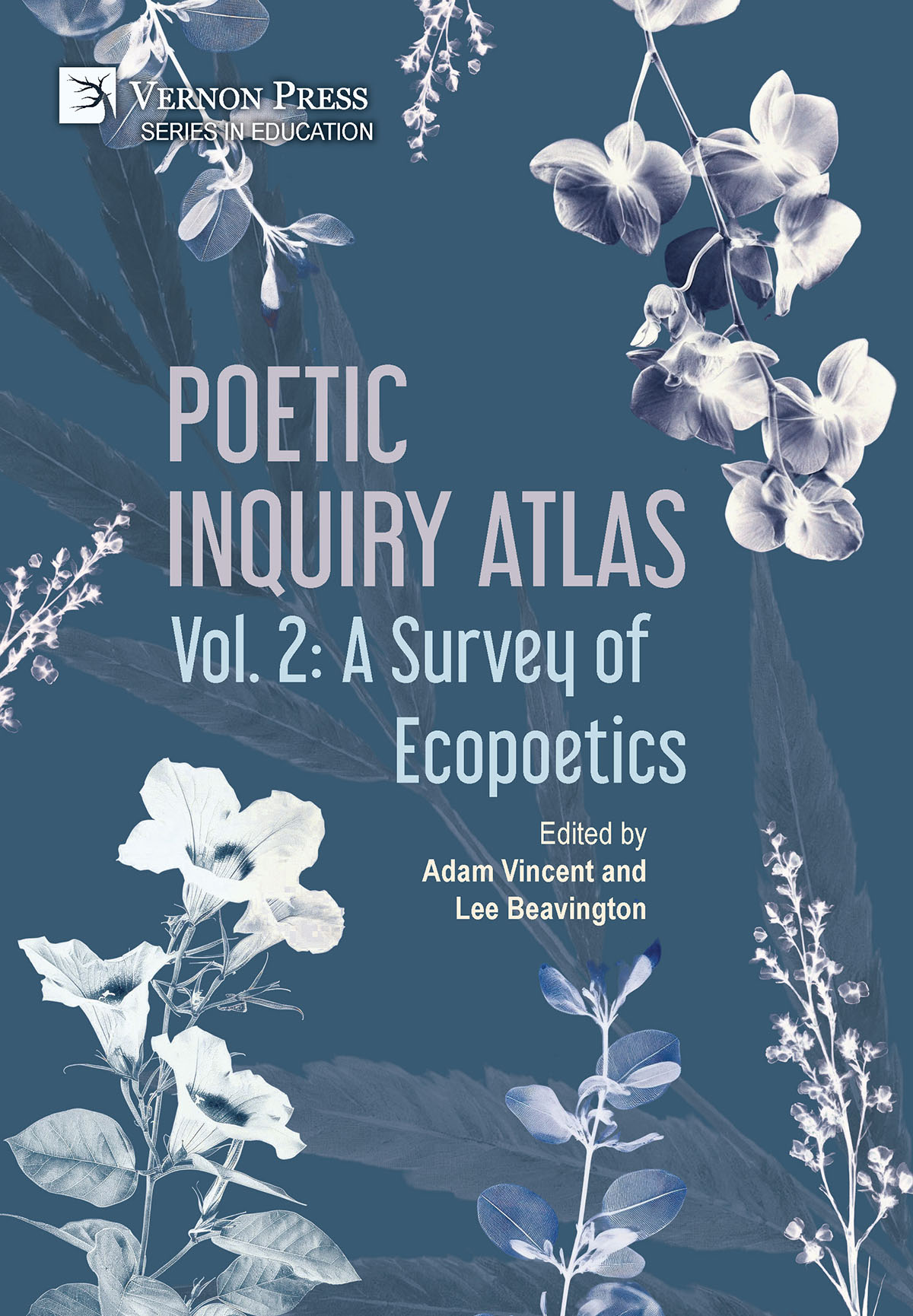
Vol. 2: A Survey of Ecopoetics
Edited by: Adam Vincent (Capilano University) and Lee Beavington (Kwantlen Polytechnic University)
This second volume in the 'Poetic Inquiry Atlas' series continues the mapping of the first edition by bringing together a collection that represents some of the diverse uses of ecopoetics across various fields of research and study and explores poetry as a form of environmental geography. With chapters from scholars from diverse ecosystems across the globe, this book highlights both generative and epistemological uses of Poetic Inquiry. Suitable for researchers, educators, poets, ecologists and those who wish to better understand the connection between humans and the world that we live in, this book adds to what is known about Poetic Inquiry, ecology, and about lived experiences in/with nature from both non-Indigenous and Indigenous poets and scholars alike.

Faculty Perspectives on Immersive Research and Study Abroad in the African Diaspora
Edited by: Clarence George III (Sacramento State University) and Juan Maefield (University of Central Arkansas)
No description available
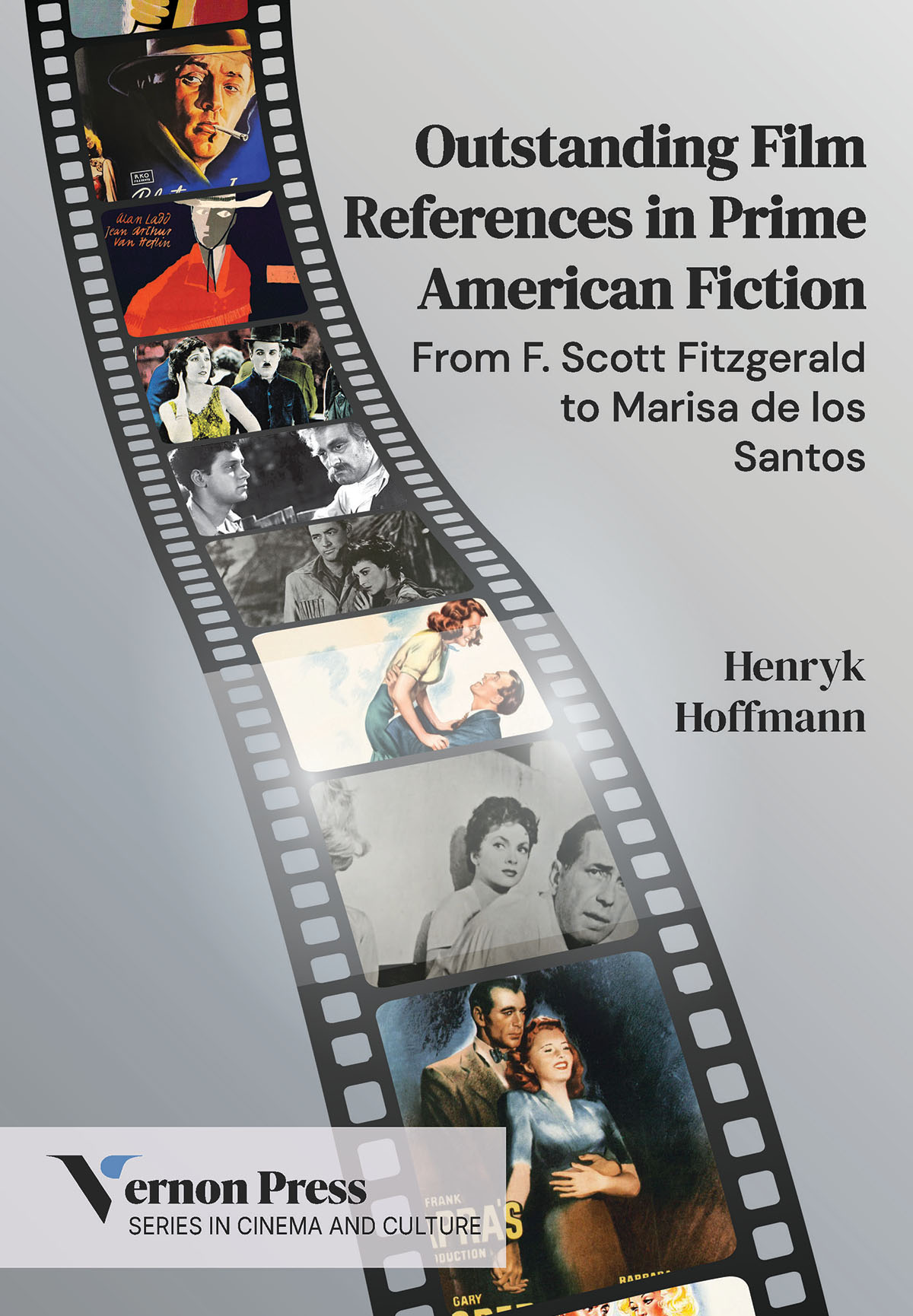
From F. Scott Fitzgerald to Marisa de los Santos
By: Henryk Hoffmann
In order to explain the concepts related to film reception and perception—such as screen personality, image, persona, identification-projection and subjective perception—theorists and lecturers usually ask the readers or audiences to imagine a hypothetical situation involving a screening of a certain film. They do not realize or forget that it would be much easier to use a situation already existing, created, for instance, by a talented and knowledgeable novelist or poet in the form of film references or allusions. So, here it is, the movie world—films, directors, actors, characters, particular scenes or lines—as perceived and commented on by some of the greatest authors and characters they have created in the pages of their novels, short stories, plays and poems. The main body of the book, consisting of nearly forty entries, is divided into three parts: mainstream fiction, represented by F. Scott Fitzgerald, James Jones, John Updike, Paul Auster and Marisa de los Santos; crime and mystery fiction—including such authors as Raymond Chandler, Elmore Leonard, Lawrence Block and Laura Lippman; and thriller/horror fiction, covering two unquestioned masters, Dean Koontz and Stephen King. A dozen more writers—e.g., Kurt Vonnegut and Jill McCorkle—whose contribution to the topic is somewhat less spectacular but still worth presenting, are briefly discussed, as entries of an intentionally limited scope, in the Appendix. In addition to providing precious observations corroborating the legendary status of some distinguished film directors and actors, as well as the assets of their most representative pictures, the analyses of the outstanding film references explain and ingeniously illustrate the major concepts related to film reception/perception studies and, more importantly, they demonstrate how some writers use references to enhance or embellish their poetic and/or narrative devices in such areas as character development, analogy within the plot or description of a specific period or location.
By: Erwin James Casareno
'A Materialist Social Theory of the Idea' advances a unified theoretical framework for understanding how ideas emerge, circulate, and materialize in the world. Rejecting both classical Idealism and reductive Materialism, the book develops a neuromaterialist approach that defines ideas as physically instantiated patterns of neural activity and traces their effects across social, institutional, and material domains. Beginning from the premise that thought is a biological process, the book follows the idea from its origin in the brain through its transmission via language and behavior, its reproduction within culture, and its eventual crystallization in norms, institutions, and physical structures. This recursive process—linking brain, behavior, environment, and social organization—provides a comprehensive model of how ideas function as causal forces in history. Drawing on insights from sociology, philosophy, neuroscience, and political theory, the work introduces original conceptual tools, including models of ideational transmission, activation, and threshold dynamics, as well as the concept of cognitive terraforming to describe the large-scale transformation of reality through ideation. This book offers an interdisciplinary framework for analyzing ideology, social change, and institutional development, making it relevant to scholars and students in social theory, sociology, philosophy of mind, and related fields. It also provides a foundation for further research into the material basis of thought and its role in shaping human behavior and social structure.
Edited by: Brian Gran (Case Western Reserve University)
'Human Rights and Social Concerns' brings together scholars who examine how human rights frameworks illuminate, and sometimes fail to address, pressing social concerns across diverse societies. Contributors explore issues including migrant women’s experiences of street harassment (Valeria Bonatti and Ashley C.F. Hutson), stigma and disability in rural India (Namita Gupta and Pardeep Kumari), environmental licensing and justice in Brazil (Cassia Cardoso de Miranda), constitutional over‑regulation of families (Ágne Lux and Emese Pásztor), and the paradoxical role of human rights in environmental degradation (Haimo Schulz Meinen).
Teaching and Acquisition in Higher Education. Vol. 2
Edited by: Alberto Regagliolo (UKSW University)
'Italian as a Foreign Language: Teaching and Acquisition in Higher Education. Vol. 2' brings together twelve chapters written by scholars and university lecturers, all focusing on the teaching of Italian through a wide range of approaches. These range from inclusive and multisensory pedagogies to corpus-based learning, from grammar through use to debate-based teaching and content-focused courses (politics, ecology, food, health, culture, and identity). The book values plurality and dialogue, showing how different pedagogical perspectives can respond to diverse learning contexts and heterogeneous student profiles. What makes this volume distinctive is its strong connection between theory and practice. Each contribution is grounded in current research in applied linguistics and language pedagogy, while remaining firmly rooted in real university classrooms. Practical examples, teaching ideas, and reflections on course design make the book particularly useful for university instructors, teacher educators, and advanced students. At the same time, the volume can be read as a source of inspiration, as a methodological guide, or as a reference text for developing inclusive and meaningful Italian language courses in higher education.
Social Media and Youth Activism
By: Monica Pauls (Mount Royal University)
Young people’s lives are increasingly shaped by digital media, yet public and academic debates about youth, social media and well-being are often dominated by fear-based narratives that frame online spaces as inherently harmful. Against a backdrop of rising concerns about youth mental health and widespread anxieties about social media use, this book offers a critical and timely intervention into how we understand young people’s political and civic engagement in the digital age. Drawing on in-depth interviews with youth activists involved in the international climate change movement and the American gun control movement, alongside analysis of their social media practices, the book challenges binary distinctions between online and real-world activism. Rather than treating digital participation as superficial or ineffective, it foregrounds young people’s own perspectives on activism, demonstrating how digital platforms function as meaningful spaces for connection, organizing and political expression. Situated at the intersection of youth studies, sociology, media studies and political engagement, the book builds on and extends existing literature on digital activism by centring youth voices and lived experience. It offers a counter-narrative to the persistent “slacktivism” critique, arguing that such framings not only misunderstand contemporary activism but risk delegitimizing young people’s contributions to civic life. Written in an accessible style while grounded in rigorous social research, this book will be of interest to scholars, post-secondary students and practitioners working in education, youth work, child and youth care, social services and community organizing. It is suitable for classroom adoption, scholarly reference and professional reflection, and provides valuable insights for anyone seeking to better understand how young people are reshaping political participation in a digitally networked world.
The conditions, construction and consequences of racist public discourse within a racialized social system
By: Monetta Bailey (Ambrose University)
This book investigates the potential of racist public discourse to harm racialized individuals. In tackling this, this book uses multiple theoretical frameworks and data sources to highlight the need to pay attention to how we regulate racist public discourse. The first theoretical framework, Critical Race Theory, provides the foundation to look at the ways in which racist ideologies are the bedrock of post-colonial society, which created the conditions for racist public discourse. The second framework, Sociology of Knowledge, serves as a methodological framework to demonstrate how racialized knowledge is gained and transmitted to allow for the construction of racist discourse. By combining these two frameworks to investigate the consequences of racist public discourse, this book presents theoretical and empirical evidence to suggest the need to rethink the definition of harm as it pertains to racist public discourse. This topic is important given the heightened public discourse around race in social and political arenas where, increasingly, individual rights to freedom of expression are seen as being more fundamental than the impact of language upon marginalized groups. My hope is to add to the growing body of work that sheds light on the impact of harmful public rhetoric, to bring awareness of the harm caused, and highlight the need to regulate hateful racist speech.
Bridging Innovation and Human Dignity in Remote and Hybrid Workspaces
Edited by: Leigh Maxwell (Edgewood University)
In a world permanently changed by the COVID-19 pandemic, 'Reimagining Work' offers a timely and urgent exploration of how work is being reshaped—and how it should be. This interdisciplinary volume brings together scholars and practitioners from communication, leadership, education, psychology, and organizational development to confront the challenges and possibilities of the evolving workplace. More than a reflection on remote and hybrid trends, this book is a call to rethink foundational questions: How do we honor human dignity in technologically mediated environments? What leadership strategies are needed to navigate generational dynamics, digital fatigue, and rapid innovation? How do communication technologies both enable and constrain productivity, connection, and inclusion? With historical depth and forward-looking insight, the contributors examine four central themes: (1) the theoretical and historical underpinnings of communication in digital workspaces; (2) the unique strengths and tensions of multigenerational teams; (3) the influence of communication technology on collaboration and performance; and (4) the ethical responsibilities of leaders in shaping a future of work that is both innovative and humane. At its core, 'Reimagining Work' centers the human experience. It argues that while AI and digital platforms are vital, they must serve—not replace—empathy, agency, and community. Leaders and organizations must design systems that are not only efficient and adaptable but also inclusive, equitable, and responsive to diverse needs. Whether you are an academic, a manager, a student, or a policymaker, this volume equips you with insights and frameworks to actively shape a future of work where technological advancement and human flourishing go hand in hand.